






















By Asma Ali
Master of Arts (MA)
English Literature
Noor ul Sabah
Bachelor’s degree
Public administration
Stolen Childhoods in Pakistan:
When Culture Turns Criminal
پاکستان میں بچپن چوری ہو گیا
جب ثقافت ہی مُجرم بن گئی
पाकिस्तान में बचपन की चोरी:
जब संस्कृति अपराधी बन गई
“When tradition becomes an excuse for injustice, it is no longer culture — it is cruelty.”
“To preserve a child’s childhood, stop the practice of child marriage.”
“A supporter of child marriage is essentially a supporter of child sex slavery.”
“Childhood is the time for growth and development, not marriage and responsibilities.”
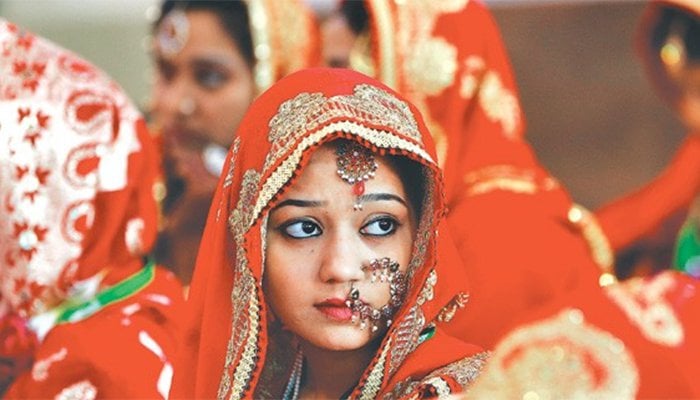
Introduction:
Child marriage can be defined as a “contract signed by guardians, but executed against the will
and capacity of the very person it binds—rendering it a legal fiction and a moral crime. Child
marriage is a systemic act of disempowerment, where society trades a girl’s potential for the
illusion of propriety.”
So—Pakistan. Child marriage here means shackling a girl (usually) to a husband before she’s even old enough to vote, drive, or really understand what marriage means. Folks justify it with “customs,” poverty, and all the usual excuses, but it tramples all over her rights, her education, and her shot at a future. Let’s not sugarcoat it—calling child marriage “tradition” is just a fancy way of masking cruelty. Every year, thousands of children are forced into child marriages in Pakistan. And the ones doing it with their own consent are either stoned to death or shot on sight. Ironic, isn’t it? Here’s the cosmic joke: elders can force a girl into marriage before she’s 18 and folks clap. But if she decides to marry on her own terms, suddenly she’s “too young” and gets punished—sometimes even killed—for “dishonoring” the family. So, what’s it really about? Control. Not care.
These innocent children, stripped away from their childhood and forced into something they were not meant to discover at the ripe age of just 8 and 9, lose the small ounce of dignity left in them. Behind every marriage contract signed by a little child and a forced “qubool hai”, a deep moral failure, entrenched in vulnerable futures that lie ahead, demands urgent and undivided attention. But the question is: has child marriage really ruined our society to the point of no return? Or is it a curse we brought upon ourselves? Or should we say that we, as a society, have failed to protect our kids?
Childhood stolen:
While childhood is something that should be cherished as the most carefree and formative time in life, for some, it remains only a dream. A period meant for growth, learning, and envisioning the future, not premature responsibility, should be thinking, “I am going to be a pilot”. But for many, life takes an unwanted flight to shattered hopes and crushed dreams. When children are forced into marriages, it not only steals their childhood. A child is stripped away from their identity, their dignity, and the little autonomy they have over their lives. Or should we say the autonomy they might have had in the future?
Child marriages turn kids into adults over one night. While they should be thinking about remote control cars and playing kitchen-kitchen with their friends, they are forced to lose the simple joys of being young and are sent to handle real kitchen duties. Such marriages make children responsible for the things they are not ready for yet or even meant to discover as kids.

The human cost of child marriage:
Child marriage is not just a custom in some cultures; it has become a way to play with the lives of innocent children. We are talking about real kids, facing the real consequences of a societal evil. Children who should be in school but are missing out big time on their education. Children who should be making paper boats when it rains, but are forced to face the monsoon that is their life now.
Let’s have a look at some stats:
Child marriage is a pervasive evil that cannot be eradicated without understanding its underlying causes.
Globally, 1 in 5 young women were married before they could turn 18, which amounts to 20% of women going through the same torment. Approximately 640 million girls across the world were married off as child brides, with about 4 million being married before the age of 13 every year.
Sub-Saharan Africa: Almost 31% of women reported they were married off before the age of 18.
India: The country accounts for almost one-third of the world’s child brides, making it the most socially vulnerable country with the largest number of child brides in the world.
Latin America: The region shows 59 million girls becoming child brides before turning 15,
which accounts for almost 20% of child brides every year.
Pakistan: 1 in every 6 girls is married before the age of 18, and around 18% of women who are
now aged 20-24 were married before 18. Around 4% of girls were married before the age of 15 in Sindh and Punjab. It has been found that child marriage has become more prevalent in the rural areas of Punjab and Sindh, as per UNICEF’s compiled datasets.
Even though regulations are in order, Sindh still reports 21.7% of girls being married off before the age of 18 every year.The stats? Brutal. About 20 million women in Pakistan got married before 18. That’s 1 in 5. Four percent didn’t even make it to 15. If you’re rural or poor, your odds skyrocket. Zero education? One in three girls gets married off young. And don’t get me started on violence—over a third of teenage moms and young wives get abused by their husbands. These statistics don’t just showcase the brutal reality of gender inequality in Pakistan. It highlights the failure of legislation and human rights authorities in taking legal steps to prevent child marriage as an unlawful act.
The socioeconomic roots of child marriage:
Child marriages occur when individuals are forced into a sacred institution of marriage prematurely, even before entering adulthood. It has now become a persistent global issue with severe social and economic implications. Child marriage is found to hinder the mental, emotional as well and physical growth of an individual. Modern statistics show that kids forced into early marriages are less likely to achieve financial independence and continue living through the loop of a disadvantaged life across many
generations. But an evil cannot be driven away if it isn’t struck at its roots. It is not common that the roots of child marriage are deeply embedded in socioeconomic evils like poverty, illiteracy, and cultural
traditions.
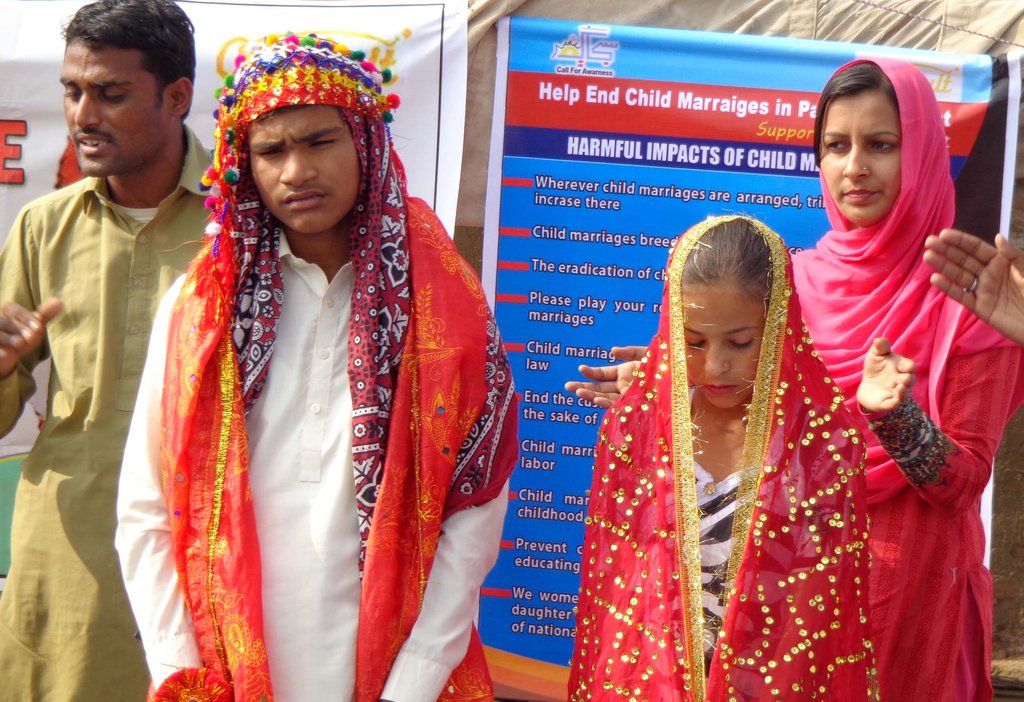
Can poverty lead to child marriages?
The practice of child marriage is being triggered greatly in the lower class of society. Imagine this. A father of five daughters, desperately trying to make ends meet. His meagre earnings barely cover his family’s basic needs. On top of that, he faces constant pressure from his landlord to repay the small loan he took years ago. Calls and threats haunt him in his sleep. Caught in the despair of threats and daily survival, he is forced to give away his youngest to the landlord’s son. The youngest daughter, who is still just a child, had her dreams of being top of her class left unfinished.
Monsoon Brides:
Climate change into the mix and things get even messier. When disaster hits and families lose everything, marrying off daughters becomes a “solution.” It’s not just a social issue—it’s tied to disaster relief, poverty, and gender dynamics.
The whole “Monsoon Brides” trend is the stuff of nightmares. Every time the floods hit, families on the edge get pushed right over. In places like Khan Mohammad Mallah in Sindh, just in 2024, forty-five girls—some as young as 13—got married off, a third of them right before the rains came. Its survival math has gone toxic. Take Shumaila, 14, and her sister Amina, 13. Both were forced to marry older men—basically sold, because the family had no other way to make it through the floods. Floods rip up every safety net: crops, homes, jobs. Suddenly, a daughter’s worth is “the price of a cow—or less.” People aren’t monsters; they’re desperate. The UNDP says in these disaster zones, girls are a quarter more likely to drop out and get married early. All that progress on gender equality? Washed away in a season. UNICEF says the 2022 floods alone could bump up child marriage rates by 18%—five years of gains, just gone. It gets worse. The 2025 flash floods? Absolute carnage. Sure, the body count isn’t officially tied to child marriage, but let’s not kid ourselves—every climate disaster just makes girls more vulnerable to being married off as a “fix.” The law’s there, but when the water rises, so does the chaos. A bunch of provinces still let girls marry at 16, and local officials sometimes just look the other way. It’s even worse when disaster strikes and everyone’s scrambling to survive.
You can’t call Pakistan flood-resilient if you ignore what happens to girls. Disaster relief needs to have child protection baked in—cash aid, help getting kids back in school, and safe spaces to land. The rules about marriage age and registration need to stay solid, even in a crisis. Recovery efforts can’t just rebuild houses; they have to rebuild hope for girls, too. Otherwise, every monsoon just sweeps away more than bricks and mortar—it steals childhoods, dreams, and choices, one storm at a time.
Bottom line? Child marriage in Pakistan isn’t some harmless tradition. It’s a full-blown crisis that shreds childhoods, education, and lives. Until people stop hiding behind culture and start giving a damn about girls’ futures, this cycle’s just gonna keep spinning. This isn’t just a story of individual struggle; this is the living reality of many in Pakistan. It is a reflection of how economic struggles and lack of support send an average man into the misery of making decisions that reverberate through generations.
In Sindh, daughters are mostly sold off at a very young age to pay debts to the wealthy. This prime reason has become a driving cause of child marriage in the rural areas of Pakistan.
What happens when girls are forced into child marriages?
● Economic impacts
Child marriages profoundly impact the financial stability and independence of girls and strip them away from their financial rights as well. Some families marry their daughters off at the ages of 8 or 10 just to make sure they don’t ask for their share in inheritance. This limits the girls’ opportunities to gain lifelong skills and restricts their autonomy over their own lives.
● Maternal health risks
Girls married off at a very young age to older men face higher risks of pregnancy-related complications. As if bearing a child before even turning 15 is not enough of a pain for the girl, complications in early pregnancy are the leading cause of higher mortality rates among child brides. Lack of prenatal care among child brides and increased chances of domestic violence during pregnancy are also pretty common results of child marriages. Such child brides are treated worse than street rats and are often left in miserable conditions where they can’t even recognize their own features. The abuse and brutal torture they face daily, and isolation, leave them haunted and traumatized for the rest of their lives, making them lose the little thread of hope they kept holding onto every day.
It gets uglier. July 2025, Rawalpindi—Sidra Bibi, 18, gets murdered by her own family for marrying a man she chose. Nine arrests, including her own dad. Yeah, that’s the price some girls pay for dreaming about choosing their own partner. Flip the script to Bahawalpur, same month. Police actually stop a
13-year-old’s wedding—her dad, groom, and the nikkah khwan all in jail. A rare win, but it’s the exception, not the rule.
Let’s talk about legalities now…
Child marriage is legally banned in Pakistan. Yes, you heard it right. With so much legislation in place and the development sector funding the cause, it still prevails in 1 out of every 5 homes in the rural areas of Pakistan. Pakistan’s legal framework for child marriage became decentralized after the 18th amendment, and every province became responsible for passing its own legislation.
 Bill to curb child marriages passes parliament in Pakistan
The latest federal act being the Child Marriage Restraint Act 2025, passed by the Islamabad Capital Territory, sets 18 as the legal age to marry for both girls and boys, otherwise paying strong penalties for the violation of the law. Nonetheless, such laws seem like showpieces for the people to be displayed on mantles of injustice. Making a law and then just waving it around is pointless. Islamabad’s move looks good on paper, but if the country doesn’t connect legal words with real-world checks, support, and loud
community buy-in, it’s the same old story—just in new wrapping. Pakistan’s big shots—politicians, imams, you name it—need to pick a side. Are they gonna honor their international promises and protect kids, or keep selling out childhoods like spare livestock?
What has gone wrong?
Such intricate legislation needs careful and strict implementation. However, law enforcement still remains weak in Pakistan, especially when it comes to handling such sensitive issues. The cultural resistance to child marriage laws still persists as a continuous issue in the effective implementation of child marriage laws. Mostly, the general public of lower classes are not aware of such legislation and remain bound in the shackles of cultural traditions and economic
burdens. Corruption in the legal system and resource constraints are also another few issues within themselves. Restricted access of the lower class to adequate medical facilities in rural areas also hinder timely intervention and prosecution because age testing through medical verification is rarely done in such areas.

Conclusion:
The notion of child marriage is more multifaceted than it seems, and no matter how much we discuss such issues, it still remains under-discussed, and no action on the ground seems adequate to solve this social evil. Such marriages fuel the existing patriarchy in South Asian society and prevent child brides from acting on their free will and realizing their true potential as individuals. If Pakistan can build satellites and host international summits, surely it can figure out how to keep girls in school and out of forced marriages. This isn’t rocket science—it’s about guts, money, and finally admitting that “tradition” isn’t a free pass to ruin lives. The world’s not fooled by fancy speeches; what matters is whether fewer little girls disappear into “married life” and fewer families mourn in silence.
Child marriage is not a tradition worth preserving — it is a crime worth ending. The future of Pakistan lies not in the hands of child brides, but in educated, empowered girls who can shape the nation’s destiny. It’s time to replace customs that steal childhood with choices that secure it. Enact a national “Educate to 18” policy that would bind government welfare assistance to school attendance and make education free and mandatory for all girls and boys until they turn 18. In addition, a uniform marriage age law would be strictly enforced in every province, legal loopholes would be closed, and community awareness campaigns would be launched to combat cultural norms that support child marriage.
This strategy addresses poverty, damaging customs, and a lack of education all at once.
“Child marriage is not just a tragedy for young girls; it is a disaster for social development.”
“Ending child marriage is not about fighting tradition — it’s about fighting injustice.”
“We cannot claim progress while our daughters are still sold to tradition.”
Neither Sada-e-Watan (Melody Media Productions) nor its sponsoring partners make any warranties or representations as to the accuracy, applicability, completeness, or suitability for any particular purpose of the information contained herein. Sada-e-Watan (Melody Media Productions) and its sponsoring partners expressly disclaim any liability arising from the use or misuse of these materials and, by visiting this site, you agree to release Sada-e-Watan (Melody Media Productions) and its sponsoring partners from any such liability. Do not rely upon the information provided in this content when making decisions regarding financial or legal matters without first consulting with a qualified, licensed professional.