













USA

USA

INDIA

India

BANGLADESH

BANGLADESH

NEPAL

Nepal

FIJI

FIJI

PAKISTAN

Pakistan

Melody Media Productions

Excellence in Broadcasting!

Pervez Saleem

(Producer/Director)

Parents and sex education: appropriate touching and inappropriate touching. Why is it so important?

BY Eisha Tir Raazia
Bachelor of Engineering(BEng)
Aerospace engineering

Parents and sex education:
appropriate touching and inappropriate touching.
Why is it so important?
:والدین اور جِنسی تعلیم
مُناسب اور نامُناسب چُھونا
یہ اِتنا اہم کیوں ہے؟
माता-पिता और सेक्स एजुकेशन
सही और गलत तरीके से छूना
यह इतना ज़रूरी क्यों है?

“We’ve tried ignorance for a thousand years. It’s time we try education.”
“Sex education is not only about having sex, but it is also important to look at the health and reproductive system, and protecting the body from infections.”
“If you are not intentional about talking with your children about sex, you may never get around to it. You will never feel like they are old enough or you are prepared enough.”

Download Angelic Children Gathering Image - Angels, Children, Globe | StockCake

Sex is an adult thing, this is true. Knowing the proper names for body parts, respecting other people’s bodies and your own, private parts of our bodies, where babies come from, and body changes are all important subjects to discuss with our children. You can have simple conversations like these without ALL the details. Your child will not lose their innocence by simply talking about sexuality. Don’t let this fear stop you.

“Even if you do not feel fully prepared, even if your kid rolls their eyes, even if you wish you started years ago, it is never too late to begin having ongoing conversations about sex with kids.”

In our homes, we spend years teaching children how to be polite. We teach them to lower their gaze before elders, to offer their seats, to hug relatives on Eid whether they want to or not, and above all, never to answer back. What we rarely teach them is how to say “No.”

Think about what a five-year-old is already taught to know about safety. They know not to touch a hot stove, they know not to play with electrical sockets, they know not to open their door for strangers. We teach these things because we know that children need to recognize danger before they can protect themselves. When it comes to their own bodies, however many of us suddenly become uncomfortable.

Page 10 | Child sex education Images - Free Download on Magnific (formerly Freepik)

A child may know not to talk to a stranger, but not know that someone they know can cross their boundaries too. They may know they should listen to elders, but not know that they can refuse an unwanted touch. They may even know something feels wrong, but have no idea who they can tell. Body safety is no different from any other kind of safety. Who is allowed to touch them? Which parts of their body are private? What should they do if someone makes them uncomfortable? What if the person is someone they already know and trust? And, perhaps most importantly, who should they tell? In almost every Pakistani home, these questions are simply never discussed.

“Bachay hain, inhain kya pata.”

But children do need to know. Not every detail, and certainly not in a way that frightens them. They need simple, age-appropriate lessons about their bodies, boundaries, unsafe behavior and speaking up. And keeping them uninformed does not necessarily keep them innocent. Sometimes, it leaves them unprepared.

he Problem with Keeping Children “Innocent”

There is a common misunderstanding that talking to children about abuse, private body parts, or inappropriate behavior will expose them to things they are too young to understand. The intention may be protective but there is a difference between exposing your child to something inappropriate or teaching them how to protect themselves from it.

A child does not need an adult level explanation of sexuality. They need simple information that matches their age.

  • They can learn that their body belongs to them and anything making them uncomfortable is important to address.

  • They can learn the name of their body parts (and spare me the “haw-hayes” please).

  • They can learn that no one has the right to make them feel uncomfortable.

  • They can learn that they can say “NO”, even to someone elder than them.

  • They can learn that if someone tells them to keep an uncomfortable secret, they should tell a trusted adult.

These are not lessons that take away childhood but basic safety lessons.

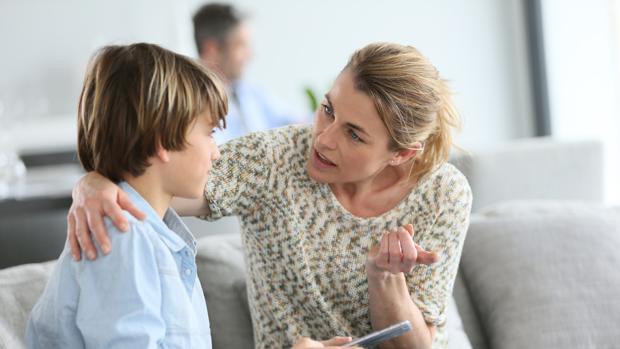
Parents teach Images - Free Download on Magnific (formerly Freepik)

“Don’t Talk to Strangers” Is No Longer Enough

For years, one of the most common messages given to our children has been, “don’t talk to strangers.”

But abuse doesn’t always come from a stranger. It can come from a relative, neighbor, teacher, family friend, older cousin, Maulvi everyone trusts or anyone a child has been taught to trust. Predators do not always look dangerous either. Often, they gain a child’s trust through attention, gifts, treats, slowly crossing boundaries while making it look like affection or fun.

“We cannot protect children from something they have never been taught to name, recognize or report”

That is why children need to understand unsafe behavior, not just unsafe people. They should know that they can say no to unwanted touch, walk away when something feels wrong, and tell a trusted adult if someone asks them to keep an uncomfortable secret or crosses a boundary. But we also need to remember that children can freeze, stay silent or be too scared to say no. That never makes the abuse their fault. The goal is not to make children afraid of everyone, but to help them recognize when something is wrong and feel safe enough to tell us. If stranger-danger is where our safety education ends, we haven’t given children the tools they need to recognize abuse.
NCDPI's inadequate curriculum on sex education holds serious consequences.

What Are We Afraid to Teach Them?

Perhaps the biggest obstacle is the discomfort of adults themselves. In Pakistan, conversations about sex education are still shaped by taboo and stigma. Many parents worry that teaching children about private parts, inappropriate touch or abuse will expose them to things they are too young to know. There is a difference between exposing a child to something inappropriate and teaching them how to protect themselves. A child does not need complicated explanations.

We can start with teaching children about privacy, using the correct names for their body parts, explaining boundaries, and letting them know that asking questions is never shameful. There is nothing inappropriate about teaching a child how to recognize inappropriate behavior. What is dangerous is leaving them without the words to understand it.

And then there is Internet. Children are growing up with cameras, messaging apps (WhatsApp), social media apps (Instagram and TikTok) before they are old enough to understand manipulation. They need to know that no one should ask them for private pictures, ask them to keep the conversation private or force them into sending something they are uncomfortable with. The rules of body boundaries apply online too.

How Parents Should Approach the Conversation

Yes, there is also wrong way to have this conversation too. We shouldn’t make them believe that every adult is out there to hurt them. The goal is not to make children afraid of people, but to help them understand their boundaries and feel safe enough to speak when something is wrong.

Parents can start with simple, everyday conversations. Teach children that they have the right to say no to uncomfortable touch, and that they can always tell a trusted adult if something makes them uncomfortable. It doesn’t have to be a scary lecture. Sometimes, a few encouraging words are enough to help a child understand that their feelings matter, and that their bodies belong to them, no matter how young they are.

But there is another part of this conversation that matters just as much i.e. “children need to know they will not be blamed, if someone does something inappropriate to them”. A child may already be frightened by what happened. The last thing they need is to worry about being scolded for it.

“Mama ghussa karengi”

“Koi mujhay trust nahi Karega”

These are the type of fears which can keep a child silent. They may worry that no one would trust them, especially if the person involved is someone the family trusts. That’s why children need to hear, time and again, that they can come to their parents with anything, even if they are scared, and even if they think they have done something wrong.

Start saying this to your children: “You can always tell me. I will listen. You will not be blamed for what someone else did to you”.

How Should I Talk to My Kids About Sex? The Importance of Discussing Sex, Consent, Body Safety, and Pleasure - Take Root Therapy

“But What If They Don’t Understand?”

Children do not always have the words to explain what happened. They may know something felt wrong but may not understand why. Fear, shame, or worry about getting in trouble can make staying silent feel easier. Research on Pakistani parents has also found gaps in how families talk about private body parts and abuse, despite understanding its importance. Children cannot be expected to speak openly if they don’t feel safe talking about uncomfortable things.

Sometimes a child may also behave differently without saying anything at all. They may suddenly avoid a person or place, become unusually quiet, have trouble sleeping, or seem anxious around certain situations. None of these signs prove abuse on their own, but they are reasons to pay attention rather than dismissing a child as being difficult or dramatic.

A child may not clearly say they were hurt. They might simply say, “I don’t like going there” or “I don’t want to be alone with him.” These small signs matter. If a child does tell you, how you respond matters. Stay calm, listen, let them know they can come back and talk whenever they are ready. Do not blame them, question them repeatedly or immediately confront the person involved in front of the child. Instead of asking, “Why didn’t you tell me?” say, “I’m glad you told me.” Then get the right help and take the disclosure seriously.

What Must We Teach Them: The Actual Practical Rules

“Good touch” and “bad touch” can be a good starting point, especially for younger children, but it is not enough. Children also need to know that their body belongs to them, they can say no, walk away from something that feels wrong, and tell another trusted adult if they are not listened to. Most importantly, they need to know that freezing, staying quiet, or being too scared to say no is never their fault.

The four pillars of child safety:

  1. The Swimsuit Rule:

Teach children that the parts covered by swimsuit are strictly private. No one including relatives, friends, teachers, neighbors etc is allowed to see, photograph or touch those areas without any reason. Nor should any adult ask a child to look at theirs.

  1. Safe vs. Unsafe Secrets:

Tell your child that safe secrets are temporary surprises like a birthday present. Unsafe secrets are anything involving physical touch, private photos or threats like “Don’t tell your mom”.

  1. The “No, Go, Tell” Rule:

Teach the child that if anyone makes you uncomfortable or scared, you “say NO Immediately”, “Go away instantly” and “Tell a trusted Adult”.

  1. Unconditional Belief:

Parents must be a child’s safe space; someone they can trust to believe and protect them if anyone makes them uncomfortable.

None of this means a child is responsible for preventing their own abuse. Children can freeze, stay quiet, be manipulated, or simply not understand what is happening. The responsibility always remains with the person who abuses them and the adults responsible for keeping them safe.

Talking to your kids about sex – how to get started – Community Education

Case Studies:

Pakistan continues to see thousands of reported child abuse cases every year. NGO Sahil recorded more than 4,000 cases in 2023 alone, while SSDO reported 2,954 cases of child sexual abuse in 2024. Many children are abused by people they know and trust, including relatives and neighbors. And these numbers only show the cases that are reported. Fear and shame keep many others hidden.

  1. The Tragedy of Kasur: Seven-Year-Old Zainab Ansari:

The abduction, rape and murder of seven-year-old Zainab Ansari in Kasur shocked the country. What made the case even more disturbing was that her killer was not a stranger. Imran Ali lived in the same neighborhood and was someone Zainab had no reason to fear. CCTV footage showed her walking with him, unaware of what was about to happen. Investigators later linked him to the assault and murder of several other young girls in the area.

Zainab’s case showed why telling children simply about stranger-danger is not enough. Children also need to understand that danger can come from someone they know, whether it is a neighbor, relative, teacher or family member. Children need to know that they can refuse unwanted touch, move away from situations that make them uncomfortable and tell a trusted adult when something does not feel right.

  1. The 2015 Kasur Child Blackmail Ring, Hussain Khanwala:

In the rural village of Hussain Khanwala near Kasur, investigators uncovered a large child sexual abuse network that had been operating for years. More than 280 children were reportedly targeted, sexually abused and filmed by members of the gang.

The children were then threatened with the release of those videos to their families and to the broader community. In a society where shame and fear can fall heavily on the victim, many of them were too frightened to speak about what was happening. They carried the abuse in silence, fearing what would happen if their parents found out. This is exactly why children need to hear that if someone abuses them, the blame is never theirs.

These cases remind us that protecting child is not just about warning them about danger. It is about giving them knowledge, confidence and safe space to speak when something feels wrong.
Sex education of children at different age stages - With Mona Reda

Conclusion

Maybe we have been asking the wrong question all along. It is not just about how much a child knows about abuse. Do they know that it is okay to say no? Do they know that feeling uncomfortable around someone matters? And if they do speak, do they know that we will trust them?

We cannot protect children from every person or every situation. But we can make sure they grow up knowing that their body belongs to them, their voice matters, and they never have to stay quiet to protect someone else’s feelings. Because teaching a child to speak up means very little, if we don’t listen, when they finally do.

May God Almighty Protect Our Children

Prayer for children's protection and well-being on Children's Day

God Almighty, please keep our children safe from all physical, emotional, and spiritual harm. Surround them with Your angels to guard them wherever they go, whether they are at school, at home, or out in the world. Be their strong tower, their refuge, and a shield against any danger or evil influence that tries to come near them. Give our children wisdom, discernment, and courage to recognize potential harm and walk away from it. Fill our own hearts with Your peace, replacing our worry and fear with trust in Your unfailing strength and constant presence. We place them safely into Your hands today and always…Amen.

Disclaimer:

Sada-E-Watan provides news and opinion articles as a service to our readers. These articles and news items come from sources outside of our organization. Where possible, the author and the source are documented within each article. Statements and opinions expressed in these articles are solely those of the author (reporter/newspaper) or authors (reporters/newspapers) and may or may not be shared by the staff and management of Sada-E-Watan. Sada-E-Watan was created to provide one convenient central location where a user can quickly scan headlines from many news sources. The headlines listed on Sada-E-Watan pages are links to stories on the sites where these stories are located. The goal of Sada-E-Watan is to help readers access stories on web sites that they would normally not have time to view on a regular basis and to add value to the news source sites by mentioning their name on top, so readers can view these sites.

The Sada-E-Watan takes no responsibility for any loss or damage suffered as a result of using the linked websites or as a result of using the information published on any of the pages of the linked websites.
Whilst every effort is made to ensure downloadable content is free from viruses, Sada-E-Watan cannot accept any liability for damages resulting from virus infection. You should take adequate steps to ensure your virus check regularly when using any device. If you have any questions or comments about Sada-E-Watan, please contact us at: radio@sada-e-watan.com. 
BY Eisha Tir Raazia Bachelor of Engineering(BEng) Aerospace engineering Parents and sex education: appropriate touching and inappropriate touching. Why is it so important? :والدین اور جِنسی تعلیم مُناسب اور نامُناسب چُھونا یہ اِتنا اہم کیوں ہے؟ माता-पिता और सेक्स एजुकेशन सही और गलत तरीके से छूना यह इतना ज़रूरी क्यों है? “We’ve tried ignorance for a thousand years. It’s time we try education.” “Sex education is not only about having sex, but it is also important to look at the health and reproductive system, and protecting the body from infections.” “If you are not intentional about talking with your children about sex, you may never get around to it. You will never feel like they are old enough or you are prepared enough.” Sex
A Horrific, Repulsive Face of Society: Sexual Abuse of Children in Madrassas

By Shagufta Mobeen
Educationist,
M.Sc Zoology + B.Ed

A Horrific, Repulsive Face of Society:
Sexual Abuse of Children in Madrassas
:مُعاشرے کا ایک بھیانک، مُکروہ چہرہ
مَدرسوں میں بچوں کا جِنسی اِستحصال
:समाज का एक भयानक और घिनौना चेहरा
मदरसों में बच्चों का यौन शोषण
 

“Abuse is never deserved, it is an exploitation of innocence and physical disadvantage, which is perceived as an opportunity by the abuser.”
“No human being should be maltreated under any circumstances. We are all wonderful creation of God. May we affectionately love one another.”
“Children don’t get traumatized because they are hurt. They get traumatized because they’re alone with the hurt.”

Introduction: A Widespread and Silenced Problem

Sexual abuse badly affects or is widely spread in homes, streets, markets, and other places. It affects religious institutions too, especially madrassas. No place is safe for children. If we look at the research, we know that it seems to be mainly connected to power dynamics. When power dynamics are imbalanced, the inevitable result is abuse.

Pakistani students of a madrasa or Islamic school recite the Quran at a seminary in Islamabad, Pakistan in 2015

There are a lot of madrasas in Pakistan, and millions of children are going to madrasas with the intention of learning the Holy Quran, receiving religious training, and developing good morals. Madrasas particularly claim to be centers of religious guidance, knowledge, training, and character building, where children are nurtured spiritually and morally. Such institutions are expected to provide moral guidance. Here, children aged 5 to 15 are going through a sensitive stage and need protection, guidance, and trust. Children are not empowered. Children are small. The majority of madrassah students come from poor families. Mostly, there are male teachers in madrassahs. Children are at the mercy of male teachers.

“The true character of a society is revealed in how it treats its children.

Globally, children are at risk of sexual abuse. In practically every region of Pakistan, child abuse occurs. Over 2 million pupils are taught at Pakistan’s more than 22,000 madrassas. However, there are a lot more madrassas that are not registered. A terrible reality exists beyond the walls of these esteemed establishments: thousands of youngsters are sexually abused in deafening silence. Fear prevents the kids from criticizing clergy, and clerics will undoubtedly deny any wrongdoing. Any criticism of a cleric is viewed as an assault on the faith.

In dramatic about-face, Mufti Aziz denies sexually assaulting student, says police pressuring him to confess - Pakistan - DAWN.COMMufti Azizur Rehman after he was detained and charged with sexually abusing a student at a religious school, in Lahore.

“I am very ashamed at what I did,” Mufti said during the interrogation.

Mullahs, who pretend to be pious and sport a long beard, commit these heinous crimes behind closed doors while publicly denouncing people who are liberal, open-minded, and clean-shaven. Many of these men engage in these immoral acts despite claiming to be pious. Religious leaders were frequently sexually unsatisfied and under mental strain, attempting to repress their sexual urges as a sign of their
strong religious beliefs. Such religious authorities denigrate Islam. In addition to assaulting the students, they had taught them how to act in this way toward one another.

Lack of Certifications.
Psychological and emotional training is necessary for teachers, but in madrassas, mostly teachers do not hold any certificates. And teacher certificates are not mandatory in madrassas. There is no check on emotional intelligence, so they cannot understand the moral responsibilities toward the children.

How Abuse Is Concealed and Silenced
Because they are aware that children’s allegations of sexual abuse are far less likely to be accepted, some clerics therefore target vulnerable children. Thus, priests are encouraged to continue their actions without consequence. Many victims of child sexual abuse endure silent suffering as they lack the vocabulary to express what is occurring to them. When parents learn of abuse, social pressure may also keep them from reporting it, causing it to go unreported.

Pakistan's madrasahs need to be shut down to stop this epidemic of child sexual abuseMaulvi (religious cleric) Naimat Yaseen raped a 12 year old boy in the Mehrab of Masjid in Larkana Sindh. SSP Larkana Rohail khoso confirmed the arrest of Pedophilia.

Maulvi’s sexual abuse of children is a widespread issue, according to authorities, and the numerous allegations they have received are only the top of the iceberg. However, none of the numerous reports have led to a Maulvi being found guilty. In Pakistan, the influential religious Qari, also known as the Maulvi, band together when one of them is accused of abuse. By accusing victims of blasphemy or defamation of Islam, they have been able to conceal the pervasive abuse.

Families choose to dismiss the charges because they are overcome with guilt and fear that the stigma of being sexually assaulted will follow a kid into adulthood. Usually, when a family forgives the Maulvi, the inquiry comes to a conclusion when the allegations are dropped. Maulvis frequently target young males who have not yet reached puberty. Boys, who are less likely to disclose a sexual assault, were often accessible to and trusted by the Maulvis.

“Trauma is not what happens to you. Trauma is what happens inside you as a result of what happens to you.”

The Cloak of Holiness
On 15 July 2026, 12-year-old Imran Ali died after being sexually abused at a madrassah. The incident occurred in a madrasa in Tando Allahyar district of Sindh. Nobody deserves to go through that, especially in a place of worship.

When an incident of sexual abuse occurs in a madrassa, it becomes a cause of concern not only for an individual but also for the entire society. Any kind of abuse of such children can have profound negative effects on their mental, emotional, and physical health and even loss of life. Teachers who sit in madrassas are people to whom a cloak of holiness is thrown. When they do any sexual action or sexual harassment comes up, people make interpretations of it. Because of this, the cloak of holiness. But in other places or in other institutions, there are no interpretations, and no one is defending the abusers. But in madrasas, people defend sexual abusers.

Video Credit: France 24 English/YouTube

Case Studies from Across Pakistan

Muhimman, Pakpattan
On Tuesday, February 4, 2020, Muhimman, a Pakistani student, was allegedly mistreated by a cleric in Pakpattan, Pakistan. He was raped earlier that year by a clergyman at the religious school he often frequented.

Yaous, Kohistan
One of those youngsters is Yaous, eight years old, from the isolated northern Kohistan region of Pakistan. It was a holiday in the madrassa in late December of last year. The majority of the pupils were gone. A few classmates and Yaous were the only ones who had stayed behind. His parents could not afford the cost of transportation to his village, which was hours distant. For his age of eight, Yaous is petite, with subtle features. During an interview with the AP, Yaous’ small body trembled as he described what happened. Yaous’s father wanted to educate his son despite being a lowly laborer with no formal education and speaking only the local tongue. He had heard that some local boys had attended a religious school at Mansehra, several hundred kilometers south of his hamlet. His father hadn’t talked to his son for months, since he couldn’t even afford a phone. Yaous claimed he was alone inside the mosque with the cleric Qari Shamsuddin while the other pupils had gone to wash their clothes. According to the child, Shamsuddin took hold of his hand, pulled him into a room, and locked the door. “It was extremely cold. I didn’t understand why he was taking my warm clothes away,” Yaous said in a barely audible whisper.

He stated the cleric reached for a stick, about 12 inches long. “I cried and screamed because of the pain, but he wouldn’t stop,” Yaous remarked. After being confined for two days and repeatedly raped, the child became so ill that the cleric took him to the hospital, fearing he was going to die.

According to Dr. Faisal Manan Salarzai at the hospital, Yaous shouted whenever anyone tried to approach him. Because of his small stature and delicate appearance, Salarzai referred to Yaous as “the baby.” The child had numerous bruises all over his body, including on his head, chest, legs, and other areas, according to Salarzai. Suspecting sexual abuse, Salarzai ordered his transfer to the isolation unit and examined him. Brutal and repeated attacks were discovered.

Pakistan Madrassa Abuse

However, according to Salarzai, Yaous’ uncle claimed the boy had fallen, rather than that his nephew had been sexually molested. “At last, the uncle said: If news spreads in our area that he has been sexually assaulted, it will be very difficult for him to survive in our area,” Salarzai said. “He was not willing to talk about it or even think that he was sexually assaulted,” Salarzai said.

However, the evidence was overwhelming, and the doctor contacted the police. The cleric was arrested and is currently in jail; police matched his DNA samples to those found on Yaous. “I want this mullah hanged. Nothing else will do,” said Yaous’ father, Abdul Qayyum, who expressed shame that he hadn’t spoken to his son for over three months prior to the attack.

Misbah, Basti Qasi, South Punjab — “Forgive Me”
Religious clerics do not simply sexually abuse young boys. Religious leaders have also targeted young girls, like Misbah from the village of Basti Qasi in south Punjab. Misbah, 11, who had trouble speaking, said that after three years of studying the Quran in the mosque next door, she was sexually assaulted. She had stayed behind to sweep the mosque when the attack occurred one morning. The cleric, whom she trusted, asked Misbah for help after the other children were sent home.

Speaking in her native Saraiki, she said: “I had just started cleaning when he slammed shut the mosque door. I had no idea why, but he suddenly grasped me and dragged me into a separate room. I was crying, shouting, and screaming.” She was unable to estimate the duration of the attack. She could only recall shouting for her father to come to her aid, but the cleric would not stop, she said.

Mohammed Tanvir, her uncle, was the one who saved her. He had stopped by the mosque to use the toilets on his way to college. Outside the door, he saw a pair of children’s shoes. “Then I heard screams from within; she was begging for her father,” Tanvir said. His niece was sprawled on the floor, unclothed, when he opened the door. “She appeared to have passed out,” he said. Her pants were in a corner, stained with blood. At his feet, the religious leader fell. “He kept begging, ‘Forgive me,’” Tanvir said.

After being arrested, the religious leader was released on bail. Muhimman’s aunt claimed there had been a deliberate attempt to quiet the family following the attack on the young boy who had proudly displayed his writing abilities. Shazia stated, “The villagers refuse to expel him because they believe that they are our spiritual leaders and the imams of our religious places.” “They all came to our home and they know we are poor and he is an imam and they said we should forgive him but we won’t,” she said, adding that her father, Muhimman’s grandfather, refused.

Despite the fact that the attack was captured on camera by a number of village boys who broke down the bathroom door and scared the cleric, Shah, away as he attempted to rape Muhimman, Shah is on the run. Police say they are investigating and have filed a charge, though several neighbors near the mosque say police are not actively looking for him. They appeared angry, but also accepted that he would not go to jail. Shazia stated: “A beast like that should not be spared at all.”

Video Credit: AP/YouTube

Rawalpindi Case
On Wednesday, Rawalpindi reported that Ibrahim Yaseen had allegedly sexually abused a 12-year-old child in a madrassa. The child was in a madrassa at the village mosque, a two-story structure, according to the FIR filed under the authority of the Gujar Khan Police Station. The boy was sitting in the assigned place when the accused allegedly approached him after he completed his task of calling the prayer (Azaan). According to the complainant, the suspect filmed a video of the child being sexually molested, which eventually went viral.

Sahiwal Case
Omer Hayat, a prayer leader (Qari), and Sanwal Parvez, a caretaker of a mosque and seminary in Ada Shabeel, Kameer Town, Sahiwal, were both charged by the Kameer Police with molesting, raping, and filming students at the madrassah Jamia Noor ul Quran, situated at Chak 116/9-L, Ada Shabeel. The accused’s phone was found to contain dozens of videos of sexual acts he had recorded. The Kameer police detained both suspects after discovering more than 60 (63, to be exact) videos of severe sexual violence in a single folder; other folders were password protected.

Despite his polio-related disability, Sanwal Parvez, the caretaker of the seminary, was also accused in the June 18 FIR of repeatedly raping students and filming the abuse. It later emerged that he had also been raping his own disabled sister. According to the FIR, Parvez was a fellow instructor and caretaker from when the mosque and madrassa were established years earlier by the Qari, who also made amulets.

HOW ISLAMIC MADARSAS ARE SEVERE THREAT TO CHILDREN RIGHTS AND SOCIETY. Even last year December 2017, One of the Lucknow Madarsa was exposed where 51 Minor Girls been captive and Sexually abused

The complaint was filed after a local laborer took his sister-in-law to the madrassah in search of an amulet to treat a headache. The caretaker allegedly led the woman into a room, sexually assaulted her, and, with the assistance of an unnamed student, filmed the assault when the Qari was not present. He later blackmailed her and demanded money using the video.

When the matter was brought before village elders, it was discovered that the phone also contained multiple videos allegedly capturing the caretaker and the Qari raping and assaulting children, as well as videos of madrassah pupils being forced to abuse one another while the caretaker was present.

Nine-Year-Old Boy Raped by a Madrasa Maulvi (religious cleric)
A madrasa maulvi raped a nine-year-old child in Pakistan. The victim said: “I was crying, I was being victimized by him. He put my shirt in my mouth. I spent the entire night crying. I asked my parents to please take me out of the madrassa in the morning. “The accused cleric stated: “I’ve been married for six or seven years, and my wife is attractive. Why would I harm the child in this way?”

Other Reported Cases
A case of sexual abuse in a madrasa in Lahore shocked the nation.
1. A student named Sabir Shah said that Mufti Aziz-ur-Rehman sexually
assaulted him for more than a year. Rehman was a member of Jamiat Ulema-e-Islam a group of religious scholars who follow a very traditional view of Islam. It was not an isolated occurrence.
2. Additional reported incidents include: a video of a Shiite priest abusing children, which surfaced shortly after.
3. A cleric in Pak Pattan who raped a nine-year-old child in May 2017.
4. A cleric in Lahore charged with raping a minor in 2018.
5. A cleric in Multan who sexually abused a thirteen-year-old girl with a disability in 2019.

Cardiff imam jailed for 13 years for abusing girls at Qur’an lessons

Mohammed Haji Saddique, 81, sexually assaulted young girls in front of class and slapped students who made mistakes

Cardiff imam jailed for 13 years for abusing girls at Qur'an lessons | Cardiff | The GuardianMohammed Haji Saddique taught at Madina mosque in Cardiff for more than 30 years.
Photograph: South Wales police/PA

The Threat of Serial Offenders
Many such perpetrators escape punishment, as there is often no video evidence or direct witnesses to the incidents, and the affected children are unable to complain due to fear, shame, or pressure. CCTV cameras should be installed at madrasas too, as in other institutions, to improve the safety ofchildren.

When the perpetrator is not repeatedly held accountable, some individuals become serial offenders, increasing the risk of further children being affected. Serial offenders target one child after another because they are mentally ill or psychologically damaged.

The End of Silence and the Arrest of the Criminals:
Lessons from Chakwal
An instructive and painful incident in Chakwal, Pakistan. This incident that came to light in the year 2024 is enough to open our eyes: two teachers of a madrassa subjected 15 innocent children to their brutality. They were busy with this heinous crime for weeks, and the main reason for this was the fear and terror within the children, due to which they did not even mention this to their parents.

This cruelty was exposed when the parents of a 12-year-old boy, seeing knife marks on his body, took immediate action and informed the police, after which the perpetrators were arrested. If the criminals are not arrested, crime increases.

Only one forensics lab in Pakistan
Currently, there is only one forensics lab in Pakistan, and it took the lab four months to analyze one case. The lab’s huge caseload and the length of time reports take cause delays in procedures. This creates issues for the victims’ families and often causes them discontinuing their charges, which gives perpetrators more self confidence.

The government should improve and supply more tools and training so that police, doctors, judges, social workers, and child welfare institutions can respond to reports of child sexual abuse in a timely manner to claims of child sexual abuse.

Children in Pakistan should have a secure childhood.
Unfortunately, such incidents continue largely because police do not assist poor families. Victims report being asked for bribes, with no meaningful action taken afterward, leaving no real authority to pursue legal action on their behalf.

Shared Responsibility
- There must be strict supervision of male teachers, or there must not be any male.
- There should be certifications.
- There should be training.
- There should be psychological tests. Protecting children is a shared responsibility of all of us. Silence exacerbates the problem, while timely awareness, monitoring, and justice play a vital role in its eradication.
- Children are children. Their protection and preservation are shared responsibility of all of us.

Child sexual abuse within Pakistan’s madrassas (Islamic seminaries) is an endemic, deeply entrenched crisis that operates under a severe culture of silence and systemic impunity

In this picture taken on May 4, 2017, Saima Khan* comforts her child who was allegedly raped by a religious cleric in Kehror Pakka, Pakistan. ─ APSaima Khan* comforts her child who was allegedly raped
by a religious cleric in Kehror Pakka, Pakistan. ─ AP

Trauma is a result of an overwhelming sense of danger, powerlessness, and fear. Healing is a result of feeling safe, empowered, and supported. 

The Shield of Impunity

  • Social Stigma and Shame: Severe societal taboos around sex and gender force families to hide the abuse. They fear that public knowledge will permanently taint the child’s and family’s reputation.
  • Legal Loopholes and Blood Money: Pakistan’s legal structure allows out-of-court settlements under Islamic law provisions. Clerics frequently abuse this system by pressuring impoverished families to “forgive” them in exchange for small monetary payouts (ranging from $300 to $800), which forces the police to drop the charges.
  • Blasphemy Weaponization: Whistleblowers, victims, and activists who speak out face immense danger. Clerics and right-wing extremist groups regularly shield predators by threatening victims with counter-accusations of “blasphemy” or “defaming Islam”.
  • Institutional Collusion: Local police are poorly trained in child rights, frequently corrupt, and highly susceptible to political and religious pressure. Investigations are commonly botched, stalled, or shut down entirely.
Monitoring and Data Realities:
  • Data compiled by child protection non-profits like Sahil indicates thousands of annual child abuse cases nationwide, with religious teachers consistently making up a massive percentage of institutional perpetrators.
  • Despite legislative actions like laws banning corporal punishment and the introduction of child protection desks, state enforcement remains functionally absent.
  • Government bodies, such as the Interior and Religious Affairs Ministries, historically minimize the crisis or refuse external oversight to avoid clashing with powerful clerical lobbies.

God watching over his children Photos - Download Free High-Quality Pictures | Magnific (formerly Freepik)

We fervently pray to God Almighty for the safety and protection of innocent children everywhere. Please shield them from harm, illness and danger. Surround them with Your love and send Your angels to watch over them, providing them with secure environment to grow, learn and thrive in life. Amen. 

Disclaimer:

Sada-E-Watan provides news and opinion articles as a service to our readers. These articles and news items come from sources outside of our organization. Where possible, the author and the source are documented within each article. Statements and opinions expressed in these articles are solely those of the author (reporter/newspaper) or authors (reporters/newspapers) and may or may not be shared by the staff and management of Sada-E-Watan. Sada-E-Watan was created to provide one convenient central location where a user can quickly scan headlines from many news sources. The headlines listed on Sada-E-Watan pages are links to stories on the sites where these stories are located. The goal of Sada-E-Watan is to help readers access stories on web sites that they would normally not have time to view on a regular basis and to add value to the news source sites by mentioning their name on top, so readers can view these sites.

The Sada-E-Watan takes no responsibility for any loss or damage suffered as a result of using the linked websites or as a result of using the information published on any of the pages of the linked websites.
Whilst every effort is made to ensure downloadable content is free from viruses, Sada-E-Watan cannot accept any liability for damages resulting from virus infection. You should take adequate steps to ensure your virus check regularly when using any device. If you have any questions or comments about Sada-E-Watan, please contact us at: radio@sada-e-watan.com. 

By Shagufta Mobeen Educationist, M.Sc Zoology + B.Ed A Horrific, Repulsive Face of Society: Sexual Abuse of Children in Madrassas :مُعاشرے کا ایک بھیانک، مُکروہ چہرہ مَدرسوں میں بچوں کا جِنسی اِستحصال :समाज का एक भयानक और घिनौना चेहरा मदरसों में बच्चों का यौन शोषण  “Abuse is never deserved, it is an exploitation of innocence and physical disadvantage, which is perceived as an opportunity by the abuser.” “No human being should be maltreated under any circumstances. We are all wonderful creation of God. May we affectionately love one another.” “Children don’t get traumatized because they are hurt. They get traumatized because they’re alone with the hurt.” Introduction: A Widespread and Silenced Problem Sexual abuse badly affects or is widely spread in homes, streets, markets,
Silent Screams: How Sexual Abuse and Murder Are Tearing Our Society Apart.

By Shagufta Mobeen
Educationist,
M.Sc Zoology + B.Ed

Silent Screams: How Sexual Abuse and
Murder Are Tearing Our Society Apart.
خاموش چیخیں: جنسی زیادتی اور قتل
ہمارے معاشرے کو کس طرح پارہ پارہ کر رہے ہیں۔
साइलेंट स्क्रीम्स: कैसे यौन शोषण और हत्या
हमारे समाज को तहस-नहस कर रहे हैं।

The alarming surge in sexual violence and murder in Pakistan—particularly against women and children—has sparked national outrage and deep societal grief. Reports from human rights groups and medical professionals indicate a distressing rise in both the frequency and brutality of these crimes.
The escalating crisis of sexual abuse, femicide, and child murder is widely seen as tearing at the moral fabric of Pakistani society. Activists, journalists, and religious leaders argue that the crisis is a reflection of systemic failures, harmful cultural conditioning, and a culture of silence.

‘If a woman is killed, they say she fell, she took poison’

Introduction:
“Silent Screams” are sometimes ignored, usually for the basis of fear, shame, and more often an overall indifference. Children often do not report abuse right away because they are scared, confused, embarrassed, or afraid of more violence from the abuser. Touching upon child suffering, bolstered by hiding the truth of their act, horrifying children, folks ashamed or hypersensitive about misrepresentation. As one of the ugliest facets of our reality, child abuse — followed by sexual harassment and even death — is a recurrent global theme. These atrocities steal children’s innocence, their safety, and their future.
Raising awareness is the first step toward breaking this cycle of violence. Child experienced sexual abuse is probably one of the most painful and challenging events a parent can face.
All rape-murder cases of children are awful, but some are more awful than others. People involved in such horrific incidents do not deserve any leniency. Children deserve protection, care, and love—not fear, violence, or abuse.

What is Child Sexual Abuse?
It is any sexual activity between adults and minors or between two minors when one forces it on the other. This includes sexual touching and non-touching acts like exhibitionism, exposure to pornography,

photography of a child for sexual gratification, solicitation of a child for prostitution, voyeurism, and communication in a sexual way by phone, Internet, or face-to-face. It is a crime punishable by law that must be reported. In some disastrous cases, abuse is followed by murder in an attempt to hide the crime, resulting in the loss of innocent lives. Such incidents not only destroy the future of the victim but also leave permanent pain and trauma for families and the public.

Why Are Child Sexual Abuse and Child Murders on the Rise?
Children are innocent and unaware of the dangers around them. In childhood, Childs learn to walk, talk, move, speak, and learn about the world. Children are delicate like flowers, and men break them through
their societal indifference. Children have less power to defend themselves; that’s why Men Crush the Childs. A child cannot be expected to protect themselves from such threats.

Video Credit: Hamariweb/YouTube

The Numbers Behind the Silent Screams:
According to Sahil, an organization that works on child protection

In the years 2012-2016, a total of 17,205 cases were reported. Over 3,830 cases of child abuse were reported in newspapers in 2018,. The report documented 3,630 cases of child abuse in the first six months of 2022 and a total 4253 cases in 2022. In 2023, Sahil organization indicated 4,213 cases;
in 2024, 3364 cases; and in 2025, 3630 cases were reported. In 2026, Childs still facing horrific sexual violence.

Child Protection Laws and Support Systems in Pakistan.
- Child protection helplines (1121)
- The Criminal Law (Amendment) Act, 2016
- Zainab Alert Response and Recovery Act, 2020
- Child protection units
- CCD Established in February 2025

“No society can call itself just or peaceful while its children live in fear and insecurity.”

Who are the Perpetrators?
Many perpetrators are known to the victims’ acquaintances, relatives, or neighbors. Most child sexual abusers are men and may be respected members of the community drawn to settings where they gain easy access to children when they are alone and away from the supervision of trusted adults. If a man has a conscience, honor, and basic human decency, he would never prey upon a child. Exploiting or harming a child is not a sign of strength; it is a reflection of moral failure, cruelty, and the complete absence of humanity.

How does Child Sexual Abuse happen?
To Know About how abuse occurs is essential for prevention. Much of child sexual abuse occurs when a child is alone, such as walking down a road by himself, alone in a house, being alone in a school building, or being left alone in places like mosques and other places. often look for opportunities where children are separated from parents, teachers, or guardians and are unable to seek immediate help. They come from all age groups, races, religions, and socioeconomic classes. Most victims know and trust their abusers. It isn’t strangers our children have to fear most. Child sexual abuse often happens when an offender takes advantage of a child’s trust, innocence, vulnerability, or lack of supervision.

The most horrific cases are highlighted.
The following are some cases that received significant media coverage and public attention.

Zainab murder case, Kasur (4-9 January 2018):
Zainab disappeared on 4 January, and her body was found five days later. Police found Zainab Ansari’s body on a rubbish dump in Kasur district near the eastern city of Lahore. Residents of the area have said the murder was the 12th such incident in a year. Police investigators said later that they had matched DNA from eight girls’ bodies, including Zainab’s, with the convicted killer, Imran Ali, 24. “The court handed down death on four counts and life imprisonment to Imran Ali in the rape and murder of the little girl, Zainab.”


Farishta Mohmand (2019, Islamabad, Pakistan)
The murder of a 10-year-old Pakistani girl who was allegedly raped. Farishta Mohmand’s body was found in woodlands near her home in the capital Islamabad.

Murder of a 7-year-old girl in Sargodha, June 22, 2026.
Muntaha Zahra Case
A 7-year-old girl was allegedly raped and murdered inside a grocery store after she went there to buy something. Her throat was cut, and her clothes were torn when police discovered her body.
Murder of 3-year-old girl in Karachi. 23 June-2026.
The body of Kulsoom Mohammed Qasim, who had left her home to play outside in Muslimabad Colony on Tuesday afternoon, was found stuffed in a gunny bag at a main gate of the street leading to her home near Mustafa Masjid in Muslimabad later that evening. Doctors confirmed that she was subjected to “violent rape” before being murdered.


Murder of 6-Year-Old Boy in Karachi. 8 July- 2026.
A missing six-year-old boy was found raped and murdered near Karachi’s Lea Market on 8 July 2026, Wednesday, with the police claiming to have arrested a 20-year-old suspect who happened to be a
neighbor of the victim. After allegedly killing the boy, the suspect kept the body on the rooftop
of his house. It was later thrown from the third floor into an empty plot on Tuesday night, wrapped in a gunny bag, according to the DIG. Residents of the area noticed the incident and opened the bag, discovering the body.
Hope and Solutions: A Call to Action
Change is possible in such a critical problem.

1. Strengthening laws and their strong Implementation can lower the cases.
2. Neighbors and citizens should keep their eyes open in their surroundings.
3. Parents should alert their child to the risks in the world and shield them from harm in the future. You can also tell children that people and the world are dangerous.

Conclusion
* Preventing child Sexual Harassment before it starts is possible.
* The “Silent Screams” of abused children demand our attention. Every number shows a child whose childhood has been stolen. By breaking the silence and implementing laws, we can create a safe Pakistan and a world where children spend safe lives.
* Awareness into action. Report abuse. Support survivors. Protect the innocent. The time for change is now.
* Therefore, the criminals involved in such cases should be given punishments like public hanging so that the children can be safe.
* All parents try to develop a protected environment for children free from all forms of violence, especially child sexual abuse.
* Do Not Leave Your Children Unattended. Children depend on adults for their safety and protection. Even a few moments of isolation can create opportunities for offenders to target them.

The Call for Justice and Protection
Child rights organizations, religious leaders, and activists stress that the government and the justice system must take swift, exemplary action to protect the innocent.

Resources for Help and Reporting in Pakistan:
If you suspect or witness child abuse or violence in Pakistan, there are state and non-profit services available to help: 
  • Child Protection & Welfare Bureau: Call 1121 (Available 24/7 in Punjab).
  • Zainab Alert Line: Call 1099 (Federal missing and abused child reporting).

“All emotions, even those that are suppressed and unexpressed, have physical effects. Unexpressed emotions tend to stay in the body like small ticking time bombs—they are illnesses in incubation.”

I am deeply aware of the pain caused to any victim of child abuse, especially at the hands of a trustworthy person within the family and “so-called religious environment”. I do encourage any person who believes they have been a victim of abuse to come forward and to inform the police.

When will there be justice for Pakistan’s victims of child abuse?

Disclaimer:

Sada-E-Watan provides news and opinion articles as a service to our readers. These articles and news items come from sources outside of our organization. Where possible, the author and the source are documented within each article. Statements and opinions expressed in these articles are solely those of the author (reporter/newspaper) or authors (reporters/newspapers) and may or may not be shared by the staff and management of Sada-E-Watan. Sada-E-Watan was created to provide one convenient central location where a user can quickly scan headlines from many news sources. The headlines listed on Sada-E-Watan pages are links to stories on the sites where these stories are located. The goal of Sada-E-Watan is to help readers access stories on web sites that they would normally not have time to view on a regular basis and to add value to the news source sites by mentioning their name on top, so readers can view these sites.

The Sada-E-Watan takes no responsibility for any loss or damage suffered as a result of using the linked websites or as a result of using the information published on any of the pages of the linked websites.
Whilst every effort is made to ensure downloadable content is free from viruses, Sada-E-Watan cannot accept any liability for damages resulting from virus infection. You should take adequate steps to ensure your virus check regularly when using any device. If you have any questions or comments about Sada-E-Watan, please contact us at: radio@sada-e-watan.com. 

By Shagufta Mobeen Educationist, M.Sc Zoology + B.Ed Silent Screams: How Sexual Abuse and Murder Are Tearing Our Society Apart. خاموش چیخیں: جنسی زیادتی اور قتل ہمارے معاشرے کو کس طرح پارہ پارہ کر رہے ہیں۔ साइलेंट स्क्रीम्स: कैसे यौन शोषण और हत्या हमारे समाज को तहस-नहस कर रहे हैं। The alarming surge in sexual violence and murder in Pakistan—particularly against women and children—has sparked national outrage and deep societal grief. Reports from human rights groups and medical professionals indicate a distressing rise in both the frequency and brutality of these crimes. The escalating crisis of sexual abuse, femicide, and child murder is widely seen as tearing at the moral fabric of Pakistani society. Activists, journalists, and religious leaders argue that the crisis is
How Scolding Damages a child’s self-worth and identity? By Iram…

By Iram… 
Intermediate (Arts)

How Scolding Damages a child’s self-worth and identity?
ڈانٹ ڈپٹ بچے کی خود اعتمادی اور شناخت کو کس طرح نقصان پہنچاتی ہے؟
डांट-फटकार बच्चे के आत्म-सम्मान और पहचान को कैसे नुकसान पहुंचाती है?

“Children are like wet cement, whatever falls on them makes an impression.”
“Be mindful of the words you speak to a child, because words once spoken can never be taken back. Our words become their inner voice.”
“Words can build or break a child’s spirit.”

Angry father scolding his son Images - Free Download on Magnific (formerly Freepik)

Introduction:
Childhood is often seen as a time of learning and growth, where making mistakes is a natural part of
development. However, the way adults respond to those mistakes plays a significant role in shaping a child’s personality.

When the approach to correction makes a child feel emotionally unsafe or undervalued, it begins to change how they see themselves. What may seem like a small moment can leave a lasting impression on a child’s mind, influencing their confidence and behavior. In today’s world, where social awareness is growing, understanding the impact of such everyday practices has become more important than ever.

Scolding damages a child’s self-worth and identity by teaching them to internalize negative message. When children are harshly yelled at, their nervous system records the experience as a threat. Instead of learning from their mistakes, they internalize the criticism, shaping an internal voice that believes they are inherently “bad” or incapable. 

1-Breakdown of Self-Respect in Children:
A child’s self-respect begins to weaken when they start feeling that their thoughts, choices, or presence do not truly matter. Instead of valuing themselves from within, they begin to depend on how others treat or respond to them.
They may slowly accept being overlooked, interrupted, or dismissed, without questioning it. Over time, this creates a mindset where the child lowers their own worth, believing they deserve less attention, respect, or appreciation.
This quiet shift does not happen suddenly, but it gradually shapes how the child sees themselves and their place in the world.

2-Decline in Confidence:
A child’s confidence fades quietly through repeated moments of fear, hesitation, and emotional discomfort. When a child experiences correction in a way that feels intense or exposing, they begin to hold themselves back. Instead of freely speaking or participating, they start thinking twice before every action.
Gradually, the child becomes over-conscious of making mistakes. Even simple situations—answering a question, trying something new, or expressing an opinion-begin to feel risky. The focus shifts from learning to avoiding embarrassment.
Shaming makes children feel that they are the problem rather than recognising they made a mistake. A child who hears, “you’re so naughty,” internalises that. They may start to believe they’re incapable of doing the right thing, leading to hopelessness or more negative behavior.

Over time, this creates a pattern where the child prefers to stay silent, avoids challenges, and depends on others to lead. Their natural curiosity and willingness to explore slowly diminish. As a result, the child may appear calm or obedient on the surface, but internally they struggle with low confidence,
hesitation, and fear of judgment, which can continue to affect their personality as they grow.

Scolding, shaming, and punishing children might seem like the quickest route to better behavior, but they often backfire. 

Parent scolding Images - Free Download on Magnific (formerly Freepik)

3-Loss of Identity:
A child’s sense of identity begins to fade when they feel the need to constantly adjust themselves to meet expectations. Instead of expressing who they truly are, they start shaping their behavior to avoid

negative reactions.
Over time, the child disconnects from their own thoughts, preferences, and emotions. They may struggle to make decisions independently or express their opinions with confidence.
As a result, the child does not fully develop a clear sense of self. They grow up feeling unsure of who they are, often relying on others to define their identity.

4-Long-Term Emotional Effects:
Emotional experiences in childhood do not simply fade-they often settle deep within a child’s inner world and continue to influence them over time.
When a child repeatedly goes through uncomfortable or distressing moments, they may begin to carry unresolved emotional weight. This can appear later as mood instability, sensitivity to criticism, or difficulty handling pressure.
As they grow older, these early experiences can shape how they respond to relationships, challenges, and even their own emotions. Without realizing it, the child may carry forward a pattern of
emotional strain and inner conflict, affecting their overall well-being in the long run.

5-Development of Fear and Anxiety:
Fear and anxiety in children often develop when their environment feels unpredictable or emotionally intense. When a child is unsure how adults will react, they begin to stay constantly alert, trying to avoid situations that might lead to discomfort.
Instead of feeling safe to explore or make mistakes, the child becomes focused on preventing negative outcomes. This ongoing state of alertness can slowly turn into anxiety, where even normal situations start to feel stressful.
Over time, the child may become overly cautious, avoid new experiences, and struggle to feel at ease—even in everyday interactions.

Children might stop misbehaving temporarily out of fear, but they don’t internalise why the behavior was wrong. Fear can lead to lying, blame-shifting, and secrecy.

6-Social Withdrawal:
When a child repeatedly feels uncomfortable or exposed, they may begin to pull away from social

interactions. Instead of engaging with others, they choose silence and distance as a way to feel safe.
This withdrawal can limit their ability to build connections, express ideas, and develop social confidence. Over time, the child may appear quiet or reserved, but internally they may be struggling with isolation and lack of belonging.

7-Damage to Parent-Child Trust and Relationship:
Parenting is all about connection. When we shame our kids, we drive a wedge between us. They pull away rather than coming to us for help. Kids want to please us, but criticism leads them to shut down or act out more.

Trust between a parent and child is built when the child feels safe, understood, and accepted. When a child is repeatedly hurt, dismissed, or not listened to, this sense of safety begins to break. The child may start to hide their feelings, avoid sharing problems, or stop seeking comfort from their parents. Instead of seeing parents as a source of support, they may see them as someone they need to be careful around.
Over time, this creates emotional distance. The relationship may still exist on the surface, but the deeper connection built on trust, openness, and comfort slowly weakens.

8-Impact on Adult Behavior and Personality:
Childhood experiences don’t just stay in the past — they quietly shape how a person behaves as an adult. A child who grows up under constant pressure may become an adult who is overly self-critical, hesitant. In relationships, they might find it hard to trust, open up, or feel emotionally secure,
because they were never fully at ease expressing themselves earlier. Over time, their personality may reflect control, fear of judgment, or a need for perfection, not because that is who they truly are, but because that is what they learned to survive.

Full shot mother and girl in livingroom | Free Photo

9-Low Risk-Taking Ability:
They may prefer playing safe in life – avoiding challenges, leadership roles, or bold decisions, even when capable.

10-Sensitivity to feedback:
Even small feedback can feel overwhelming, The person may take things personally, even when no harm was intended.

11- Loss of Autonomy:
If a parent constantly overrules, controls, mocks, or punishes a child’s thoughts and decisions, the child may not develop confidence in their own judgment. They may second-guess themselves constantly, look to others for permission, or freeze when faced with choices. Even small decisions can feel loaded with fear, because independent thinking was treated as dangerous or wrong. Emotional abuse can therefore leave a person not only wounded emotionally, but unsure of their own ability to direct their life.

“A psychologist warns that saying ‘I’m disappointed in you’ damages a child’s core identity more than screaming ever could.”

12- Long term Trauma Symptoms:
For many children, parental emotional abuse is not just “hurtful” in a casual sense. It can be traumatic. The child may later experience intrusive memories, emotional flashbacks, dissociation, startle responses, chronic tension, or strong reactions to reminders of the parent’s voice, anger, or controlling behavior. These are all symptoms of Post Traumatic Stress Disorder. Because emotional abuse often happens repeatedly over long periods, the harm can become woven into the person’s nervous system and worldview. They may continue living as though they are in danger long after the original environment is gone.

13- Academic and Concentration Problems:
A child living under emotional abuse may struggle to focus, remember information, stay organized, or perform consistently at school. Fear, stress, low self-esteem, exhaustion, and mental preoccupation with problems at home can all interfere with learning. In some cases, the child may be highly driven but perfectionistic and terrified of failure. In other cases, they may disengage altogether because they feel hopeless or chronically overwhelmed. The emotional harm can affect how the child functions day to day in school and later in work, damaging their future opportunities.

14- Guilt and Self Blame:
 Emotionally abused children often end up blaming themselves for what is happening. Because children naturally depend on parents and want to preserve attachment to them, it can feel easier to believe “something is wrong with me” than to fully recognize that the parent is being cruel or controlling. A child may believe that if they were smarter, calmer, quieter, more obedient, less emotional, or more successful, the abuse would stop. This false sense of responsibility can last for years and become a major obstacle to healing.

15- You’re worthless:
This phrase undermines a child’s sense of self-worth and can lead to feelings of inadequacy and low self-esteem. Such a statement strikes at the heart of their sense of significance and can last a lifetime.

16. You’re so stupid:
Using derogatory language belittles a child’s intelligence and erodes their confidence, hindering their ability to learn and grow. Not to mention they won’t like you!  Plus, you are giving them the language to be a bully to other kids. Instead encourage your children by saying, “mistakes are growth opportunities, and I know you can learn from them.”

17. You’re such a failure:
Labeling, in general, can be devastating and cruel. Labeling a child as a failure reinforces negative self-perception and can hinder their willingness to take risks or try new things. Rather than creating independence and a desire to try new things, you inadvertently make them dependent on you and others for their needs. Instead encourage your children by saying, “You’ve shown great resilience and determination in the face of challenges.”

Parent scolding child Images - Free Download on Magnific (formerly Freepik)

18- You’re so lazy:
Again, it is a very cruel label. Using negative labels like “lazy” can demotivate a child and reinforce a fixed mindset, inhibiting their potential for personal growth and development. Ultimately, our efforts are everything. Acceptance, inclusivity, and desire are all negatively impacted, and the futility of one’s efforts has been called out. Instead encourage your children by saying, “I’ve noticed all the effort you put into your tasks, and I’m proud of you.”

19- Yelling Can Lead to Depression:
As mentioned above, while children may feel scared, upset or hurt when yelled at, verbal abuse can cause mental health issues that carry into adulthood. Many studies show a strong connection between emotional abuse and depression or long-term anxiety. These symptoms can worsen behavior and even cause self-destructive habits, like substance misuse or risk-taking behaviors.

Parents yelling Images - Free Download on Magnific (formerly Freepik)

In Conclusion:

The way a child is treated at home does not end in childhood — it becomes part of their inner world. Psychology shows that early experiences shape how a person thinks, feels, and connects with others.
When a child grows up under constant pressure, it can leave silent patterns in their mind. But when they are raised with understanding and emotional safety, they build a stronger, healthier sense of self. In the end, it is not strictness, but emotional security that shapes who a child becomes.

Teaching children with love rather than anger builds deep trust and emotional safety. When parents guide with patience instead of reacting out of frustration, children are better able to learn from their mistakes and develop healthy self-esteem, feeling valued for who they are.

LOVE AND DISCIPLINE / Helping Your Kids To Thrive! - Counseling Solutions WM

Leading with love instead of anger transforms discipline from punishment into a constructive learning experience. Consider these approaches to intentional and compassionate parenting:

1- Regulate Your Own Emotions: Take a moment to pause and breathe before responding to misbehavior. Modeling emotional control teaches your children how to manage their own feelings

2- Focus on Connection Before Correction: Validate their feelings while holding firm boundaries. Children are more receptive to guidance when they feel understood and secure.

3- Prioritize Teaching Over Reacting: Use mistakes as teachable moments to discuss natural consequences and better choices, rather than relying on fear or intimidation.
.

4- Encourage Open Communication: Create an environment where children feel safe discussing their struggles without the fear of harsh judgment or emotional outbursts.

Disclaimer:

Sada-E-Watan provides news and opinion articles as a service to our readers. These articles and news items come from sources outside of our organization. Where possible, the author and the source are documented within each article. Statements and opinions expressed in these articles are solely those of the author (reporter/newspaper) or authors (reporters/newspapers) and may or may not be shared by the staff and management of Sada-E-Watan. Sada-E-Watan was created to provide one convenient central location where a user can quickly scan headlines from many news sources. The headlines listed on Sada-E-Watan pages are links to stories on the sites where these stories are located. The goal of Sada-E-Watan is to help readers access stories on web sites that they would normally not have time to view on a regular basis and to add value to the news source sites by mentioning their name on top, so readers can view these sites.

The Sada-E-Watan takes no responsibility for any loss or damage suffered as a result of using the linked websites or as a result of using the information published on any of the pages of the linked websites.
Whilst every effort is made to ensure downloadable content is free from viruses, Sada-E-Watan cannot accept any liability for damages resulting from virus infection. You should take adequate steps to ensure your virus check regularly when using any device. If you have any questions or comments about Sada-E-Watan, please contact us at: radio@sada-e-watan.com. 
By Iram…  Intermediate (Arts) How Scolding Damages a child’s self-worth and identity? ڈانٹ ڈپٹ بچے کی خود اعتمادی اور شناخت کو کس طرح نقصان پہنچاتی ہے؟ डांट-फटकार बच्चे के आत्म-सम्मान और पहचान को कैसे नुकसान पहुंचाती है? “Children are like wet cement, whatever falls on them makes an impression.” “Be mindful of the words you speak to a child, because words once spoken can never be taken back. Our words become their inner voice.” “Words can build or break a child’s spirit.” Introduction: Childhood is often seen as a time of learning and growth, where making mistakes is a natural part of development. However, the way adults respond to those mistakes plays a significant role in shaping a child’s personality. When the approach to
The Growing Threat of Child Sexual Violence in Pakistan: Causes, Effects, and Preventive Strategies

By Ayesha Bashir
Master of Arts (MA)
English Literature

The Growing Threat of Child Sexual Violence in Pakistan:
Causes, Effects, and Preventive Strategies
:پاکستان میں بچوں کے خلاف جنسی تشدد کا بڑھتا ہوا خطرہ
وجوہات، اثرات اور روک تھام کی حکمت عملی
पाकिस्तान में बच्चों के ख़िलाफ़ यौन हिंसा का बढ़ता ख़तरा:
कारण, प्रभाव और रोकथाम के उपाय

A Nation Failing Its Children
Pakistan is confronting a child protection crisis that can no longer be dismissed as a series of
isolated incidents. With disturbing regularity, news emerges of another child sexually assaulted, raped, tortured, or murdered after abuse. The victims are not confined to one city, province, socioeconomic class. They are children from villages and metropolitan centers alike, boys and girls whose lives are permanently altered before they have had the chance to truly begin. Each headline sparks public outrage for a few days, yet the cycle continues, exposing a deeper failure of society and the institutions entrusted with protecting its most vulnerable members. This article examines the scale of the crisis, why it keeps growing, what happens to a child and family in its aftermath, and what it would actually take to change course.

Sexual violence - UNICEF DATA

Understanding the Scale of the Crisis:
The statistics reveal only part of this grim reality. In 2025, child-protection monitoring data recorded 3,630 reported cases of child abuse, an 8% increase over the previous year —more than nine children reportedly abused every day. Separate figures documented over 2,900childabuse cases in 2024, while other monitoring data for the same year showed over 4,200 children experienced sexual violence, with girls (53%) and boys (47%) both heavily represented. Children aged 11–15 were the most frequently victimized age group. Punjab consistently accounts for the largest share of reported cases — around three-quarters nationally followed by Sindh, Khyber Pakhtunkhwa, and the remaining regions.

Two figures make the scale of institutional failure even clearer. First, roughly 83–93%of reported cases are formally registered with police so the shortfall is not primarily about families refusing to file complaints. Second, despite that registration rate, conviction outcomes are almost negligible: a 2025 parliamentary briefing put the conviction rate for child sexual abuse cases at just 0.7% nationally, with Punjab as low as 0.2% and Sindh at 3.1%, while related crimes like child trafficking and labor saw conviction rates in the low single digits. Separate reporting has cited conviction rates hovering between 5–10% depending on methodology and year, but every estimate places it far below what any functioning justice system would consider acceptable. In a documented 56 cases in a single year, the abuse ended in the child’s murder.

Even these numbers understate the true scale. They represent only the children whose suffering reached the police, courts, or a newspaper reporter much of this monitoring relies on media coverage across roughly 80 newspapers, meaning abuse in remote areas or cases deliberately suppressed by families or communities never enter the record at all. Every serious study of the issue agrees the real number of affected children is significantly higher than what is reported.

The nature of the crimes themselves is equally alarming: rape, gang rape, sodomy, abduction, torture, and, in the most horrific cases, murder following abuse. These are not merely criminal
offences; they are profound violations of childhood itself, leaving families shattered and communities questioning how such brutality continues with such frequency.

Why Child Sexual Violence Is Increasing
1. Parental Supervision Gaps and Communication Failures
Economic hardship undoubtedly places immense pressure on parents, particularly in large households where five or more children may be competing for limited time, attention, and money. These pressures are real, and they deserve to be acknowledged rather than dismissed. However, they cannot replace the need for consistent supervision, communication, and awareness of a child’s daily environment. Research shows child sexual abuse occurs across all socioeconomic classes — poverty and overcrowding can increase vulnerability by reducing supervision and increasing exposure to unsupervised, risky environments, but abuse is also well documented in affluent households where children are left with domestic staff, drivers, or tutors with equally little oversight. This is a supervision and communication problem before it is a class problem.

Where it does show up most visibly is in households where children are routinely sent to shops alone, left to play in the street for hours, or handed off to whichever relative, neighbor, or informal caregiver happens to be available, often so that stretched parents can get some relief from the demands of constant childcare. Time spent this way is time spent outside anyone’s direct supervision, and predators whoever they may be look for precisely these unguarded windows.

Beyond physical supervision, most children are never taught the basics of personal safety: how to recognize inappropriate behavior, whom to trust, what to say if someone touches them wrongly, or that they are allowed to refuse an adult. Conversations about the body, boundaries, and consent remain taboo in most households, so children grow up without the vocabulary to describe what happened to them — and a child who cannot name what occurred cannot ask for help. This silence is precisely what abusers rely on. Data consistently shows that acquaintances— people already inside the family’s circle of trust are the most common category of perpetrator, alongside strangers and, notably, religious teachers. The danger is rarely a stranger on the street; it is very often someone the family already let in.

None of this diminishes the real constraints many parents face. But supervision, open conversation, and basic safety education cost far less than the alternative, and no economic hardship changes the fact that watching over a child’s environment from birth onward is parent’s core responsibility.

2. Perpetrators: Access, Power, and Entitlement:
Discussions of this crisis often focus heavily on parenting, education, and technology and rightly so but they can end up saying remarkably little about the people who actually commit these crimes. That omission matters, because understanding the offender is essential to understanding the crime.

Most offenders are not strangers lurking in unfamiliar places. Case data and investigative reporting repeatedly point to fathers, uncles, teachers, religious instructors, neighbors, domestic employers, coaches, and family friends. The common thread connecting these categories is not primarily sexual desire it is access and power. Children are taught from the young age to obey adults and defer to authority; abusers exploit exactly that trained obedience and the trust an adult’s position automatically confers. Child sexual abuse is, at its core, an abuse of power over someone with far less capacity to resist, refuse, or be believed. Framing it this way changes the prevention conversation: the goal is not only to warn children about “strangers, “but to build systems in which no adult regardless of relationship or status has unsupervised, unaccountable access to a child.

3. Institutions Without Safeguarding Policies:
Children spend enormous amounts of time in institutions outside the home: schools, tuition centers, madrassas, sports academies, orphanages, and workplaces. This is not an accusation against any one type of institution — the overwhelming majority of teachers, religious instructors, and coaches in Pakistan are not abusers. The point is structural: any institution that lacks basic safeguarding policies — background checks, restrictions on being alone with a child, clear reporting channels, and independent oversight creates conditions where abuse can occur and go undetected for years, regardless of the institution’s intentions. Very few Pakistani schools, madrassas, or academies have such policies in any formal, enforced sense. Building them in is one of the more concrete, achievable reforms available, and one of the most neglected.

4. Grooming: A Process, Not an Event:
One of the most widespread misconceptions about child sexual abuse is that it begins with abduction or a sudden, violent encounter with a stranger. In reality, most abuse —especially by someone already known to the family — follows a slower, deliberate pattern known as grooming. It typically starts with small gifts, special attention, and displays of affection that make a child feel singled out and valued. The abuser gradually builds trust with both the child and often the family, positioning themselves as reliable, generous, or trustworthy. Secrecy is introduced early and normalized, and requests are made not to mention certain interactions to parents. Physical boundaries are tested and pushed gradually rather than violated all at once, so the child does not immediately register what is happening as wrong. By the time abuse occurs, the child has often already been conditioned to stay silent, feel complicit, or believe the
relationship is special rather than exploitative. Recent cases, including one in Punjab where children were filmed inside what was made to look like a recreational gaming club and later blackmailed with the footage, illustrate how grooming increasingly extends into digital spaces as well. Recognizing these patterns rather than waiting for signs of a stranger-danger scenario is essential for parents, teachers, and communities to intervene earlier.

5. Why Children Stay Silent:
A recurring question after every case is: why didn’t the child say something sooner? The answer is rarely simple indifference. Children stay silent because:
-They fear punishment or disbelief if they speak up.
- They have been directly threatened by the abuser, sometimes with harm to themselves or their family. - They do not have the vocabulary or understanding to recognize what happened as abuse, especially at a young age.
- They feel ashamed or believe, wrongly, that they are somehow to blame.
- They have seen how previous disclosures — by themselves or others —were met with disbelief, blame, or family pressure to stay quiet.

Understanding these barriers is critical, because it shifts responsibility away from asking “why didn’t the child tell us” and toward asking “what did we do, or fail to do, that made telling us
feel unsafe.”

6. Conservative Schools and a Broken Approach to Sex Education
If parents are the first line of defense, schools are the second — and in Pakistan, that second line barely exists. There is effectively no age-appropriate safety or sex education at the primary or middle-school level, the stage at which children most need to learn about body boundaries and inappropriate touch, precisely because that is when they are most vulnerable and least equipped to protect themselves.

By the time students reach Matric and FSc, the entire subject is reduced to a single chapter on the human reproductive system within the biology syllabus, and even that chapter is often handled poorly. Teachers frequently appear visibly uncomfortable teaching it, rushing through the material, skipping diagrams, or telling students to “read it at home” instead of explaining it in class — a pattern that persists even in gender-segregated settings, such as a female teacher instructing a class of only girls. The chapter is technically read aloud so it is “covered” for the syllabus, but rarely explained in a way that ensures students actually understand it, and the same pattern holds in boys’ classes. Students can recite that the chapter exists without grasping what it means, let alone how it connects to consent, safety, or recognizing abuse.

This is the core of the problem: when a child’s two most essential sources of knowledge —parents at home and teachers at school — both fail to educate them properly, the child does not simply remain uninformed. They go looking for answers elsewhere, and today “else where” almost always means the internet.

7. Unregulated Digital Exposure and the Normalization of Exploitation:
Pakistan’s digital landscape has expanded at an unprecedented pace. Smartphones and affordable internet packages have connected millions of young people to the online world, but this transformation has occurred without a parallel investment in digital literacy, age verification, parental supervision, or comprehensive sexuality education. Many children and adolescents now enter online spaces exposing them to explicit and often violent sexual content long before they have the emotional maturity to critically evaluate it.

Unlike previous generations, today’s youth can access pornography within seconds, often without any meaningful restriction, and increasingly without even searching for it. Recommendation algorithms on major platforms are built to maximize engagement, and they frequently escalate a user — including a curious teenager — toward increasingly explicit or extreme content simply by following what keeps them watching. A child no longer needs to seek this material out; it is often served to them.

Much of this content does not portray healthy, respectful, or consensual relationships. It
frequently depicts aggression, domination, humiliation, and coercion, treating people as objects for gratification rather than partners in a relationship. Some illegal material circulating online also involves the direct exploitation of children, which is criminal rather than merely inappropriate. Repeated exposure during adolescence, absent any parental or class room guidance to contextualize it, can gradually distort a young person’s understanding of intimacy, consent, and relationships, replacing respect and mutual regard with messages centered on domination and gratification.

Mental health professionals additionally warn that excessive and unregulated exposure to explicit content is associated with compulsive consumption patterns, social isolation, anxiety, and depression, and in some individuals can progressively desensitize them, driving a search for increasingly extreme material to achieve the same effect. Exposure to such content does not automatically make someone an offender, but it functions as one of several risk factors —particularly when combined with poor supervision, unresolved trauma, or entrenched attitudes of entitlement over women and children.
Addressing this cannot rest on parents alone. Schools must incorporate digital literacy and online-safety education; technology companies need stronger age verification and faster detection and removal of illegal content; and policymakers must invest in cybercrime enforcement capacity that currently lags far behind the speed of the problem.

8. Poverty, Child Labor, and Domestic Work:
Economic desperation pushes many families to send children into domestic labor, street work, or informal apprenticeships — environments with minimal oversight and high vulnerability to exploitation. Trafficking for forced labor and sexual exploitation remains a documented problem, with hundreds of cases recorded annually, and overlapping harms are common: a trafficked child, for instance, frequently experiences sexual abuse or forced labor simultaneously rather than one or the other.

9. Government and Institutional Underperformance:
Despite an existing legal framework the Criminal Law (Amendment) Act of 2016, the Zainab Alert, Response and Recovery Act of 2020, and various provincial child-protection statutes that criminalize abuse and expand definitions of exploitation — implementation lags far behind legislation and is inconsistent across provinces. Child-protection units, helplines, and rescue mechanisms exist on paper but are frequently underfunded or understaffed. Advocates describe Pakistan as a country with a surplus of protective laws and a severe deficit of enforcement: the legislation exists, but the political will to fund and prioritize it consistently does not.

10. A Justice System That Rarely Delivers Justice:
The conviction statistics cited earlier are not an abstraction — they are the product of specific,
well-documented failures at every stage of the legal process:

Delayed FIR registration, where police are slow or reluctant to formally register a complaint, sometimes under social or financial pressure from the accused.
- Poor investigation and evidence collection, including mishandled or lost forensic
evidence, which has allowed cases in Punjab to collapse even when suspects were identified.
- Witness intimidation, particularly where perpetrators hold social, political, or economic influence in their community, and where Pakistan’s near-absence of witness protection mechanisms leaves families exposed to ongoing threats.
- Hostile cross-examination of child witnesses in court, often without the trained, trauma-informed judicial procedures used in many other countries.
- Multi-year delays, which exhaust a family’s financial and emotional resources long before a verdict is reached, pushing many toward informal “settlements” instead.
- Acquittals driven by procedural failure rather than innocence — cases lost not because the evidence didn’t exist, but because it wasn’t properly collected or preserved.

This combination has been described by child-protection monitors as a “ticking time bomb”: a justice system whose near-total failure to convict sends offenders, and the wider public, an
unmistakable signal that the real-world risk of consequence is close to zero.

The Societal Dimension: Stigma and Victim-Blaming
Perhaps the most damaging social response to child sexual abuse is the instinct to protect family honor rather than the child. Survivors and their families frequently face:

- Victim-blaming, where a child’s clothing, behavior, or mere presence near the abuser is used to imply some degree of fault, despite the child being a minor incapable of consent.
- Silencing and “compromise” settlements, where families are pressured — sometimes by community elders, sometimes by the perpetrator’s family — to withdraw complaints in exchange for money or a promise of marriage between families, effectively erasing the crime.
- Social ostracization of the victim’s family, who may be seen as bringing shame rather than as having been wronged.

This culture of blame does two things simultaneously: it discourages reporting, and it re-traumatizes children who do come forward, sending the message that speaking up creates more punishment than staying silent.

Consequences:
Psychological Impact on the Child
Child sexual abuse can have devastating psychological consequences that often persist long after the abuse itself has ended. Many survivors experience symptoms consistent with post traumatic stress, including nightmares, flashbacks, heightened anxiety, and intense fear triggered by reminders of the event. Depression and anxiety disorders are also common and, left untreated, can continue well into adulthood.

The abuse frequently damages a child’s ability to trust others — particularly when the perpetrator is someone known to them — making it harder to build healthy relationships later in life. Many children struggle with shame, guilt, and self-blame, especially in environments where victims are questioned or discouraged from speaking out. Behavioral changes such as withdrawal, sudden aggression, emotional instability, regression in younger children, and declining academic performance are common early warning signs. In severe cases, prolonged trauma can increase the risk of self-harm, substance misuse, or suicidal ideation, underscoring the importance of early psychological intervention.

The Cycle of Violence and Intergenerational Trauma
It is important to state clearly that being a victim of abuse does not make someone destined to
become an offender the overwhelming majority of survivors never harm anyone. But psychologists have documented a related and more subtle pattern: children raised around violence, or whose trauma is never acknowledged or treated, can develop distorted templates for what relationships, intimacy, and authority are supposed to look like. Left unaddressed across a lifetime, and sometimes across generations, this intergenerational trauma can quietly reshape how a survivor later parents, forms relationships, or responds to conflict. This is one more reason why timely psychological support is not a peripheral concern but a central part of breaking the cycle.

Impact on the Family
The effects of child sexual abuse extend beyond the victim and deeply affect the entire family. Parents and siblings often experience trauma, helplessness, guilt, and anger while trying to support the child, and delays or failures in the justice system intensify that distress. Many families face significant financial burdens from medical treatment, psychological counselling, and legal expenses. In a society where sexual abuse carries such heavy stigma, families may experience social isolation and community judgment, and in some cases the trauma strains family relationships further, with blame or conflict arising over perceived failures to protect the child.

How to get help with family violence and abuse

The Missing Healthcare Response
A question rarely asked publicly is: where does a child actually go after abuse is disclosed? In
principle, the path should involve a hospital visit for medical care, a proper forensic examination to preserve evidence for prosecution, and sustained psychological counselling and trauma therapy. In practice, Pakistan has very few trauma-informed child psychologists, and even fewer facilities equipped to conduct forensic examinations in a way that is both medically sound and sensitive to a child’s age and distress. This gap means that even when a family does everything right — reporting quickly, cooperating with police — the child may still receive little to no structured psychological support afterward, leaving the deepest wounds of the experience essentially untreated.

Long-Term Societal Consequences
The impact of child sexual abuse extends beyond individual families and becomes a broader societal issue. Untreated childhood trauma contributes to long-term mental health problems, reduced educational and economic productivity, and increased pressure on healthcare and social welfare systems. It also weakens public trust in the very institutions responsible for protecting children, particularly when victims fail to receive timely justice or adequate support.
A society that fails to address this crisis risks perpetuating cycles of violence, silence, and stigma
across generations.

What Pakistan Must Do?
For parents and families: Supervision is a baseline duty, not a luxury reserved for smaller or better-resourced families. Open, age-appropriate conversations about body safety, consent, and trusted adults should begin early, not after abuse has occurred, and children should not be routinely left to roam streets or shops unaccompanied simply for parents’ convenience.
Believing a child’s disclosure rather than questioning it is the single most protective response a
parent can offer.
For institutions: Schools, madrassas, sports academies, tuition centers, and orphanages need
enforced safeguarding policies — background checks, restrictions on unsupervised one-on-one
contact, clear and confidential reporting channels, and independent oversight — regardless of
how trusted the institution or its staff are assumed to be.
For the education system: It is not enough to add a chapter to a textbook. Schools need age
appropriate personal-safety education starting in primary grades, not a single reproductive
system chapter reserved for Matric and FSc, and teachers need proper training and support to
deliver this material clearly and without embarrassment. Until schools can actually teach this
material rather than technically include it, children will keep learning about their bodies and
relationships from the internet instead.


For technology platforms and regulators: Stronger age verification, content moderation, and
algorithmic safeguards for minors are needed, alongside public awareness campaigns about
online grooming risks, to match the pace at which children are going online.
For government and law enforcement: Existing laws need consistent funding and enforcement —faster FIR registration, specialized child-protection investigation units, trained forensic
capacity, witness protection mechanisms, and fast-track courts with defined resolution timelines, so that a 0.7% conviction rate stops being the norm.
For the healthcare system: Pakistan needs a genuine expansion of trauma-informed child
psychologists and accessible forensic and counselling services, so that medical and psychological
care after disclosure is the rule rather than the exception.
For communities: Shifting the social response from protecting the abuser’s reputation to protecting the child is a cultural change, but it is achievable through sustained media campaigns, engagement with religious and community leaders, and visible, consistent consequences for perpetrators.

Every reported case represents far more than a statistic. It represents a childhood interrupted, a family forever changed, and a society that failed in its most fundamental responsibility. Pakistan’s child protection crisis cannot be solved by stronger laws alone. It requires a cultural transformation in how children are valued, educated, protected, and heard. Until safeguarding children becomes a shared responsibility of families, schools, communities, institutions, and the state, the headlines will continue — and another generation of children will bear the cost.

Disclaimer:

Sada-E-Watan provides news and opinion articles as a service to our readers. These articles and news items come from sources outside of our organization. Where possible, the author and the source are documented within each article. Statements and opinions expressed in these articles are solely those of the author (reporter/newspaper) or authors (reporters/newspapers) and may or may not be shared by the staff and management of Sada-E-Watan. Sada-E-Watan was created to provide one convenient central location where a user can quickly scan headlines from many news sources. The headlines listed on Sada-E-Watan pages are links to stories on the sites where these stories are located. The goal of Sada-E-Watan is to help readers access stories on web sites that they would normally not have time to view on a regular basis and to add value to the news source sites by mentioning their name on top, so readers can view these sites.

The Sada-E-Watan takes no responsibility for any loss or damage suffered as a result of using the linked websites or as a result of using the information published on any of the pages of the linked websites.
Whilst every effort is made to ensure downloadable content is free from viruses, Sada-E-Watan cannot accept any liability for damages resulting from virus infection. You should take adequate steps to ensure your virus check regularly when using any device. If you have any questions or comments about Sada-E-Watan, please contact us at: radio@sada-e-watan.com. 

By Ayesha Bashir Master of Arts (MA) English Literature The Growing Threat of Child Sexual Violence in Pakistan: Causes, Effects, and Preventive Strategies :پاکستان میں بچوں کے خلاف جنسی تشدد کا بڑھتا ہوا خطرہ وجوہات، اثرات اور روک تھام کی حکمت عملی पाकिस्तान में बच्चों के ख़िलाफ़ यौन हिंसा का बढ़ता ख़तरा: कारण, प्रभाव और रोकथाम के उपाय A Nation Failing Its Children Pakistan is confronting a child protection crisis that can no longer be dismissed as a series of isolated incidents. With disturbing regularity, news emerges of another child sexually assaulted, raped, tortured, or murdered after abuse. The victims are not confined to one city, province, socioeconomic class. They are children from villages and metropolitan centers alike, boys and girls whose lives are
The Serious Issue of Abandoned Children on Pakistan’s streets and Homelessness

By Linta Adnan
Bs. Business Data Analytics

The Serious issue of Abandoned Children
on Pakistan’s streets and Homelessness
پاکستان کی گلیوں میں لاوارث بچے
اور بے گھر لوگوں کا سنگین مسئلہ
पाकिस्तान की सड़कों पर बेसहारा बच्चे
और बेघर लोग एक गंभीर समस्या हैं।

“Street children are lovely blossoms just dropped from the tree after a heavy storm. Now they need to be put together with a needle and threads of security and shelter to live into a beautiful circle of life’s garland”

“On the street there is no tomorrow. There is only here and now and nothing else. And yesterday is just another day you’re trying to forget.” 

“Home is not where you live, but where they understand you.”
“A house is a home when it shelters the body and comforts the soul.”

Orphan child abandoned street children homeless orphans lonely and helpless an adolescent with no family living on the street forgotten and needed by no one generative ai | Premium AI-generated image

Between 1.5 million and 2.5 million street children live in urban centers across Pakistan. Driven by extreme poverty, domestic violence, and displacement, these children survive primarily through begging, scavenging, or informal labor. They are highly vulnerable to violence, trafficking, substance abuse, and exploitation

There is this specific kind of tranquility that settles over a traffic signal in Karachi or Lahore the moment the lights go red. For three seconds before the engines accelerate again, a tiny figure appears at the car window, unshod, suntanned, holding out a hand that doesn’t know how to hold a toy. Sometimes it’s a bundle of pens, sometimes it’s a packet of tissues and sometimes it’s nothing at all, just empty hands reaching out, palm up, waiting. Majority of the drivers look away. Some close the window really quick, while some hand over a few rupees without even making a single eye contact. The signal turns green, the cars disappear and the child is swallowed by a city that has concluded, somewhere along the way that this is how things work.

It isn’t how things should work, but it is, undoubtedly, how things are for about one or two million children across Pakistan today, a population larger than the entire city of Multan, composed up almost entirely of people too young to even vote, too young to work and too young to defend themselves in a way that so many of them must.

This is their story, it should’ve been entirely different. Their story should’ve been about chalk dust and schoolbags not garbage dumps and traffic lights. It should’ve been about their favorite toy held tight at bedtime and not hands held out at a car window. It should’ve been about a grazed knee from falling on the playground and not about the scars that no one talked about. It should’ve been about growing up and not growing up too fast. Somewhere along the way, the world, the society and all of us owed them a childhood, and never paid the debt.

How a child ends up on the streets

It would be a bit comforting to imagine that street children come from a single, recognized cause, that if we fixed only one thing, the whole problem would be solved. The reality is more chaotic and harder to solve accurately because the cause are deeply intertwined.

Poverty is at the top most roof of almost every case, but poverty alone doesn’t push a child out of a house. Its poverty along with something else: a father who has stopped coming home clear-headed, a mother who passed away and left no one willing enough to keep the children, a family of 8 packed into two rooms where there isn’t simply enough food to go around. Nearly 40% of Pakistani population faces food insecurity and more than three million children are known to suffer chronic hunger. For a child watching younger siblings crying from empty stomachs, the street, with its scraps, odd jobs and insults from strangers, can start to look less like an abandonment and more like a desperate alternative.

Domestic violence pushes others out the door entirely. Children leave homes where they are beaten, where they watch their mothers battered, where the dwelling has become more dangerous than the open roads. Broken families, divorce, death, abandonment and a parent’s remarriage that leaves no room for children from the first marriage, scatter children under relatives who often see them as another mouth to feed rather than a child to love. Many simply run.

Homeless Children on the streets of Karachi : r/pakistan

What a day actually looks like

It’s easy to idealize endurance from a distance, calling these children ‘tough’ or ‘street smart’ in a way that totally neglects what they had to bear and go through. But take even a little time learning about their actual days and idealization fades away quickly.

Mornings start before the world wakes up, not because of discipline but because hunger doesn’t wait for daylight. Many children search through garbage dumps, looking through trash to find anything of resale value like plastic bottles, cardboard, scrap metals, or anything that can be sold for a few rupees to a recycling dealer who knows how desperate his suppliers are for money and this is where they take advantage of their desperation. Others station themselves at traffic signals, bus terminals and markets begging, selling tissues, pens and flowers or washing car windscreens for whatever money the stranger would give.

Many of these children aren’t working for themselves at all. Investigations and reports, including from Pakistan’s own Ombudsman secretariat, have documented planned and structured begging rings that expertly traffic children, compelling them to beg for hours and confiscating their earned money at the end of the day. A child who returns with too little money may face violence. A child who tries to run may be tracked down. What looks like a poor child hard on his luck, trying to survive, is sometimes the visible edge of an organized exploitation that most of us don’t even realize.

Food is whatever can be found, items pulled from garbage, leftovers from restaurant bins, the occasional act of kindness from a shopkeeper or a stranger. A balanced meal is a foreign concept. Malnutrition, untreated illness and parasitic infections are constant companions not exceptions.

Nighttime possesses its own dangers. Children without homes will find a place to sleep wherever it may be safer from the worst of the night, under bridges, in mosques’ courtyards, in the doorway of closed shops, lain huddled together in groups for warmth and security. Groups provide some measure of safety to be preyed upon, but they necessarily expose the children to older street children who will introduce them to drugs, stealing and gang structures as a way to survive. Researches indicate that as many as one-third of children in some cities report their participation in some kind of street gang, not as an option, but because being alone on the street sets them as a target.

Homeless street Images - Free Download on Freepik

The abuses that rarely make the news

This is the part of the story that is hardest to write, and harder still to read, but it cannot be left out, because leaving it out would be its own kind of dishonesty.

Poverty and lack of access to education create extreme difficulties for street children in Pakistan. Unfortunately, street children in Pakistan have found to be significantly at risk for sexual abuse and have been the focus of many studies that show that most of them at some point in their lives have suffered sexual, verbal or physical abuse. Abuse rarely limits itself to one setting, it stalks them from homes that failed to protect them, onto the streets that misuse them and sometimes even into schools meant to shelter them. Physical violence is usually the first lesson learned by these children through parents’ hands, employer’s stick or another old street child in the brutal chain of survival. Verbal abuse also does damage to a child’s sense of self beyond being visible, when a child gets to hear something repeated often enough over several years, it builds into how they see themselves and makes every good relationship, much harder if not impossible, to develop. Of all the types listed, sexual abuse is the most debilitating. Research conducted on street children in Pakistan has shown that there are epidemic levels of sexual exploitation and that the public spaces have become the hunting grounds for sexual predators.

Many of the adult abusers of street children are well aware that there are very low chances of them being caught and reported and there are few places where children could safely seek help if they try to report. Public spaces, bus terminals, parks, transport hubs, and whichever place could be thought of are now sites where this exploitation occurs, hidden in plain sight because society has conditioned itself not to look too closely at street children in the first place.

In many countries around the world, including Pakistan there exists a cultural stigma that boys are safe from such abuse simply because of their gender which leaves no avenues for boys to report and disclose violations they have suffered. This creates additional barriers for boys who have faced abuses, as they many not know how to break their silence, may fear being blamed for the incident by someone else or will not be believed if they do come forward. Boys who have suffered abuse often live with this silence because they are ashamed, scared or think that they will be blamed.

This is a critical issue that needs more attention than it currently receives and should be treated with the same seriousness as other forms of child abuse.

Orphan child abandoned street children homeless orphans lonely and helpless an adolescent with no family living on the street forgotten and needed by no one generative ai | Premium AI-generated image

Names behind the numbers

Some statistics are astonishing and inspire imagination, however, they also become abstract over time. It helps to remember that each statistic is a child with a name, although that name may not be recorded anywhere. The boy who sells roses at red light in Lahore has never been inside of a classroom, he does not have a formal education but can tell you what intersection at what time of the day gets him earn the most money. This is a knowledge that no ten-year old should have.

There are sets of siblings who have learned how to divide their efforts at traffic stops so as to maximize their coverage of a particular area, then after sunset they meet, combine what they gathered together and share food the way that people share who have experienced hunger.

These children display stunning level of intelligence and resourcefulness such as being able to instantly read a stranger’s face, having great negotiation skills, being able to move around in a big city with no map and being able to care for their young siblings with gentleness that comes from their own unmet needs. The tragedy behind this crisis is that there is an immense amount of human potential that has been wasted in just surviving for another day rather than building something extraordinary because of lack of support they have received from their family to help them achieve something move productive after reaching this level of intelligence and resourcefulness described above.

What is being done and why it is not enough yet

It’s not fair to assert that nothing is being done. In Pakistan, there exists a comprehensive legislative framework to safeguard children that includes: the National Commission on the Rights of Child Act (passed in 2017); the Juvenile Justice System Act (passed in 2018); numerous provincial child protection laws and welfare agencies; NGOs (such as Street Child International and its local partners) providing education and protection programs; and, coordination of effort among other NGOs involved in these same areas (education, financial management and capacity building). Additionally, many NGOs work with children and families in Pakistan, including: Save the Children; UNICEF; SOS Children’s Villages; and, a number of smaller local charities that operate shelters, informal schools, and outreach programs in the major metropolitan areas of Pakistan (i.e., providing meals, basic literacy/Vocational training, etc.), and some of the more fortunate children, with some hope of reunited with their families or going to school formally.

As noted in a recent Policy Brief released by the National Commission on the Rights of Child, Pakistan, the major issue facing advancement of children’s rights is implementation. Many of the laws related to children’s rights have no regulations defining how they are enforced, or their requirements have never been made publicly available. This suggests that children’s rights have a lower priority compared to other goods and services in a context where there is little political will, an ineffective system, and little collaboration or coordination across ministries and other entities to ensure that the laws are uniform, across all parts of the country, in their implementation.

The funding for child welfare programs is in comparison to the size of the problem constantly inadequate; shelters for street children, when they do exist, are frequently overcrowded, underfunded and can use only a fraction of the number of street children that require shelter. In addition, at best, coordination between all three levels of government, federal, provincial and local, is inconsistent. There also is a cultural perception that street children are an annoyance or a problem that need to be controlled rather than as victims of systemic failure who need urgent, long-term intervention.

Abandon child Images - Free Download on Magnific (formerly Freepik)

Why this should matter to everyone

While it would be easy to read all this and have a fleeting feeling of sadness to simply move past it, which is what most people do, as soon as the traffic light changes for the child who is at the intersection waiting for food; there are good reasons beyond compassion alone that this situation and the children on the street should get more than a passing thought.

Street children in one nation will be the working-age population of another nation tomorrow. Without access to basic needs (education, job training, safe housing), children can become unprepared for participating in the formal economy. Because of this, children raised without stable homes and/or no access to education are statistically much more likely than their peers to have children who will experience homelessness, creating an intergenerational poverty and exclusion cycle that continues to affect millions of deserving families every day. In addition, every child who grows up without access to the three basic needs has two losses: individual and collective, unknown future skills take years to benefit society and fulfill potential.

The economic ramifications are only one part of living without a stable home; however, what society does to support or mistreat those in greatest need (who have the least ability and/or means to advocate for themselves) reveals what its actual culture values.

What a change could actually look like

None of this means that the situation is hopeless, countries with far lesser resources than Pakistan have made meaningful progress on child homelessness when they treat this issue as a national priority rather than a backdrop to everyday life.

Real change would mean properly funding and staffing the child protection laws that already exist on paper. It would mean investing in shelters with enough beds and trained staff to provide more than just a bed but also real rehabilitation, including medical care, counseling, vocational training and a path to either reunification with family or independent lives. It would also mean cracking down on the networks of human trafficking that exploit children for begging, rather than viewing children themselves as the problem and being treated like a nuisance to be removed from the street.

It would mean training law enforcement and municipal officials to view street children as victims needing their protection, not as a public nuisance.

And finally, it would mean something simple that any reader can do: making a conscious effort, at least sometimes, to not look away from children in need of help – by supporting a reputable, local NGO; donating to organizations that are doing real and verifiable work with street children; advocating (in whatever small way is possible) for political will, which the National Commission’s own findings identify as missing.

Homeless Images - Free Download on Magnific (formerly Freepik)

A closing thought

Somewhere tonight in Pakistan, there are children going to sleep with no roof over their heads, no blanket waiting for them except whatever they could find, no parent holding their hand. No voice whispering that they are safe, that morning will be kinder. They will fall asleep hungry, or frightened, or both, the way they have every night before, and the way they will tomorrow, unless something changes. They did not ask for this life. No child asks to be unwanted, unfed, unprotected. Somewhere, a mother who should have held them couldn’t. Somewhere, a nation that should have claimed them as its own simply didn’t notice they were gone.

We tell ourselves that we would never let a child suffer if we saw it happening in front of us. And yet it is happening, in front of us, every single day, at the traffic signal, outside some restaurant, beneath the bridge we drive past without a second glance. Maybe the tragedy isn’t that we don’t care. Maybe it’s that we’ve taught ourselves not to look long enough to care. Every child who is sleeping on road tonight is someone’s son, someone’s daughter, someone who once had a name whispered over them with hope, and who deserved, simply by being born, a chance at softness this world never gave them.

The Forgotten Street Children Of Pakistan - PrairieWifeinHeels.com

“To walk past a hungry child is to walk past a piece of our own humanity”

The lights will turn red again tomorrow. A small hand will reach towards a window again. And somewhere under the noise of traffic and rush of our own lives lies a silent question waiting for an answer we haven’t provided yet: if not us then who? If not now then when?

“Every child who goes unfed, unseen or unheld is a debt the world has yet to repay”

Disclaimer:

Sada-E-Watan provides news and opinion articles as a service to our readers. These articles and news items come from sources outside of our organization. Where possible, the author and the source are documented within each article. Statements and opinions expressed in these articles are solely those of the author (reporter/newspaper) or authors (reporters/newspapers) and may or may not be shared by the staff and management of Sada-E-Watan. Sada-E-Watan was created to provide one convenient central location where a user can quickly scan headlines from many news sources. The headlines listed on Sada-E-Watan pages are links to stories on the sites where these stories are located. The goal of Sada-E-Watan is to help readers access stories on web sites that they would normally not have time to view on a regular basis and to add value to the news source sites by mentioning their name on top, so readers can view these sites.

The Sada-E-Watan takes no responsibility for any loss or damage suffered as a result of using the linked websites or as a result of using the information published on any of the pages of the linked websites.
Whilst every effort is made to ensure downloadable content is free from viruses, Sada-E-Watan cannot accept any liability for damages resulting from virus infection. You should take adequate steps to ensure your virus check regularly when using any device. If you have any questions or comments about Sada-E-Watan, please contact us at: radio@sada-e-watan.com. 

By Linta Adnan Bs. Business Data Analytics The Serious issue of Abandoned Children on Pakistan’s streets and Homelessness پاکستان کی گلیوں میں لاوارث بچے اور بے گھر لوگوں کا سنگین مسئلہ पाकिस्तान की सड़कों पर बेसहारा बच्चे और बेघर लोग एक गंभीर समस्या हैं। “Street children are lovely blossoms just dropped from the tree after a heavy storm. Now they need to be put together with a needle and threads of security and shelter to live into a beautiful circle of life’s garland” “On the street there is no tomorrow. There is only here and now and nothing else. And yesterday is just another day you’re trying to forget.”  “Home is not where you live, but where they understand you.” “A house is a

Disclaimer:
Sada-E-Watan provides news and opinion articles as a service to our readers. These articles and news items come from sources outside of our organization. Where possible, the author and the source are documented within each article. Statements and opinions expressed in these articles are solely those of the author (reporter/newspaper) or authors (reporters/newspapers) and may or may not be shared by the staff and management of Sada-E-Watan. Sada-E-Watan was created to provide one convenient central location where a user can quickly scan headlines from many news sources. The headlines listed on Sada-E-Watan pages are links to stories on the sites where these stories are located. The goal of Sada-E-Watan is to help readers access stories on web sites that they would normally not have time to view on a regular basis and to add value to the news source sites by mentioning their name on top, so readers can view these sites..

The Sada-E-Watan takes no responsibility for any loss or damage suffered as a result of using the linked websites or as a result of using the information published on any of the pages of the linked websites.

Whilst every effort is made to ensure downloadable content is free from viruses, Sada-E-Watan cannot accept any liability for damages resulting from virus infection. You should take adequate steps to ensure your virus check regularly when using any device.

If you have any questions or comments about Sada-E-Watan, please contact us at: radio@sada-e-watan.com