






















By Mishal Gill
Academic Excellence
Gold Medalist
Lahore, Pakistan
A Grave Failure of Justice:
Christians In Pakistan Protesting
Against Court Ruling
The decision by the High Court to uphold the marriage of a young Christian girl to a Muslim man after she disappeared and converted is an example of how for many Christians and Hindus in Pakistan, a recent court case has become much more than just a case. It has become a reflection of the fear of so many Christians and Hindus. Fear that when a minor daughter goes missing, her rights to her youth and her beliefs and those of her family will not be protected. This is why protests are taking place in cities such as Karachi, Lahore, Faisalabad, Multan, and elsewhere in Punjab. Church leaders, activists and ordinary citizens are demanding better protections for children from being forced into marriages and converting religions.

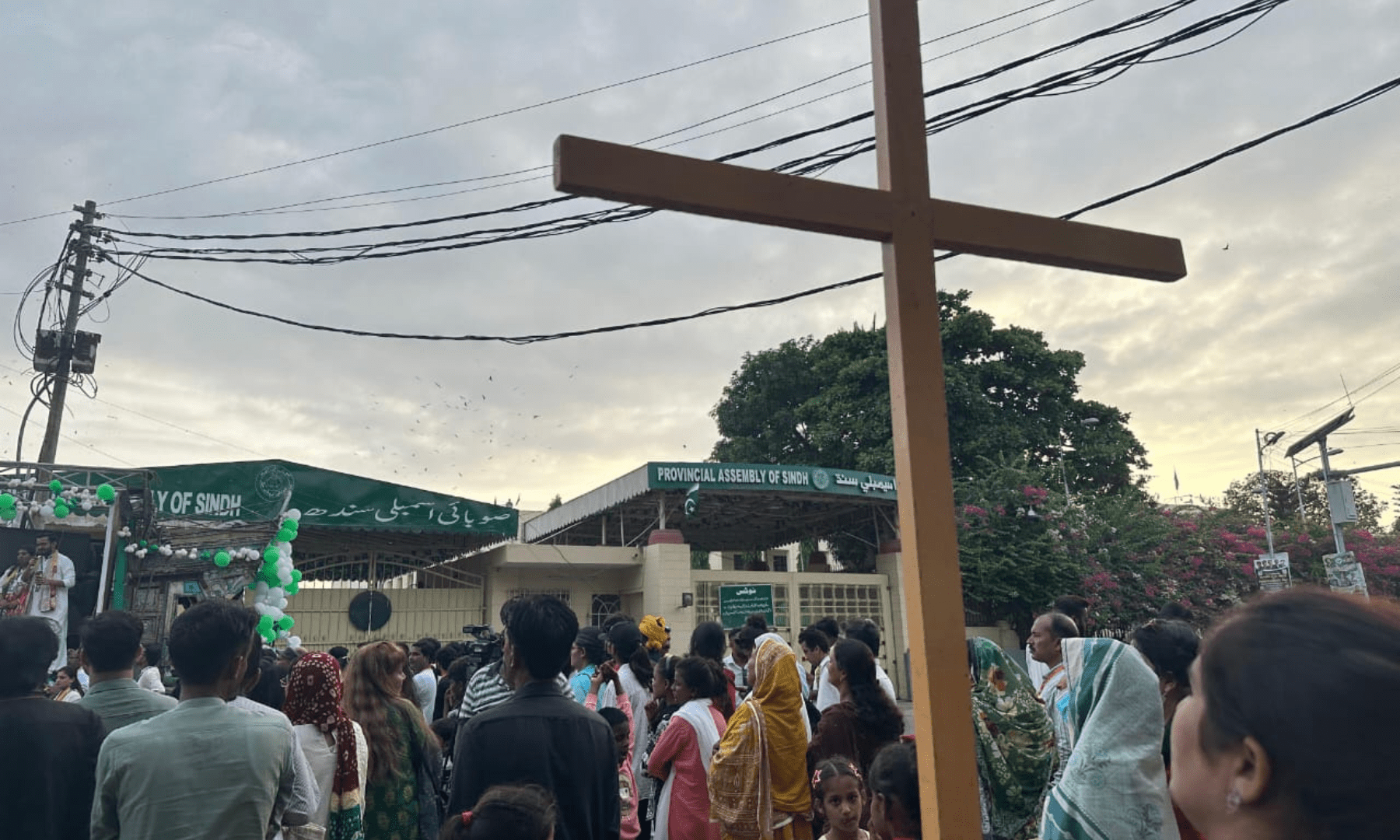
Christians in Pakistan are protesting a March 25, 2026, Federal Constitutional Court ruling that upheld the marriage of 13-year-old Christian girl Maria Shahbaz to a 30-year-old Muslim man who allegedly abducted her. The verdict has sparked national outcry, with protestors and church leaders decrying it as a grave failure of justice.
Archbishop Khalid Rehmat described the ruling as “profoundly disturbing” and “unacceptable,” stating that it “represents not only a grave failure of justice… but also sends a dangerous message that undermines the rule of law and weakens protections for vulnerable minority girls.” (OSV News, April 2026 — Full report on protests and church reaction))
Justice protects us from the strong. Justice is no longer a protective barrier at this point.
Catholic bishops and church leaders warned that the ruling “could set a dangerous precedent” and raised concerns that it undermines protections for minors and vulnerable communities. (Crux, April 4, 2026 — Pakistan bishops decry court ruling.
The high court based its decision on some interpretations of Islamic principles regarding marriages between Muslims and Christians. Specifically, the court said that since Christians are “Ahl al-Kitab” (the “People of the Book”), a Muslim man may legally marry a Christian woman. The court further stated that the girl’s conversion was proven simply by her declaring herself a Muslim. No formalities were necessary for her to convert. However, the court rejected documentation which proved that the girl was a member of a religious minority. Documentation included documents related to her delayed birth registration. The court used her own statements as proof that she had given her consent to marry. Many critics believe
that this line of reasoning ignores the basic issue here: Can a minor give their free consent to enter into a contract of marriage or choose a religion at all?
Credit Video: Express News/YouTube
The issue of religious minorities in Pakistan is an on-going problem in which the constitutional protection of religious freedom as defined within the 1973 Constitution is at odds with the real-life experiences of Christians and other non-Muslim. Despite legal protection against persecution, there exists a pervasive system of social and institutional discrimination facing religious minorities, due to extreme interpretations of Islamic law that are used to limit the freedoms of minority religions.

Archbishop Joseph Arshad stated, “This situation is deeply troubling,” adding that inconsistencies in applying laws protecting minors “undermine confidence in the justice system and raise grave concerns about the safety and dignity of vulnerable communities.” (Crux, April 2026 — Pakistan bishops decry court ruling)
An examination of statistics indicates a disturbing environment: between 2013 and 2019 alone, over 1,000 reports of violent acts and persecution occurred toward religious minorities (USCIRF / Human rights reports). Additionally, the use of the blasphemy laws has been used to persecute Christians, leading to arrest and mob violence creating a climate of fear among many religious minorities. For example, the unfortunate circumstances surrounding Asia Bibi, a Christian woman who was sentenced to death for allegedly committing blasphemy in 2009, highlighted the danger of using these types of legal frameworks and generated widespread protests and revealed how broken the justice system is in Pakistan.
Following the ruling, Ejaz Alam Augustine said it had caused “deep anguish and unrest” in the Christian community and described the issue as “a violation of the fundamental rights of minority citizens.” (Morning Star News, April 23, 2026 — Change sought to help kidnapped Christian girls)
Historically, Pakistan has struggled with issues related to its diversity in religious aspect. The country’s religious diversity is legally recognized through the 1973 Constitution which provides the right to free exercise of religion for all citizens, regardless of religion or creed. However, this provision has failed to become a reality in most cases. This is because of the increasing amount of power given to radical clerics who continually restrict this right. It is). Estimated that Christians represent approximately 1.6 percent of the population. Despite this small percentage, Christians experience some degree of systemic discrimination and violence. Hence, Christians can scarcely hope to retain any rights, if at all. The fact that Christians were lynched in 2017 for Blasphemy is merely a testament to the immediate need for safeguards for religious minorities in an exponentially growing atmosphere of hostility.
&imwidth=800&imheight=600&format=webp&quality=medium)
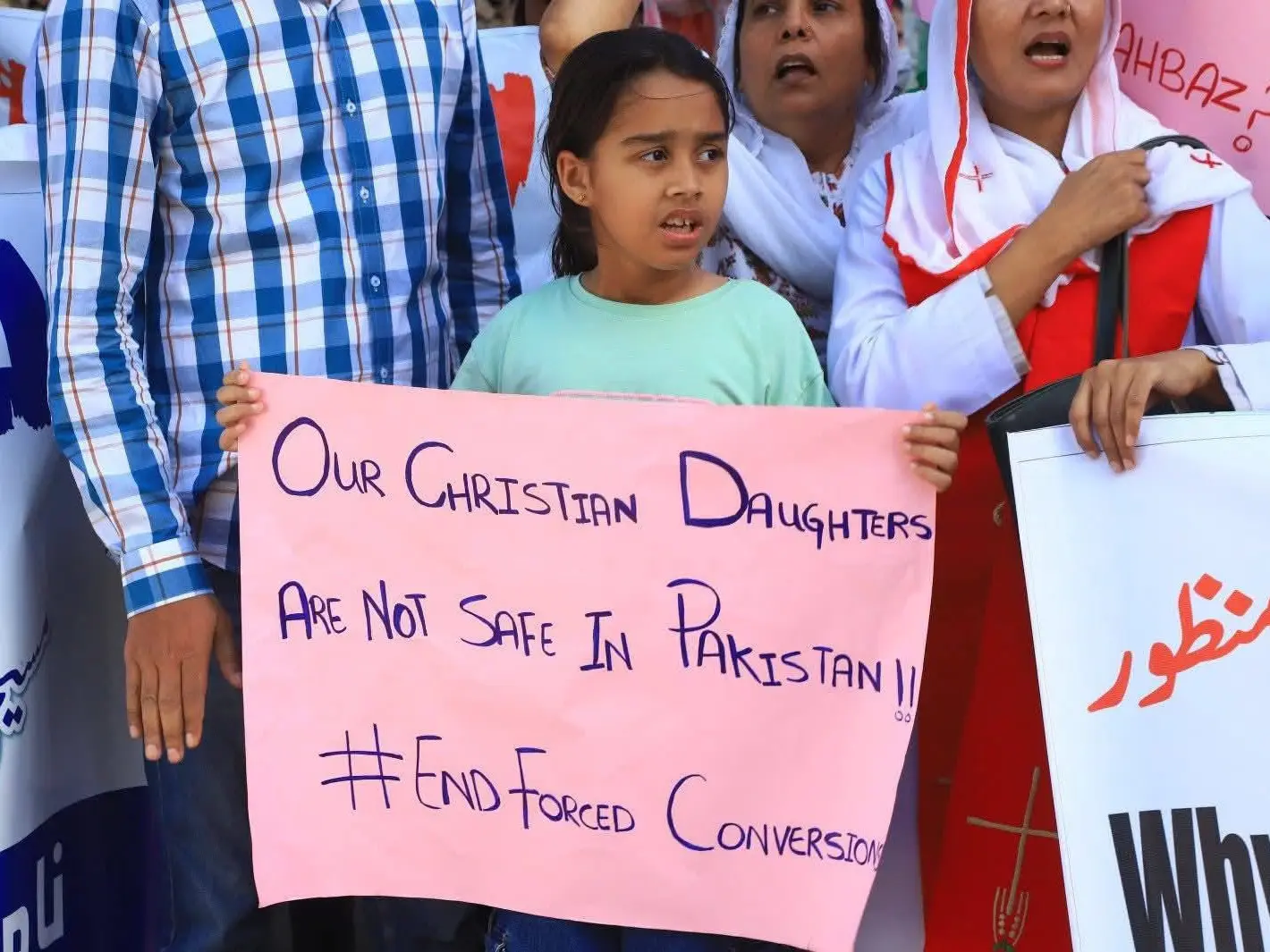
The Pakistani nation responded with protests on a large scale and an overwhelming sense of betrayal to the recent ruling of the courts. Christian protesters expressed that they were “extremely hurt” by the ruling and called for it to be reviewed, holding signs such as “Stop forced conversion” and “Child marriage is a crime” while demanding justice for minority girls. (Dawn, April 14, 2026 — Christian community protests ruling)
According to statistics, approximately 75 percent of the population believe that there is no consistency in the way that the legal system delivers justice – specifically in regard to cases dealing with members of religious minorities. Demonstrations broke out in major cities, where protesters called for accountability and reform of the legal system, further emphasizing the growing discontent with the current state of affairs. These demonstrations also represent part of a larger movement toward social change that was also seen in other movements including the demonstrations that followed the lynching of Mashal Khan in 2014, where almost 60 percent of the participants identified inadequate legal protections for minorities as one reason they participated in those demonstrations. The demonstrations related to the 2022 court rulings illustrate the extent of systemic problems associated with Pakistan’s political and social structure, highlighting the urgency needed for structural changes to occur to bridge the gap between what Pakistan’s judiciary does and what its citizenry expects from it.
Anthony Naveed warned that the ruling “has revealed serious deficiencies in the implementation of the laws protecting minors,” stressing the need for urgent legal reforms to protect children. He also added that “These laws have already been declared compatible with Islamic precepts by the Federal Constitutional Court in its rulings, underscoring the need for their strict application.”(Licas News, April 22, 2026 — Pakistan ruling raises alarm over child marriage loopholes)
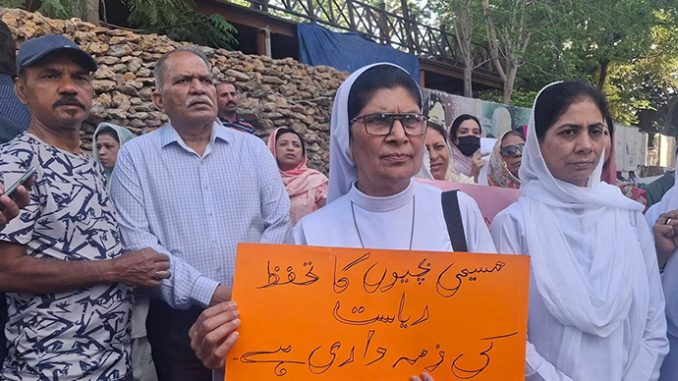
In Pakistan, the complexities involved with legal issues and society demonstrate a serious failure of justice that have generated massive civil unrest. The widespread rallies and pretests by Christians are indicative of a much broader struggle for religious freedom and equality. Based on the comparison of laws applied for religious minorities in India and Indonesia, laws are not always able to protect marginalized groups or offer protection to very little or no extent. Moreover, based on the examination of Pakistan’s legal past, there seems to be a recurring theme of corruption and incapability. Considering this, we should focus on developing and reforming the legal system. In the final analysis, this all leaves more unanswered questions, as for example the nature of safety and culpability where vulnerable
parties are concerned. It appears to illustrate an expanding gulf between legal pronouncements and their everyday human relevance. If significant and effective reforms are not made in such cases, public confidence in institutions could continue to erode over time and establish an increasing gap between communities and institutions, where trust and responsibility are no longer perceived as readily, if ever again, recoverable.
Disclaimer:
Sada-E-Watan provides news and opinion articles as a service to our readers. These articles and news items come from sources outside of our organization. Where possible, the author and the source are documented within each article. Statements and opinions expressed in these articles are solely those of the author (reporter/newspaper) or authors (reporters/newspapers) and may or may not be shared by the staff and management of Sada-E-Watan. Sada-E-Watan was created to provide one convenient central location where a user can quickly scan headlines from many news sources. The headlines listed on Sada-E-Watan pages are links to stories on the sites where these stories are located. The goal of Sada-E-Watan is to help readers access stories on web sites that they would normally not have time to view on a regular basis and to add value to the news source sites by mentioning their name on top, so readers can view these sites.
The Sada-E-Watan takes no responsibility for any loss or damage suffered as a result of using the linked websites or as a result of using the information published on any of the pages of the linked websites.
Whilst every effort is made to ensure downloadable content is free from viruses, Sada-E-Watan cannot accept any liability for damages resulting from virus infection. You should take adequate steps to ensure your virus check regularly when using any device. If you have any questions or comments about Sada-E-Watan, please contact us at: radio@sada-e-watan.com.