


















By Shagufta Mobeen
Educationist,
M.Sc Zoology + B.Ed
A Horrific, Repulsive Face of Society:
Sexual Abuse of Children in Madrassas
:مُعاشرے کا ایک بھیانک، مُکروہ چہرہ
مَدرسوں میں بچوں کا جِنسی اِستحصال
:समाज का एक भयानक और घिनौना चेहरा
मदरसों में बच्चों का यौन शोषण
“Abuse is never deserved, it is an exploitation of innocence and physical disadvantage, which is perceived as an opportunity by the abuser.”
“No human being should be maltreated under any circumstances. We are all wonderful creation of God. May we affectionately love one another.”
“Children don’t get traumatized because they are hurt. They get traumatized because they’re alone with the hurt.”
Introduction: A Widespread and Silenced Problem
Sexual abuse badly affects or is widely spread in homes, streets, markets, and other places. It affects religious institutions too, especially madrassas. No place is safe for children. If we look at the research, we know that it seems to be mainly connected to power dynamics. When power dynamics are imbalanced, the inevitable result is abuse.

There are a lot of madrasas in Pakistan, and millions of children are going to madrasas with the intention of learning the Holy Quran, receiving religious training, and developing good morals. Madrasas particularly claim to be centers of religious guidance, knowledge, training, and character building, where children are nurtured spiritually and morally. Such institutions are expected to provide moral guidance. Here, children aged 5 to 15 are going through a sensitive stage and need protection, guidance, and trust. Children are not empowered. Children are small. The majority of madrassah students come from poor families. Mostly, there are male teachers in madrassahs. Children are at the mercy of male teachers.
“The true character of a society is revealed in how it treats its children.
Globally, children are at risk of sexual abuse. In practically every region of Pakistan, child abuse occurs. Over 2 million pupils are taught at Pakistan’s more than 22,000 madrassas. However, there are a lot more madrassas that are not registered. A terrible reality exists beyond the walls of these esteemed establishments: thousands of youngsters are sexually abused in deafening silence. Fear prevents the kids from criticizing clergy, and clerics will undoubtedly deny any wrongdoing. Any criticism of a cleric is viewed as an assault on the faith.
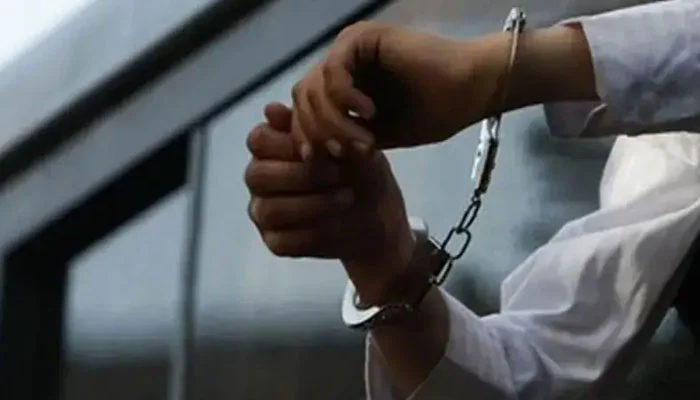
 Mufti Azizur Rehman after he was detained and charged with sexually abusing a student at a religious school, in Lahore.
“I am very ashamed at what I did,” Mufti said during the interrogation.
Mullahs, who pretend to be pious and sport a long beard, commit these heinous crimes behind closed doors while publicly denouncing people who are liberal, open-minded, and clean-shaven. Many of these men engage in these immoral acts despite claiming to be pious. Religious leaders were frequently sexually unsatisfied and under mental strain, attempting to repress their sexual urges as a sign of their
strong religious beliefs. Such religious authorities denigrate Islam. In addition to assaulting the students, they had taught them how to act in this way toward one another.
Lack of Certifications.
Psychological and emotional training is necessary for teachers, but in madrassas, mostly teachers do not hold any certificates. And teacher certificates are not mandatory in madrassas. There is no check on emotional intelligence, so they cannot understand the moral responsibilities toward the children.
How Abuse Is Concealed and Silenced
Because they are aware that children’s allegations of sexual abuse are far less likely to be accepted, some clerics therefore target vulnerable children. Thus, priests are encouraged to continue their actions without consequence. Many victims of child sexual abuse endure silent suffering as they lack the vocabulary to express what is occurring to them. When parents learn of abuse, social pressure may also keep them from reporting it, causing it to go unreported.
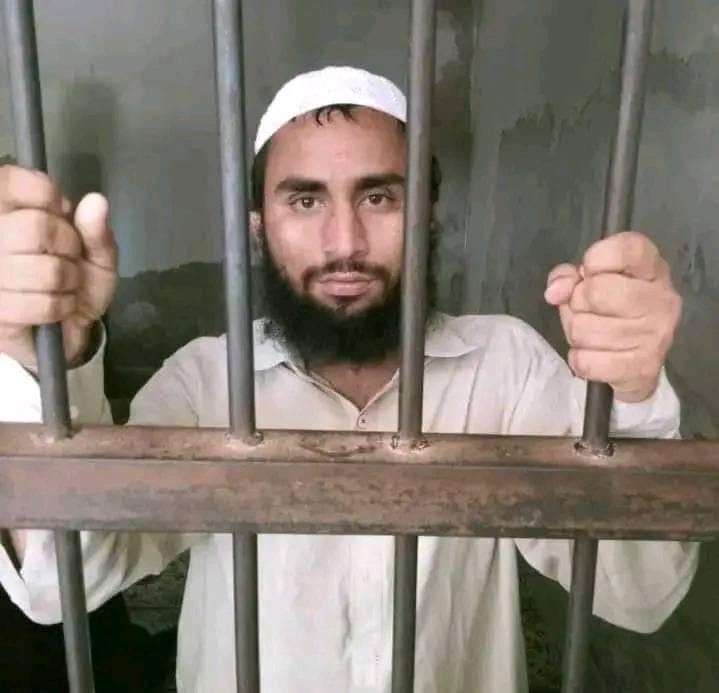 Maulvi (religious cleric) Naimat Yaseen raped a 12 year old boy in the Mehrab of Masjid in Larkana Sindh. SSP Larkana Rohail khoso confirmed the arrest of Pedophilia.
Maulvi’s sexual abuse of children is a widespread issue, according to authorities, and the numerous allegations they have received are only the top of the iceberg. However, none of the numerous reports have led to a Maulvi being found guilty. In Pakistan, the influential religious Qari, also known as the Maulvi, band together when one of them is accused of abuse. By accusing victims of blasphemy or defamation of Islam, they have been able to conceal the pervasive abuse.
Families choose to dismiss the charges because they are overcome with guilt and fear that the stigma of being sexually assaulted will follow a kid into adulthood. Usually, when a family forgives the Maulvi, the inquiry comes to a conclusion when the allegations are dropped. Maulvis frequently target young males who have not yet reached puberty. Boys, who are less likely to disclose a sexual assault, were often accessible to and trusted by the Maulvis.
“Trauma is not what happens to you. Trauma is what happens inside you as a result of what happens to you.”
The Cloak of Holiness
On 15 July 2026, 12-year-old Imran Ali died after being sexually abused at a madrassah. The incident occurred in a madrasa in Tando Allahyar district of Sindh. Nobody deserves to go through that, especially in a place of worship.
When an incident of sexual abuse occurs in a madrassa, it becomes a cause of concern not only for an individual but also for the entire society. Any kind of abuse of such children can have profound negative effects on their mental, emotional, and physical health and even loss of life. Teachers who sit in madrassas are people to whom a cloak of holiness is thrown. When they do any sexual action or sexual harassment comes up, people make interpretations of it. Because of this, the cloak of holiness. But in other places or in other institutions, there are no interpretations, and no one is defending the abusers. But in madrasas, people defend sexual abusers.
Case Studies from Across Pakistan
Muhimman, Pakpattan
On Tuesday, February 4, 2020, Muhimman, a Pakistani student, was allegedly mistreated by a cleric in Pakpattan, Pakistan. He was raped earlier that year by a clergyman at the religious school he often frequented.
Yaous, Kohistan
One of those youngsters is Yaous, eight years old, from the isolated northern Kohistan region of Pakistan. It was a holiday in the madrassa in late December of last year. The majority of the pupils were gone. A few classmates and Yaous were the only ones who had stayed behind. His parents could not afford the cost of transportation to his village, which was hours distant. For his age of eight, Yaous is petite, with subtle features. During an interview with the AP, Yaous’ small body trembled as he described what happened. Yaous’s father wanted to educate his son despite being a lowly laborer with no formal education and speaking only the local tongue. He had heard that some local boys had attended a religious school at Mansehra, several hundred kilometers south of his hamlet. His father hadn’t talked to his son for months, since he couldn’t even afford a phone. Yaous claimed he was alone inside the mosque with the cleric Qari Shamsuddin while the other pupils had gone to wash their clothes. According to the child, Shamsuddin took hold of his hand, pulled him into a room, and locked the door. “It was extremely cold. I didn’t understand why he was taking my warm clothes away,” Yaous said in a barely audible whisper.
He stated the cleric reached for a stick, about 12 inches long. “I cried and screamed because of the pain, but he wouldn’t stop,” Yaous remarked. After being confined for two days and repeatedly raped, the child became so ill that the cleric took him to the hospital, fearing he was going to die.
According to Dr. Faisal Manan Salarzai at the hospital, Yaous shouted whenever anyone tried to approach him. Because of his small stature and delicate appearance, Salarzai referred to Yaous as “the baby.” The child had numerous bruises all over his body, including on his head, chest, legs, and other areas, according to Salarzai. Suspecting sexual abuse, Salarzai ordered his transfer to the isolation unit and examined him. Brutal and repeated attacks were discovered.

However, according to Salarzai, Yaous’ uncle claimed the boy had fallen, rather than that his nephew had been sexually molested. “At last, the uncle said: If news spreads in our area that he has been sexually assaulted, it will be very difficult for him to survive in our area,” Salarzai said. “He was not willing to talk about it or even think that he was sexually assaulted,” Salarzai said.
However, the evidence was overwhelming, and the doctor contacted the police. The cleric was arrested and is currently in jail; police matched his DNA samples to those found on Yaous. “I want this mullah hanged. Nothing else will do,” said Yaous’ father, Abdul Qayyum, who expressed shame that he hadn’t spoken to his son for over three months prior to the attack.
Misbah, Basti Qasi, South Punjab — “Forgive Me”
Religious clerics do not simply sexually abuse young boys. Religious leaders have also targeted young girls, like Misbah from the village of Basti Qasi in south Punjab. Misbah, 11, who had trouble speaking, said that after three years of studying the Quran in the mosque next door, she was sexually assaulted. She had stayed behind to sweep the mosque when the attack occurred one morning. The cleric, whom she trusted, asked Misbah for help after the other children were sent home.
Speaking in her native Saraiki, she said: “I had just started cleaning when he slammed shut the mosque door. I had no idea why, but he suddenly grasped me and dragged me into a separate room. I was crying, shouting, and screaming.” She was unable to estimate the duration of the attack. She could only recall shouting for her father to come to her aid, but the cleric would not stop, she said.
Mohammed Tanvir, her uncle, was the one who saved her. He had stopped by the mosque to use the toilets on his way to college. Outside the door, he saw a pair of children’s shoes. “Then I heard screams from within; she was begging for her father,” Tanvir said. His niece was sprawled on the floor, unclothed, when he opened the door. “She appeared to have passed out,” he said. Her pants were in a corner, stained with blood. At his feet, the religious leader fell. “He kept begging, ‘Forgive me,’” Tanvir said.
After being arrested, the religious leader was released on bail. Muhimman’s aunt claimed there had been a deliberate attempt to quiet the family following the attack on the young boy who had proudly displayed his writing abilities. Shazia stated, “The villagers refuse to expel him because they believe that they are our spiritual leaders and the imams of our religious places.” “They all came to our home and they know we are poor and he is an imam and they said we should forgive him but we won’t,” she said, adding that her father, Muhimman’s grandfather, refused.
Despite the fact that the attack was captured on camera by a number of village boys who broke down the bathroom door and scared the cleric, Shah, away as he attempted to rape Muhimman, Shah is on the run. Police say they are investigating and have filed a charge, though several neighbors near the mosque say police are not actively looking for him. They appeared angry, but also accepted that he would not go to jail. Shazia stated: “A beast like that should not be spared at all.”
Video Credit: AP/YouTube
Rawalpindi Case
On Wednesday, Rawalpindi reported that Ibrahim Yaseen had allegedly sexually abused a 12-year-old child in a madrassa. The child was in a madrassa at the village mosque, a two-story structure, according to the FIR filed under the authority of the Gujar Khan Police Station. The boy was sitting in the assigned place when the accused allegedly approached him after he completed his task of calling the prayer (Azaan). According to the complainant, the suspect filmed a video of the child being sexually molested, which eventually went viral.
Sahiwal Case
Omer Hayat, a prayer leader (Qari), and Sanwal Parvez, a caretaker of a mosque and seminary in Ada Shabeel, Kameer Town, Sahiwal, were both charged by the Kameer Police with molesting, raping, and filming students at the madrassah Jamia Noor ul Quran, situated at Chak 116/9-L, Ada Shabeel. The accused’s phone was found to contain dozens of videos of sexual acts he had recorded. The Kameer police detained both suspects after discovering more than 60 (63, to be exact) videos of severe sexual violence in a single folder; other folders were password protected.
Despite his polio-related disability, Sanwal Parvez, the caretaker of the seminary, was also accused in the June 18 FIR of repeatedly raping students and filming the abuse. It later emerged that he had also been raping his own disabled sister. According to the FIR, Parvez was a fellow instructor and caretaker from when the mosque and madrassa were established years earlier by the Qari, who also made amulets.
The complaint was filed after a local laborer took his sister-in-law to the madrassah in search of an amulet to treat a headache. The caretaker allegedly led the woman into a room, sexually assaulted her, and, with the assistance of an unnamed student, filmed the assault when the Qari was not present. He later blackmailed her and demanded money using the video.
When the matter was brought before village elders, it was discovered that the phone also contained multiple videos allegedly capturing the caretaker and the Qari raping and assaulting children, as well as videos of madrassah pupils being forced to abuse one another while the caretaker was present.
Nine-Year-Old Boy Raped by a Madrasa Maulvi (religious cleric)
A madrasa maulvi raped a nine-year-old child in Pakistan. The victim said: “I was crying, I was being victimized by him. He put my shirt in my mouth. I spent the entire night crying. I asked my parents to please take me out of the madrassa in the morning. “The accused cleric stated: “I’ve been married for six or seven years, and my wife is attractive. Why would I harm the child in this way?”
Other Reported Cases
A case of sexual abuse in a madrasa in Lahore shocked the nation.
1. A student named Sabir Shah said that Mufti Aziz-ur-Rehman sexually
assaulted him for more than a year. Rehman was a member of Jamiat Ulema-e-Islam a group of religious scholars who follow a very traditional view of Islam. It was not an isolated occurrence.
2. Additional reported incidents include: a video of a Shiite priest abusing children, which surfaced shortly after.
3. A cleric in Pak Pattan who raped a nine-year-old child in May 2017.
4. A cleric in Lahore charged with raping a minor in 2018.
5. A cleric in Multan who sexually abused a thirteen-year-old girl with a disability in 2019.
Cardiff imam jailed for 13 years for abusing girls at Qur’an lessons
Mohammed Haji Saddique, 81, sexually assaulted young girls in front of class and slapped students who made mistakes
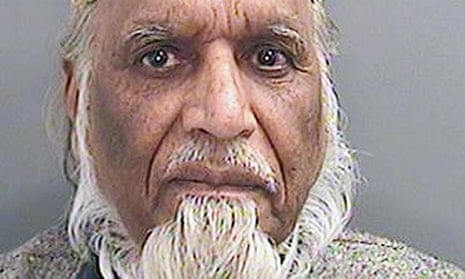 Mohammed Haji Saddique taught at Madina mosque in Cardiff for more than 30 years.
Photograph: South Wales police/PA
The Threat of Serial Offenders
Many such perpetrators escape punishment, as there is often no video evidence or direct witnesses to the incidents, and the affected children are unable to complain due to fear, shame, or pressure. CCTV cameras should be installed at madrasas too, as in other institutions, to improve the safety ofchildren.
When the perpetrator is not repeatedly held accountable, some individuals become serial offenders, increasing the risk of further children being affected. Serial offenders target one child after another because they are mentally ill or psychologically damaged.
The End of Silence and the Arrest of the Criminals:
Lessons from Chakwal
An instructive and painful incident in Chakwal, Pakistan. This incident that came to light in the year 2024 is enough to open our eyes: two teachers of a madrassa subjected 15 innocent children to their brutality. They were busy with this heinous crime for weeks, and the main reason for this was the fear and terror within the children, due to which they did not even mention this to their parents.
This cruelty was exposed when the parents of a 12-year-old boy, seeing knife marks on his body, took immediate action and informed the police, after which the perpetrators were arrested. If the criminals are not arrested, crime increases.
Only one forensics lab in Pakistan
Currently, there is only one forensics lab in Pakistan, and it took the lab four months to analyze one case. The lab’s huge caseload and the length of time reports take cause delays in procedures. This creates issues for the victims’ families and often causes them discontinuing their charges, which gives perpetrators more self confidence.
The government should improve and supply more tools and training so that police, doctors, judges, social workers, and child welfare institutions can respond to reports of child sexual abuse in a timely manner to claims of child sexual abuse.
Children in Pakistan should have a secure childhood.
Unfortunately, such incidents continue largely because police do not assist poor families. Victims report being asked for bribes, with no meaningful action taken afterward, leaving no real authority to pursue legal action on their behalf.
Shared Responsibility
- There must be strict supervision of male teachers, or there must not be any male.
- There should be certifications.
- There should be training.
- There should be psychological tests. Protecting children is a shared responsibility of all of us. Silence exacerbates the problem, while timely awareness, monitoring, and justice play a vital role in its eradication.
- Children are children. Their protection and preservation are shared responsibility of all of us.
Child sexual abuse within Pakistan’s madrassas (Islamic seminaries) is an endemic, deeply entrenched crisis that operates under a severe culture of silence and systemic impunity
 Saima Khan* comforts her child who was allegedly raped
by a religious cleric in Kehror Pakka, Pakistan. ─ AP
Trauma is a result of an overwhelming sense of danger, powerlessness, and fear. Healing is a result of feeling safe, empowered, and supported.
The Shield of Impunity
- Social Stigma and Shame: Severe societal taboos around sex and gender force families to hide the abuse. They fear that public knowledge will permanently taint the child’s and family’s reputation.
- Legal Loopholes and Blood Money: Pakistan’s legal structure allows out-of-court settlements under Islamic law provisions. Clerics frequently abuse this system by pressuring impoverished families to “forgive” them in exchange for small monetary payouts (ranging from $300 to $800), which forces the police to drop the charges.
- Blasphemy Weaponization: Whistleblowers, victims, and activists who speak out face immense danger. Clerics and right-wing extremist groups regularly shield predators by threatening victims with counter-accusations of “blasphemy” or “defaming Islam”.
- Institutional Collusion: Local police are poorly trained in child rights, frequently corrupt, and highly susceptible to political and religious pressure. Investigations are commonly botched, stalled, or shut down entirely.
- Data compiled by child protection non-profits like Sahil indicates thousands of annual child abuse cases nationwide, with religious teachers consistently making up a massive percentage of institutional perpetrators.
- Despite legislative actions like laws banning corporal punishment and the introduction of child protection desks, state enforcement remains functionally absent.
- Government bodies, such as the Interior and Religious Affairs Ministries, historically minimize the crisis or refuse external oversight to avoid clashing with powerful clerical lobbies.

We fervently pray to God Almighty for the safety and protection of innocent children everywhere. Please shield them from harm, illness and danger. Surround them with Your love and send Your angels to watch over them, providing them with secure environment to grow, learn and thrive in life. Amen.
Disclaimer:
Sada-E-Watan provides news and opinion articles as a service to our readers. These articles and news items come from sources outside of our organization. Where possible, the author and the source are documented within each article. Statements and opinions expressed in these articles are solely those of the author (reporter/newspaper) or authors (reporters/newspapers) and may or may not be shared by the staff and management of Sada-E-Watan. Sada-E-Watan was created to provide one convenient central location where a user can quickly scan headlines from many news sources. The headlines listed on Sada-E-Watan pages are links to stories on the sites where these stories are located. The goal of Sada-E-Watan is to help readers access stories on web sites that they would normally not have time to view on a regular basis and to add value to the news source sites by mentioning their name on top, so readers can view these sites.
The Sada-E-Watan takes no responsibility for any loss or damage suffered as a result of using the linked websites or as a result of using the information published on any of the pages of the linked websites.
Whilst every effort is made to ensure downloadable content is free from viruses, Sada-E-Watan cannot accept any liability for damages resulting from virus infection. You should take adequate steps to ensure your virus check regularly when using any device. If you have any questions or comments about Sada-E-Watan, please contact us at: radio@sada-e-watan.com.