
























Courtesy: Geo News
Health experts and policymakers call for urgent, nationwide reforms to prioritise prevention
- “Pakistan is facing cardiovascular emergency,” warns Dr Raj Kumar.
- He calls for shift from reactive treatment to proactive prevention.
- Sedentary lifestyles contributing as exacerbating factors, he adds.
SUKKUR: Cardiovascular disease has emerged as the leading cause of death in the country, claiming nearly 400,000 lives annually and accounting for over 30% of all fatalities, The News reported on Monday.
Alarmed by the growing crisis, health experts and policymakers have called for urgent, nationwide reforms to prioritise prevention, early detection, and equitable access to care, particularly in underserved regions.
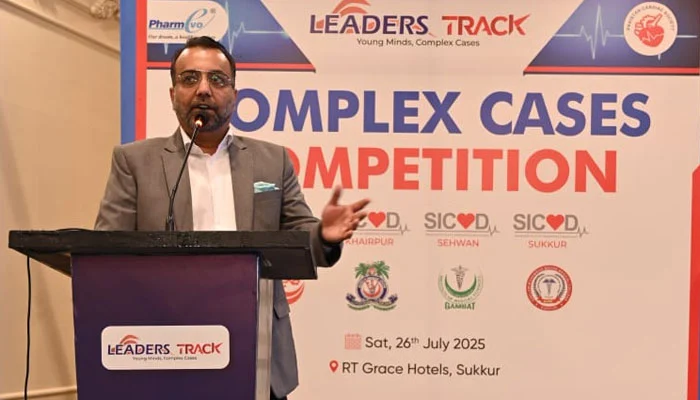
“Pakistan is facing a cardiovascular emergency. What’s deeply concerning is the increasing number of patients in their 30s and 40s presenting with advanced coronary artery disease,” said Dr Raj Kumar, President of the Pakistan Cardiac Society (PCS).
“This is not only a public health challenge but a national development issue — a sick workforce cannot carry the nation forward”.
Dr Kumar underscored that sedentary lifestyles, poor nutrition, smoking, uncontrolled diabetes, and lack of awareness around heart health were key contributors to the worsening situation.
He emphasised the need to shift from reactive treatment models to proactive prevention, starting with widespread public health education and professional training.
The call to action was issued during the PCS “Leaders Track” session held in Sukkur, an advanced academic event organised in collaboration with Pharmevo — a pharmaceutical company.
The event brought together cardiologists, physicians, trainees, and students from across Sindh to discuss complex cardiac cases, diagnostic strategies, and region-specific challenges in heart care delivery.
Dr Kumar noted that a major barrier to improving outcomes is the shortage of trained cardiologists in peripheral areas, coupled with delayed diagnosis and limited access to advanced procedures.
“We must educate not only our patients but also healthcare providers — and that’s the aim of Leaders Track,” he said. The session featured detailed case presentations, multidisciplinary panel discussions, and interactive learning on interventional cardiology, diagnostics, and treatment protocols. Participants explored the burden of cardiovascular disease in rural areas, highlighting the critical need for better screening programmes and stronger primary healthcare infrastructure.
Dr Syed Fayyaz Mujtaba, Coordinator of the PCS Larkana Chapter, who led local arrangements for the event, said such academic activities in smaller cities were crucial for bridging the knowledge gap. “Bringing programmes like this to Sukkur ensures that doctors outside major urban centres stay updated on best practices and evolving guidelines,” he said.
“Through our collaboration with PCS, we’re proud to enable knowledge-sharing platforms that can directly improve patient care, he noted, adding that Pharmevo was focused on long-term partnerships with medical institutions to uplift healthcare standards across Pakistan.
In his closing remarks, Dr Kumar emphasised the need for sustained action. “Training sessions like these must become a regular feature across the country. We cannot wait for doctors to come to learning — we must take the learning to them,” he said, urging both the public and private sectors to invest more in preventive cardiology, screening initiatives, and community outreach programmes.