























By Seemal Nawaz
Content Writer
IELTS Instructor
CNW Education Consultants
C&W Resources & Education Consultants
Child Marriage In Pakistan
پاکستان میں بچوں کی شادی
पाकिस्तान में बाल विवाह
“To break the chains of child marriage, let’s empower girls through education”.
“Girls belong in school and on the playground, not in a wedding dress”.
“Stop child marriage to save the precious childhood of a child”.
“Supporting child marriage is nothing but supporting child abuse”.
Child marriage is a human rights violation and a crime. Girls who marry as children are at a greater risk of intimate partner violence. It is a grave error to marry a minor. Please, for the sake of your child’s future happiness, refrain from making them cry. Education, not marriage, is the key to a successful life for a child. Love and care for a child are reasonable; child marriage is not.
Child Marriage In Pakistan
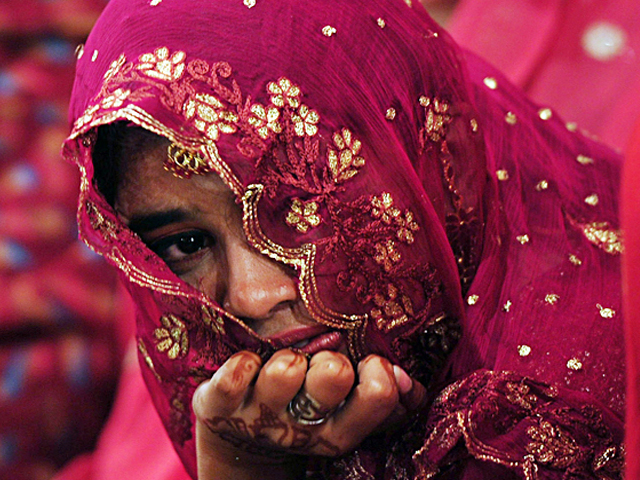
Deeply rooted in both culture and tradition, ‘Child Marriage’ is a multifaceted issue in Pakistan that needs our attention and voice to address it on all levels. Child marriage is a terrible act of denying children’s fundamental rights and a form of violence against them. In the past few years, this issue has managed to gain some scattered consideration, yet it needs way more than that. In Pakistan, many children become victims of child marriages, and most of them are girls. This horrific act of injustice denies their basic rights, including the right to make important decisions, which ultimately affects their lives, health and well-being.
Child Marriage – A Curse On Little Angels
Child marriages in Pakistan are nothing but a ‘curse’ on little children that brings them nothing but tons of difficulties and responsibilities. If we specifically talk about girls, these early marriages deprive them of their childhoods and future opportunities. Girls, who are forced to get married at a very young age, are less likely to complete their education and are more susceptible to domestic violence, abuse, and health problems.
Young females aged 15 to 19 have had the most reported instances of domestic abuse in the recent year, which was seen at a rate of 24.3%. Apart from other severe problems that are caused by child marriage, it also exposes girls to vulnerable pregnancies, fistulas, sexually transmitted illnesses, and even death. Teenage girls are considerably more likely to die from difficulties during labor than women in their twenties.
Marrying at a young age also limits a girl’s liberty. One in every 10 young girls aged 15 to 19 in Pakistan, has an input in their own health care, important home purchases, and visits to family or relatives. The health and human rights perspectives are usually used to call for the abolition of child marriage, but it is often overlooked that early marriage has a detrimental affect on a country’s economic growth and development. This makes Pakistan an example for the rest of the world because it is evident from the country’s economy as to how these issues are impacting it, leaving a disastrous effect, which is quite hard to overcome. According to a research published in 2017, child marriage could cost developing nations trillions of dollars by 2030. Given Pakistan’s high prevalence of child marriage, it is critical to understand the economic implications of child marriage in various aspects. However, what is even more important to understand here are the causes of this issue. What are the driving factors that contribute to this issue in our country? Let’s take a look at these!
Broad Drivers of Child Marriages In Pakistan
As previously stated, discourse and customs around early marriage in Pakistan are rooted in and informed by wider socio-cultural narratives about marriage and sexuality. These include the exchange of symbolic and commercial commodities related to marriage. More significant micro storylines to comprehend marriage patterns and behaviors, however, revolve on the rules and control of sexuality, particularly female sexuality.
Gender roles, norms, and power dynamics are defined globally by the extent of legal, social, political, and economic constraints on female sexuality. Religion is frequently utilized to bridge narrative gaps or frames. There is no global trend indicating that one religious group has a greater percentage of child marriage than another. In a nutshell, there are many driving factors of child marriages in Pakistan, however, the ones that are usually considered the most crucial, are as follows.
Poverty
It wouldn’t be too wrong to say that poverty is one of the biggest causes of child marriages in Pakistan. Poverty is connected with indicators of child marriage, such as particular marriage behaviors, customs, education, and employment. Many investigations, on the contrary, found a link between home affluence and child marriage.
Almost 19m girls in Pakistan are married before they turn 18.
The material grief and unhealthy circumstances caused by the disparity between household requirements and the ability of parents to meet those requirements force children into work and a lifelong struggle to satisfy even basic living needs. This results in depriving them of their fundamental rights to academic achievement, growth, good health, and protection. As a result, putting money into a girl’s future through education is not viewed as an economic decision.
Marriages are often elaborate across economic levels, and when combined with dower, it becomes an expensive proposition – a business that is not restricted to dower. The length of wedding activities across many days varies according to the family’s socioeconomic standing. In addition, there are several presents for the groom’s parents and immediate relatives. As a result, dower influences acceptance of early marriage offers since younger girls receive more proposals whereas ‘older age’ girls have a lengthy list of dower. Thus, to avoid these problems, it is considered as a ‘best practice’ to get a girl married as early as possible, which is not only sad, but worrisome as well.

Age, Consent & Role of Family
Another factor that contributes to early child marriages in Pakistan is related to age, consent and role of family. Marriage decision-making involves both official and informal processes, as well as roles and obligations. Formally, it is honorable for a father to decide his daughter’s marriage. Parents, regardless of wealth quintile, do not view early child marriage as a harmful practice, but rather as a compliance with social norms and customary practices.
Determining age is crucial for applying the age restriction and preserving the right to consent, which is jeopardized by restricted birth registration. Limited birth registration has an influence on the enforcement of the CMRA 1929’s explicit age limit of 16 years. Majority of parents in Pakistan favor Shareeka marriages – to strengthen inter-family relationships with their siblings – sometimes has an upward trend of pre-decided marriages, which are decided at the time of their children’s birth. This approval is stripped away from both boys and girls at a young age, and their age becomes insignificant.
Verbal Nikah, which is most often practiced in KP, does not require any evidence. Overall, in cultural situations, Nikhakhawan cannot or does not ask to see the girl in order to predict her age based on her physical appearance, nor does he insist on acquiring her consent in person.
The approval also gets taken away when girls/women are associated with the notion of family honor, in which marriage-related decisions are made by the parents. At one end, it is associated with her chastity; at the other, it is utilized as a barter item, i.e. in reconciliation to bride money. In both cases, age becomes irrelevant, and the likelihood of child/early marriage is considerable. Socially, a single and overaged female is worse than early marriage, and ‘decent’ girls are expected to marry according to family wishes.
Social Norms & Customs
And if poverty, age and consent weren’t enough, social norms and customs come as another big cause of early child marriages in Pakistan. If we talk about it in detail, social standards have an important role to play in this issue as cultural and religious traditions. In Pakistani tradition, girls are considered family honors, and marrying them early helps to retain this honor. This is especially important for young females who have been sexually assaulted or have engaged in premarital intimate relations. Marriage is essential in Islam, and many factions contend that early marriage for females is a religious requirement. Because of the prevalence of such traditions, child marriage is strongly embedded in Pakistani culture.
In order to understand this, there are some marriage patterns that are equally important to understand. For example, marriage between the kids of direct siblings and extended relatives is known as Watta Satta, or the exchange of females in marriage between two households, and is often consanguineous, with women having a voice in choosing her spouse. Another marriage form is based on damaging traditions/customs, in which a female child to a woman is utilized as peace collateral or a means of reconciliation. This is known by various names in Pakistan, including Swara/Vani, Badal, and Badal suleha, and it is a reconciliatory technique where marrying off a girl is utilized as dispute resolution between families. An important thing to note here is that this is not the standard for marital traditions, and some of the documented occurrences include child marriages as well.
Cultural Stereotypes
Another major cause of child marriages in Pakistan is linked with cultural stereotypes and misunderstandings. For instance, puberty is seen as a socio-cultural sign of marriage age. Generally, the local Maulvi of a mosque in the hamlet is Nikahkhawan and has little, if any, understanding of law and its application. Most of their literacy is restricted to rote memorization of the Holy Book, with little grasp of the language.
They continue to promote early marriage for females, misinterpreting puberty for girls as a call of religious law. In low economic households, however, no one contacts them to inquire about national marriage rules, the proper legal age for a kid, or whether or not child marriage is unlawful.
With all of these causes or factors in mind, we can now understand that child marriage has become a growing trend in Pakistan. Despite the country being an Islamic state, marriages of children are not coming to an end at all.
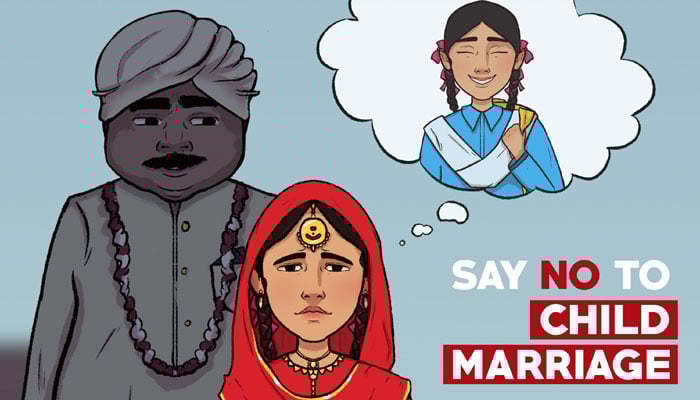
Marriage In Pakistan: When is the right time?
When a 64-year-old man in Punjab was asked this question, here’s what his answer was, “When you have an adolescent unmarried daughter sitting at home, it is like a burden. Not because you don’t want to give her food, but because you have to take care of your honor. It is a big thing if someone talks about your daughter outside.”
Marriage is heavily influenced by societal standards in Pakistan. Female teenagers frequently serve as symbols of their families’ prestige. If a young girl does not get married in time, society begins to gossip about her, which may have a greater impact on her father and the rest of the family than on her. Thus when it comes to the ‘right time of marriage’, girls in Pakistan get married when they are considered “mature”, rather than reaching a certain age. However, with the child marriage trend on rise in the country, it appears as if the term “mature” often gets confused with other factors, which ultimately get the parents to marry their children at a very young age.
While talking about age of child marriage, there are usually two main views that we get to hear.
On the one hand, some advocates feel that age should be a rigid criterion that is consistently used in all situations of child marriage. The reasoning follows that even if a person agrees to a marriage, if he or she is under the age of 18, he or she will be deemed a child in legal terms, and a child’s consent is invalid.
However, on the other side, the opposing viewpoint claims that not all instances of child marriage have equal significance and cannot be handled as such, particularly given Pakistan’s socioeconomic characteristics. Holders of this stance claim that there must be a way to distinguish between situations in which a child’s vulnerability is being exploited and instances where a child uses their independence to make an important decision about their own life, a right that they are frequently denied.
It is also noted that both sides of the debate agree that marriage before the age of 16 is illegal and punished, however the issue becomes more complicated when dealing with females aged 16 to 18. But whatever the case might be, this debate, undoubtedly, affects the young girls since they are usually the ones involved in child marriages, either forcefully through their family or by their own consent.
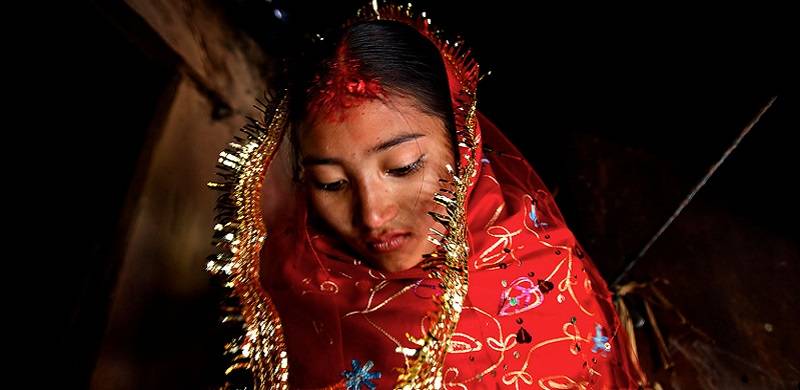
Eliminating child marriage in Pakistan
Eliminating child marriage requires everyone to work together to ensure girls have access to education, health information, services and life-skills education. UNFPA (UNFPA is the United Nations sexual and reproductive health agency) calls on governments and leaders to end child marriage by:
- Advocating politically for policies that raise the legal age of marriage from 16 to 18 years old for both girls and boys, without exceptions.
- Using evidence to tailor interventions in areas where child marriage is rife.
- Implementing support program that empower girls at risk or who are currently in child marriages.
- Improve girls’ access to supported education choices.
- Enhance economic opportunities for girls and their families through employment options and supports
- Educate and sensitize communities on the harmful impact child marriage has on girls.
When girls stay in school, are supported by their families and communities and remain healthy, they are far less likely to fall into child marriage.
UNFPA’s crucial role to end child marriage
Working with a variety of partners at all levels, UNFPA promotes and protects the human rights of adolescent girls and young people in Pakistan. This is done through improved legislation, collecting evidence for further advocacy, developing initiatives that support young women and girls empowerment and ensuring access to sexual and reproductive health information and services at a variety of locations.
UNFPA supports young women and girls in existing child marriages to ensure they have access to sexual and reproductive health information and services at local adolescent counselling centres and health facilities. Survivors of child marriage are also given adequate mental health services and stress management support in government-run adolescent counseling centers.

Are We Doing Enough To Protect Our Children?
At this point, this is a very important and crucial question that every Pakistani must ask themselves. We all are familiar that consent is a necessary and a basic principle for marriage where a boy and a girl should be able to accept or refuse according to their own free will. But there are a few questions that we should be asking ourselves before we proceed with anything. Is a child’s consent considered informed consent? Is a child cognitively developed enough to make sound decisions and take care of themselves, let alone a family?
Marriage is a lifelong commitment, and a child who has no idea what a contract is cannot be expected to pick her life spouse. How can a kid sign a marriage contract if she is not authorized to carry a Computerised National Identity Card, or CNIC, cannot obtain a driver’s license, cannot vote, and cannot sign any other contracts?
Currently, federal legislation is founded on a 1929 statute that established a marriage age of 14 years or older. The Muslim Family Laws Ordinance of 1961 extended the age limit to 16 years. The existing legislation establishes the legal marriage age at 16 for females and 18 for boys, resulting in distinct and hence unequal capable marriage ages for girls and boys.
Following 2010, avoiding the possibility of child marriage became a provincial problem. Sindh is the sole province in Pakistan to have approved a legislation prohibiting marriage before the age of 18. In Sindh, the Child Marriages Restraint Act of 2013 makes underage marriage a cognizable and non-compoundable offenses. This implies that the police can act on their own to arrest offenders based on any information, and there can be no secret conciliatory bargains between families, communities, or jirgas to circumvent the law.

The Punjab Marriage Restraint (Amendment) Act of 2015 continues to allow females to marry at the age of 16. Khyber Pakhtunkhwa and Balochistan are still controlled under the 1929 laws, as is the federal law. In 1990, Pakistan joined the Convention on the Rights of the Child, which defines a child as,
“every human being below the age of 18 years unless, under the law applicable, majority is attained earlier.”
In its final remarks and suggestions for Pakistan’s Fifth Periodic Report in 2016, the UN Committee on the Rights of the Child noted a discrepancy between the minimum legal marriage age for boys, as 18 years, and girls, as 16 years. Therefore, the committee recommended Pakistan for the “full harmonization of its legislation as regards the definition of a child so as to define a child as every human being below the age of 18 years.” It specifically suggests that the Child Marriage Restraint Act of 1929 be amended to equal marriageable ages for boys and girls by extending the minimum marriage age for girls to 18 years.
In 2019, a bill presented by Pakistani senator Sherry Rehman was passed in the Pakistani Senate, raising the minimum marriage age for women to 18. This bill intended to end child marriage in Pakistan and it was passed by an overwhelming majority. However, several Pakistani Islamic political groups, including Jamiat Ulema-e-Islam (JUI-F) and Jamaat-e-Islami (JI), rejected the law. The parties alleged that the bill was anti-Islam. Senator Sherry Rehman, however, stated that Muslim nations such as Oman, Turkey, and the United Arab Emirates have already set 18 as the minimum marriage age.
There’s no doubt that the Pakistani government faces a variety of significant human rights concerns, the liberties for girls must be prioritized. Under the UN Sustainable Development Goals, governments throughout the globe, including Pakistan, have vowed to stop marriages before the age of 18 by 2030. To protect children from early marriages, legislation across the country, whether federal or provincial, must impose constraint.
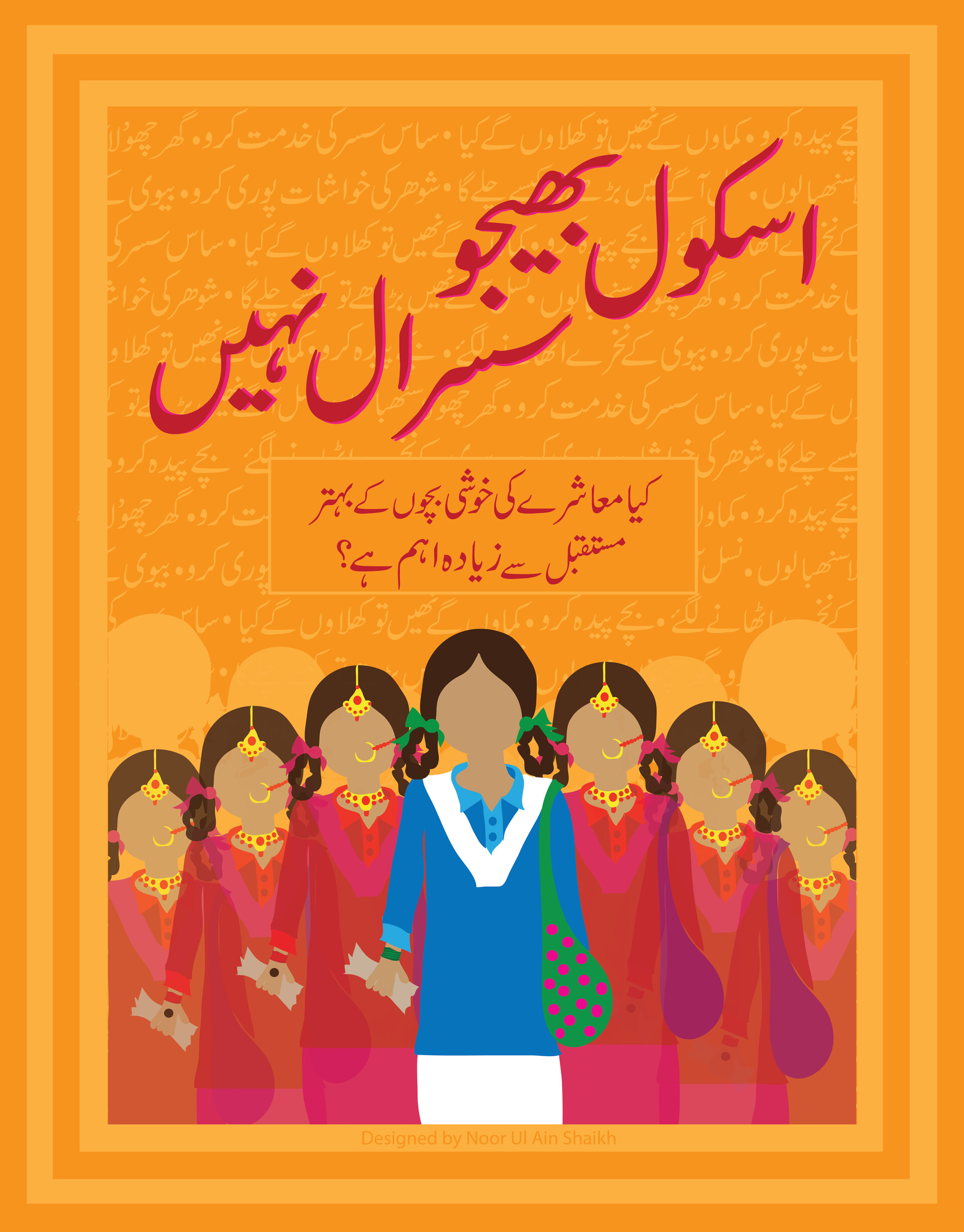
Conclusion
Child marriage in Pakistan is a condition which is both chronic and lasting. As a result, just
passing legislation or enforcing bans may not be sufficient to halt this tendency. The causes are deeply ingrained in societal habits and individual attitudes. A broad public awareness campaign, as well as encouragement of continued education and good health, can serve as a springboard to the final goal. The country must recognize at all levels, from community to individual, that marrying girls at a young age is not a solution to any problem; rather, it is a problem in and of itself, causing the generation to face lifetime troubles.
To overcome this issue, empowered local government entities must be in place to guarantee that legal precautions are strictly followed. During the legislative process, Pakistan should not utilize religion or tradition to refer the law to any council or entity other than parliament. To ensure better implementation, CNIC should be made essential for marriage registration. A national campaign can increase awareness about the negative consequences of child marriage. National human rights organizations, such as the National Commission on the Rights of the Child, must take note of the issue and make appropriate policy recommendations. To combat child marriage, all children must be educated. The implementation of assistance services can help empower at-risk females. Girls’ access to supported education options should be expanded, and they should be sent to school rather than being forced into marriage. This will allow our future generations to enjoy healthier, more liberated lives in a more affluent nation.
Neither Sada-e-Watan (Melody Media Productions) nor its sponsoring partners make any warranties or representations as to the accuracy, applicability, completeness, or suitability for any particular purpose of the information contained herein. Sada-e-Watan (Melody Media Productions) and its sponsoring partners expressly disclaim any liability arising from the use or misuse of these materials and, by visiting this site, you agree to release Sada-e-Watan (Melody Media Productions) and its sponsoring partners from any such liability. Do not rely upon the information provided in this content when making decisions regarding financial or legal matters without first consulting with a qualified, licensed professional.