


























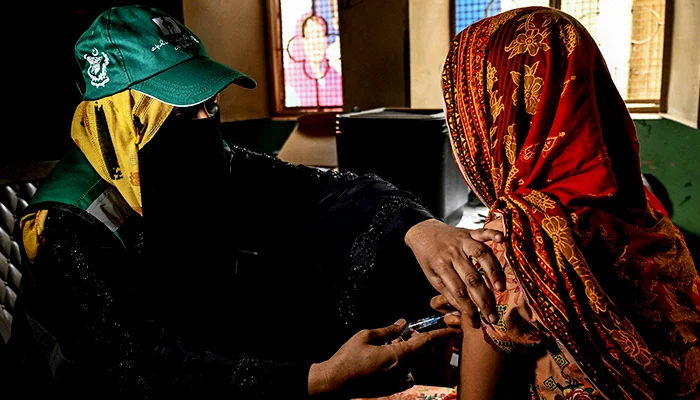
Courtesy: Geo News/AFP
“If effective measures are not taken, the burden of this disease is expected to triple over the next 70 years,” says expert
Eight women lose their lives to cervical cancer every day in Pakistan, according to a health expert, who said that it was an entirely preventable disease.
“If effective measures are not taken, the burden of this disease is expected to triple over the next 70 years,” Dr Muneeba Ahsan Sayeed, associated with Dow University of Health Sciences, said on Wednesday.
Speaking at an event organised at the University of Karachi, she said that it typically takes 15 to 20 years — or even longer — for an HPV infection to develop into cervical cancer.
Globally, Dr Sayeed noted, one woman dies every two minutes from this preventable disease. She added that alarmingly, 90% of these deaths occur in low- and middle-income countries. Of the 660,000 cervical cancer cases reported worldwide each year, the health expert noted, 95% are caused by HPV infection.
Dr Sayeed further highlighted that Pakistan has now become the second-largest country in South Asia, after India, with the highest number of children who have not received any routine vaccinations. This figure stands at 419,000 children, according to data from a recent study published in the British medical journal The Lancet, she said.
The health expert also shared that in 2023, Pakistan reported between 4,700 and 4,800 new cases of cervical cancer and nearly 3,000 related deaths, translating into 5.4 women per 100,000 being affected, with a mortality rate of 64%.
She added that although the country has over 123.8 million women, the proportion of reported cases is just 0.004%. HPV is a common virus, and it is estimated that 50% to 80% of women will contract it at some point in their lives. Of these, nearly half are infected with high-risk strains that have the potential to cause cancer.
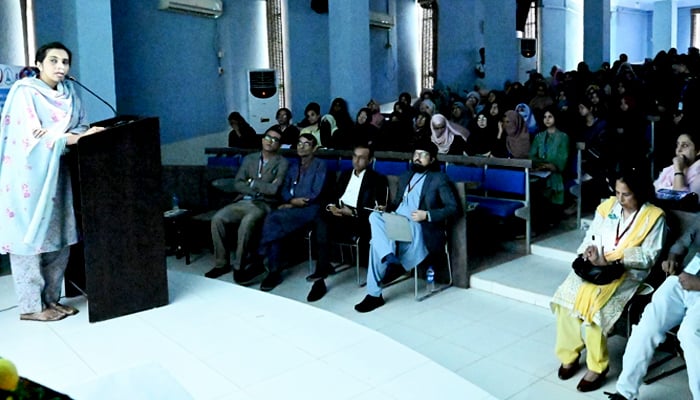 Dr Muneeba Ahsan Sayeed, associated with Dow University of Health
Sciences, speaks during a seminar in Karachi, on October 1, 2025. — University of Karachi
Dr Sayeed noted that Pakistan officially launched its first national campaign for the Human Papillomavirus (HPV) vaccine on September 15, 2025. In South Asia, Pakistan is the second-to-last country to include the HPV vaccine in its routine immunisation program. “Pakistan also remains one of the last two countries — alongside Afghanistan — where the polio virus still exists at the local level, despite global efforts to eradicate it.”
The health expert pointed out that a World Health Organisation study conducted between 2021 and 2023 across 18 healthcare centres in Pakistan reported only 1,580 cases of cervical cancer. She added that this low number reflects the severe underreporting of the disease, primarily due to limited screening and the absence of a national cancer registry.
District Health Officer, Karachi, East, Dr Zahid Solangi, said that the HPV vaccine has received a positive response in rural areas. “A significant number of families have ensured their daughters received the vaccine.”
He confirmed that the vaccine will continue to be available until December, after which it will be administered under the Expanded Program on Immunisation (EPI).
Another speaker, Dr Kiran Iqbal Masood from Aga Khan University, explained the molecular structure of the HPV virus, noting its ability to interact with human DNA and cause mutations. She emphasised that the virus can spread through means other than sexual contact, making vaccination all the more essential.
The Chief Executive Officer of a private laboratory, Dr Farhan Essa, stressed that Pakistan’s youth are a valuable asset who can contribute to national progress by prioritising their health. He praised the government’s initiative to provide the HPV vaccine free of cost, encouraging young people — especially girls — to take full advantage of it.