




















By Areeba Khan
Master of Business Administration
MBA
Image: Dawn
Religious Intolerance
مذہبی عدمِ برداشت
धार्मिक असहिष्णुता
Faith Under Fire
“Never, never, never join a movement that persecutes people because of their faith.”
“The greatest problem in the world today is intolerance. Everyone is so intolerant of each other.”
“Tolerance is a good cornerstone on which to build human relationships.”

Religious discrimination in Pakistan is a serious issue for the human rights situation in modern-day Pakistan. Hindus, Christians, Sikhs, Shias, and Ahmadis among other religious minorities often face discrimination and at times are even subjected to violence.
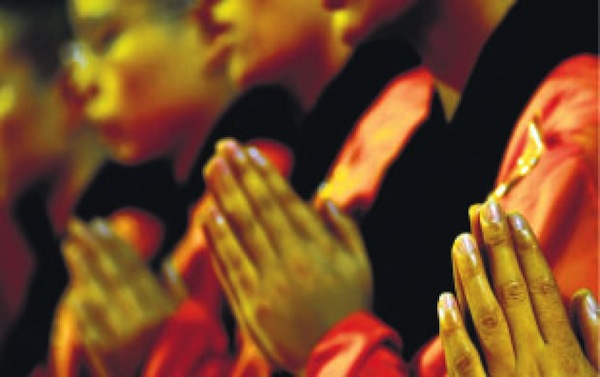
Human rights activists reported numerous instances of societal violence related to allegations of blasphemy; of efforts by individuals to coerce religious minorities to convert, and of societal harassment, discrimination, and threats of violence directed at members of religious minority communities. NGOs expressed concern about what they stated was the increasing frequency of attempts to kidnap, forcibly convert, and forcibly marry young women and girls from religious minority communities, especially Hindus and Christians. Estimates of the number of forced or coerced conversions vary widely – from as few as five per year to as many as 500. The NGO Center for Social Justice recorded 124 cases of forced or coerced conversions of young women and girls through marriage during the year, an increase of 59 percent over the organization’s count of 78 cases in the previous year. There continued to be reports of attacks on Ahmadi, Hindu, and Christian holy places, cemeteries, and religious symbols. Civil society groups and some religious leaders continued to express concerns about the safety of religious minorities.
Abuses against women and girls – including rape, murder through so-called honor killings, acid attacks, domestic violence, and forced marriage – remained common in 2023-2024. It’s very common, religious extremists committed a series of acid attacks on women in the Balochistan province.
Pakistan has grappled with religious intolerance, fueled by the intertwining of politics and blasphemy laws. The recent incident in the small town of Jaranwala in Punjab, which led to a series of attacks on churches, following accusations of blasphemy, spotlights this ongoing issue. Weak governance structures and unchecked clerical power worsen the problem.

Pakistan’s Christians account for around 1.5% of the country’s mainly Muslim population. Persecution of the minority in the past has largely been linked to a controversial blasphemy law, which allows anyone to accuse a person of insulting religion, without having to produce evidence. The law has often been abused to target minorities, settle vendettas and personal disputes.
Christians are not the only minority to be targeted. Pakistan is a majority Sunni Muslim country and sectarian attacks against its Shia Muslims have included several bombings that left hundreds dead. The country’s Ahmadi community – a breakaway sect of Muslims declared non-Muslims for their religious beliefs – have long been persecuted.
Terrorists have targeted people in places of worship across the country – Shia imambargahs, Sufi shrines and Sunni mosques have been bombed or attacked by gunmen.
More deadly
Attacks against minority groups in Pakistan are on the rise. Each year is becoming more deadly than the last according to human rights groups, which have been keeping tally on the startling statistics.
Pakistan is home to multiple minority communities who are often the victims of proselytisation and other forms of systematic oppression, persecution and opportunistic violence. For Christians, in particular, Pakistan is considered the seventh most dangerous country to live in by the World Watch List 2023. Moreover, the International Christian Concern has documented more than 300 cases of Persecution against the Christian community from 2019 to 2021, ranging from accusations of blasphemy to forced conversions and mob-led violence. The legally ambiguous nature of the blasphemy laws is often misused with impunity, fostering an unfortunate culture of mob mentality and vigilantism across the country. Pakistan’s government did little to stop the rising toll of killings and repression by extremists groups that target religious minorities.
 Christian community in Pakistan
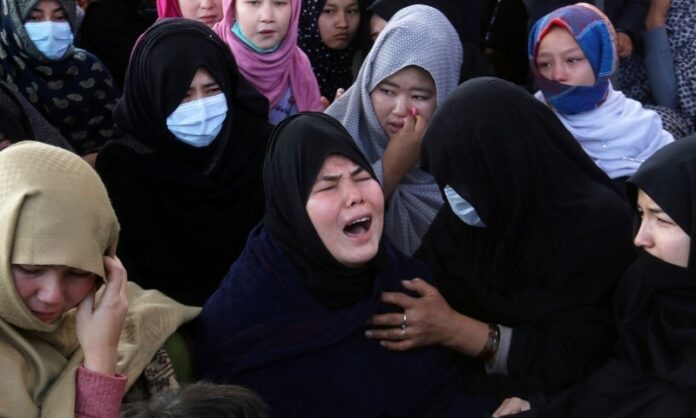 Hazara Shi’a community in Pakistan
Hindu community in Pakistan
In Pakistan, religion has been serving a very controversial purpose. Pakistan was established in 1947 on the basis of Islamic fundamentalism, it is home to many communities, such as Ahmadis, Christians, Hindus, and Sikhs and many more.
South Asia’s problems with religious liberty and intercommunal violence are intricate and have long historical roots. The reason behind partition was to provide a separate land for majority that now lives in Pakistan to have freedom go living their life according to their religious beliefs. When the British ceased their colonial control in the Indian Subcontinent in 1947. But the greatest departure in human history quickly turned into a widespread partisan slaughter, with hundreds of thousands lost in rioting between Muslims and Hindus and Sikhs. The division’s wounds continue to fuel Indo-Pakistani competition and shape their opposing views of what it means to be a nation. Now India is a secular state and Pakistan is Home to the majority.

For example, Even though people of these countries are protected by International laws, where there religious rights are safe guarded along with their rights as a minority, the reality is different. Religious discrimination and persecution is still an underlying issue in Pakistan. People are still tortured in numerous ways including physical attracts, economic enslavement and making them outcasts.
The biggest reason can be the political and historical events this region has been through. There’s always been inequality between genders and biasedness of the society. The tears of faith has not been dried up from the memories of tormenting religious partition that took place in august of 1997. These partitions would have been beneficial if religion was not too effective on the politics.
The founding father of Pakistan Played a key role in resolving the issue of conflicts between the religions. He even said on 11th august 1947 “You may belong to any religion or caste or creed – that has nothing to do with the business of the state … We are starting with this fundamental principle that we are all citizens and equal citizens of one state”
Religious extremism is a grave menace to Pakistan’s human rights situation in the modern-day world. Hindus, Muslims, Sikhs, Christians and other religious minorities in Pakistan face frequent discrimination. They feel threatened in their homes and working places in Pakistan. When Pakistan was founded in 1947, its makers had dreamt of founding a secular state, where every individual regardless of their faith would be given equal opportunities and allowed to live their life freely. But, things are vice versa in modern-day Pakistan which does not reflect the vision of Quaid and Iqbal.
Additionally, things have worsened in the past few decades due to a combination of certain factors which include a radicalized Pakistani society, an educational institution that breeds hatred and a set of laws that Muslim majorities use against other minorities for their vendettas.
The country might be made in the name of one religion but it was not welcoming to all. Founding father tried but the people did not. The main reason was to unite all the people and nations under one roof for the betterment of the People as a whole. Because the majority and its religion was supposed to be a unifying force for all. Remember no religion supports violence. So it was their responsibility to protect the rights of the others and to uphold the principles of religious rights along with the Human rights.
Let’s discuss few points that might be the reason for the fire that burns behind the false facade of humanity and unity.
Current Political situation:
Pakistan has been going through political instability since birth and there were more dictatorship regimes than democracy. All those times were consisting of laws that belonged to majority’s sharia. Again following sharia is not wrong but making others feel uncomfortable is. Pakistan gave rights to minorities to choose their leaders but forgot to give them powers with that. So minorities never actually enjoyed the freedom. There’s always a cloud of terror surrounding them because they know nobody would be coming for help. Pakistan today is going through roughest trial of the existence. Political instability has never been this bad. There’s been many cases of religious turmoil in this regime alone. Nothing has been done for the relief of people who suffered. Media play shows otherwise. But behind the camera people are still waiting for aid after losing everything in the hand of Mob that lacks reality check. How ironic it is that all the cases from current political regimes are false and result of personal grudge. However government failed to protect its own citizens.
Education system of Pakistan:
One of the main reason that education system religious system ferociously dictates is Prejudice. It has been established that the textbooks showcase intolerance and it provides young people very inaccurate knowledge about the minorities. The curriculum is very outdated. It almost never stated anything good regarding religious minorities. Even their contributions in making of Pakistan are neglected. The current contributions are not taken into account either. It also do not address concerns of religious plurality or tolerance/intolerance. This ultimately breeds bigotry and ignorance. The system is giving an option to minorities to study compulsory Ethics but very unfortunately teachers are not ready to teach. And during exams children studying ethics are treated differently. Schools or work place minorities are harassed. This type of behavior leads to inferiority complex in young minds.
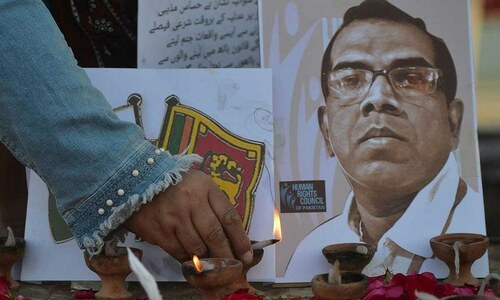 Priyantha Kumara, a Sri Lankan, was brutally murdered
in Sialkot, shames the nation.
Media of Pakistan:
Media in Pakistan is known for being partial. Its Media shows an example of sheep tricks. The media conceals the problems and unfair treatments that happen to minorities. And if it’s reported it’s mostly misinformation and very precise information. Harmful stereotypes and distorted views are of the most dangerous thing that is happening right now. Media is consumed on daily basis and that is why correct and current information is necessary. There are many transmissions and other things that happen to exist along with the hundreds of the channels. It’s not wrong to glorify ones belief but forcing it on others is. It’s like living in someone else’ house and it’s awkward all the time.
Laws and trends:
One takeaway in all such circumstances remains common: in a society governed by the rule of law, individuals must refrain from assuming the role of judge, jury, and executioner. The recent surge in cases where people have resorted to acts of violence against the accused without due process and concrete evidence is not only deeply harrowing but also undermines the very foundations of justice our country was established on – perpetuating a dangerous cycle of vigilantism.
While it is understandable that emotions may run high in the face of heinous crimes or perceived injustices, it is crucial to remember that our legal system is designed to ensure fairness and impartiality.
By taking matters into their own hands, individuals also risk compromising the integrity of the judicial process. The principle of “innocent until proven guilty” is a cornerstone of any civilized society. It serves as a safeguard against the potential for wrongful convictions and protects the rights of the accused. By bypassing this fundamental principle and resorting to violence, individuals not only deny the accused their right to a fair trial but also implicate themselves in the process.
To address these underlying issues, public awareness campaigns are crucial to shed light on the consequences of making false accusations, as well as provide guidance on how to navigate such situations, should one encounter them.
Pakistan’s Blasphemy Laws are just for targeting already hurting minorities and it is just promoting the ongoing prejudice. Unfortunately it’s also used to blackmail the rivals. Despite the fact this Law was supposed to protect and safeguard the people. This results in dangerous consequences and executions, violent crimes and it also creates a sense of hopelessness because people don’t find any justice. There’s been countless cases that led to riots and torturous situations. There were cases where people were killed just on the basis of suspicion. Drinking water from a tap can be a reason for blasphemy in Land of Pure. Out of all things when the justice system fails everything else fails as well.
There are deliberate attempts to put people into situations that are uncomfortable, so trends that can be harmful shouldn’t be supported in any way.
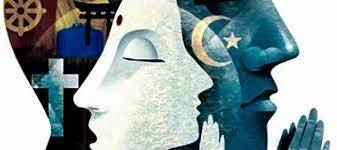
Family and Upbringing:
Family attitudes and religious instruction within household, schools and work places. It can shape individuals mindsets and contribute to the continuation of Hostility and sense of discrimination towards minorities.
Solution:
Eradicating religious intolerance is a many-sided venture that needs efforts on several levels. Here’s what we can do:
Education:
In the intricacies that characterize interfaith relations, lack of education plays a significant role in escalating tensions. Ignorance and misinformation thrive when people lack proper knowledge and understanding. In a world where quality education is a privilege, not everyone has the opportunity to objectively assess religious matters. Many people have limited access to information, making them susceptible to manipulation and extremist influences. This vulnerability can lead to tragic incidents like the recent attack in Jaranwala. Education is essential in fostering tolerance and preventing such conflicts.
Considering our changing educational landscape, comprehensive education reforms must be prioritised. As we mold the minds of future generations, our curriculum must incorporate values like religious tolerance, critical thinking and human rights. Religious tolerance, in particular, is a fundamental building block of a harmonious society.
In a world where access to quality education remains a privilege rather than a right, individuals find themselves at a disadvantage when it comes to objectively evaluating religious issues. The generalized and easily influenced mind that remains, thereof, leaves them vulnerable to manipulation and extremist influences, ultimately leading to tragic incidents such as the recent Jaranwala attack itself.
If the syllabus is updated and People are taught about minorities and their achievements it might help everyone to know that co-existence is doable. Diversity is beautiful and there are many people around us, and they should have rights to live and not just that but also to live according to their religion. Apart from that families and elders must educate their children. This can cure the root cause of hate and superiority complex.

Countering hate speech:
Addressing hate speech and promoting persuading communication can help create more tolerant environment. It will help others to understand that the issue is very delicate. It will also motivate them to respect others and to treat them equally.
Legal Protections:
There should be laws and proper ways to protect people who needs protection. There should be severe punishments for the people who misuse the law and hurt minorities. There should be strict actions against people who vandalize and harass others. Mob mentality must not prevail.
Minority should be allowed to live their lives according to their religion. They should be allowed to study about their religion or ethics without the fear of getting bullied for it.
Promoting the interfaith dialogues:
As it is said “Communication is the key”. It can be very beneficial for spreading awareness. Pakistan’s government should ensure the security of the country’s religious minorities from judicial injustice and attacks by militants, Human Rights Watch.
In the intricate tapestry of interfaith relations, one cannot overlook the profound impact that a dearth of education has on exacerbating tensions. It is an unfortunate reality that ignorance and misinformation thrive in the absence of proper knowledge and understanding.

Conclusion:
Amidst a critical juncture in Pakistan’s history, the discourse surrounding Jaranwala has underscored the imperative for resolute measures that go beyond mere rhetoric. It calls for concerted efforts to eradicate extremism and safeguard the country’s rich tapestry of diversity.
At the same time, raising a voice for victims of intolerance and bigotry has become increasingly challenging in a hostile environment. Blasphemy accused often cannot find lawyers to defend them, and the media, particularly in Balochistan, is menaced by threats from various quarters, including religious extremists.
Despite the state’s realisation, at least in part, of the folly of using religious proxies to further political ends, it appears unwilling, or unable, to take the bull by the horns. It is a mark of shame that those who fuel the flames of intolerance and carry out their blood-soaked agenda do so largely with impunity in Pakistan.
In today’s world, marked by social progress is a critical need to reaffirm our commitment to diversity and combat intolerance. These goals offer hope for a more inclusive and harmonious future, but it’s important to recognize that, while they point the way, humans must actively work towards these goals themselves.
In addition, the state must assume the responsibility of safeguarding the rights of the accused, ensuring that they are shielded from any form of extremist retribution. In this era of evolving educational paradigms, we must turn our attention to the pressing need for comprehensive education reforms.
As we strive to shape the minds of future generations, our curriculum must reflect the values of religious tolerance, critical thinking, and human rights. Religious tolerance, a cornerstone of a harmonious society, must be nurtured within the educational framework.
By fostering an environment that encourages understanding and respect for diverse religious beliefs, we equip our students with the tools to navigate an increasingly interconnected world. In doing so, we cultivate a generation that embraces diversity and promotes inclusivity, fostering a society that thrives on mutual respect and understanding.
Pakistan is suffering from many issues but religious intolerance is not only dragging the country through mud but also making people scared and tired of this never ending saga. Educated work force is leaving country and by few years only uneducated people will be left here. That is why we need very brave leadership and strong laws. And institutes that can enforce that law. Strong legal actions are needed to set examples. It is need of the time. It’s now or never!