
























By Pervez Saleem
“We make a living by what we get, but we make a life by what we give”
“The world is a dangerous place, not because of those who do evil, but because of those who look on and do nothing.”
“When a poor person dies of hunger, it has not happened because God did not take care of him or her. It has happened because neither you nor I wanted to give that person what he or she needed.”
“The test of our progress is not whether we add more to the abundance of those who have much; it is whether we provide enough for those who have too little.”
‘Intense’ monsoon rain, flooding continue to engulf Pakistan’s Punjab
Authorities issue new evacuation warnings to communities near the Chenab, Sutlej, and Ravi rivers.
New evacuation orders have been issued in low-lying areas of Pakistan’s Punjab province amid a heavy flood warning, with the region experiencing its worst flooding on record.
The Pakistan Meteorological Department posted on X on Monday that rains were persisting across the country as “another intense monsoon system is expected to bring exceptional downpours in southern parts during the next two days”.
It added that “widespread heavy to very heavy rain thundershowers accompanied by windstorms” were expected to hit areas on Monday.
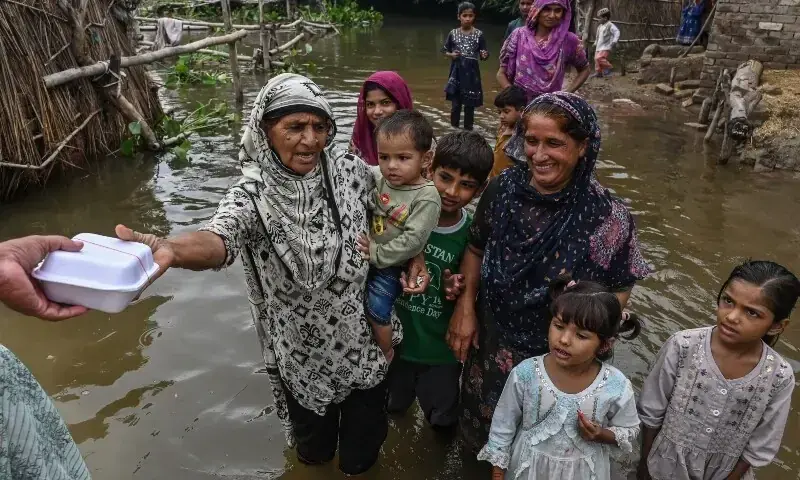
CDP… Center for Disaster Philanthropy
Since Thursday, Aug. 14, at least 350 people have been killed in Pakistan from extreme flooding, mostly in Khyber Pakhtunkhwa (KP) province. More than 150 people are still missing, and 180 are injured.
Rescuers continue to look for missing community members, and relief efforts are now underway. Survivors have a long road to recovery ahead, and will need critical resources to rebuild stronger than before the floods.
Unrelenting monsoon rains and overflowing rivers have triggered devastating floods across Pakistan, leaving entire communities submerged. Villages have been washed away, farmland destroyed, and families forced to flee their homes with nothing but the clothes they wear.
Thousands have already lost loved ones, while hundreds of thousands more remain displaced and at risk as floodwaters continue to rise. With roads cut off and rescue efforts stretched thin, reaching stranded families is becoming increasingly difficult.
The situation is worsening by the hour. Meteorological warnings point to more heavy rainfall ahead, threatening even greater destruction.
 The Pakistan Army’s Corps of Engineers Urban Search and Rescue team
searches for survivors after flash flooding and landslides
devastated communities in Pakistan. (Photo: Pakistan Armed Forces News via X)
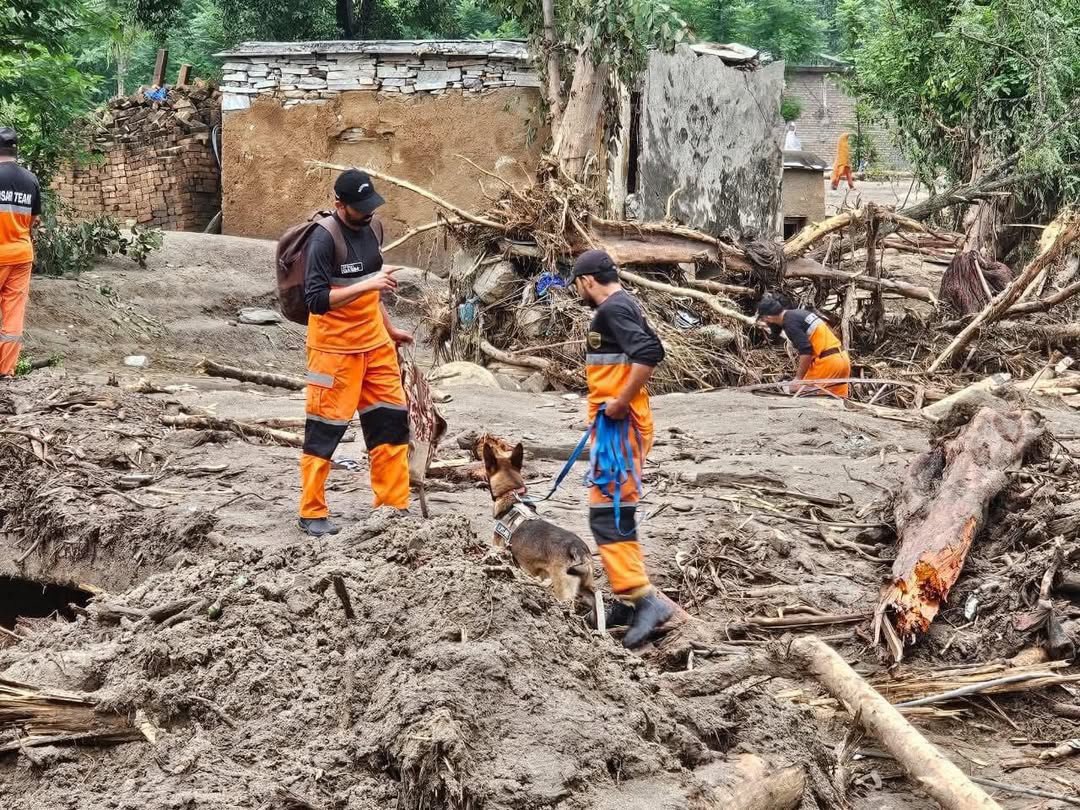 The Pakistan Army’s Corps of Engineers Urban Search and Rescue team
Since Thursday, Aug. 14, at least 350 people have been killed in Pakistan from extreme flooding, mostly in Khyber Pakhtunkhwa (KP) province. More than 150 people are still missing, and 180 are injured.
Rescuers continue to look for missing community members, and relief efforts are now underway. Survivors have a long road to recovery ahead, and will need critical resources to rebuild stronger than before the floods.
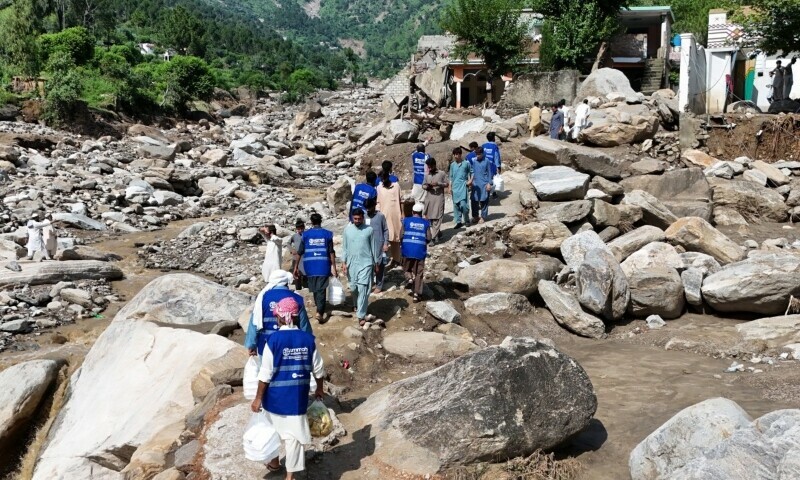
The flood’s devastating impact
Rushing water triggered rockslides, which buried houses and buildings. At least 50% of the houses in the village of Bishnoi have been destroyed, and the others are no longer habitable. While other regions in Pakistan have suffered damage, the mountainous northwest region has been hardest hit.
Residents of Buner, a mountainous area in KP province, where the most fatalities occurred, say they did not receive evacuation alerts or weather warnings on the mosque loudspeaker as they typically do. Officials say it was because the deluge happened too quickly to respond.
Torrential rains caused by the monsoon season, along with rare cloudbursts and melting glaciers all contributed to the flash flooding.
Since June 26, more than 650 people have been killed by flooding in Pakistan. The 2025 monsoon season has already brought over 50% more rain than is typical.
It will be some time before the damage to infrastructure and the actual death toll can be accurately calculated, as more heavy rain has hampered rescue and recovery efforts.
Services
Disasters can occur anytime, anywhere. Hurricanes, wildfires, floods and humanitarian crises are threatening the lives and livelihoods of billions worldwide, creating a critical need to know how and when to effectively give. Through our expert advisory services, we provide tailored solutions to support philanthropic giving for disaster recovery and humanitarian crises.
Sharad Aggarwal, CDP’s vice president of fund management & coalition building,
Yna Moore, senior director of marketing & communications, and Austin Snowbarger,
director of strategy & research.
 Sharad Aggarwal, CDP’s vice president of fund management & coalition building,
When disasters strike, giving feels urgent. But giving well during disasters can be hard – and how, when and what we give makes all the difference for the equitable recovery of those affected.
We know disasters. We bring the full spectrum of our experience to advise foundations, donor-advised funds, wealth advisors, corporations and nonprofits. We meet you where you are in your disaster-giving journey to create bespoke deliverables that speak to your realities and values.
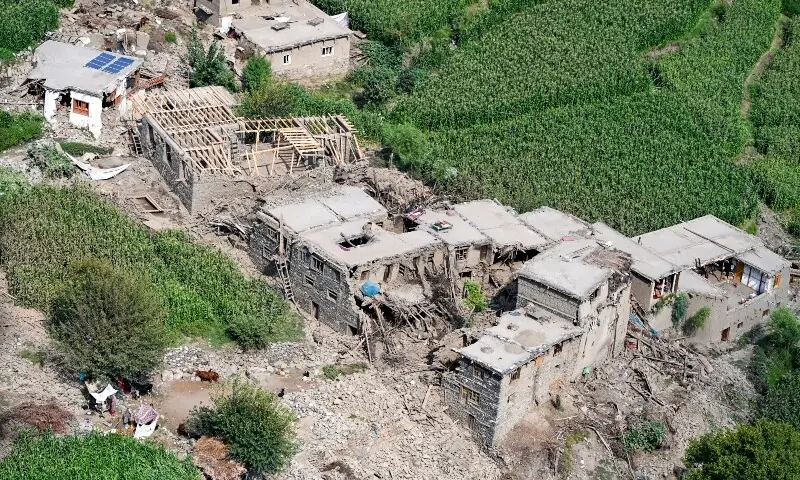
Earthquakes in Afghanistan and a landslide in SudanEarthquake damage in Kunar Province, Afghanistan.
(Source: Afghanistan National Disaster Management Authority via Facebook)
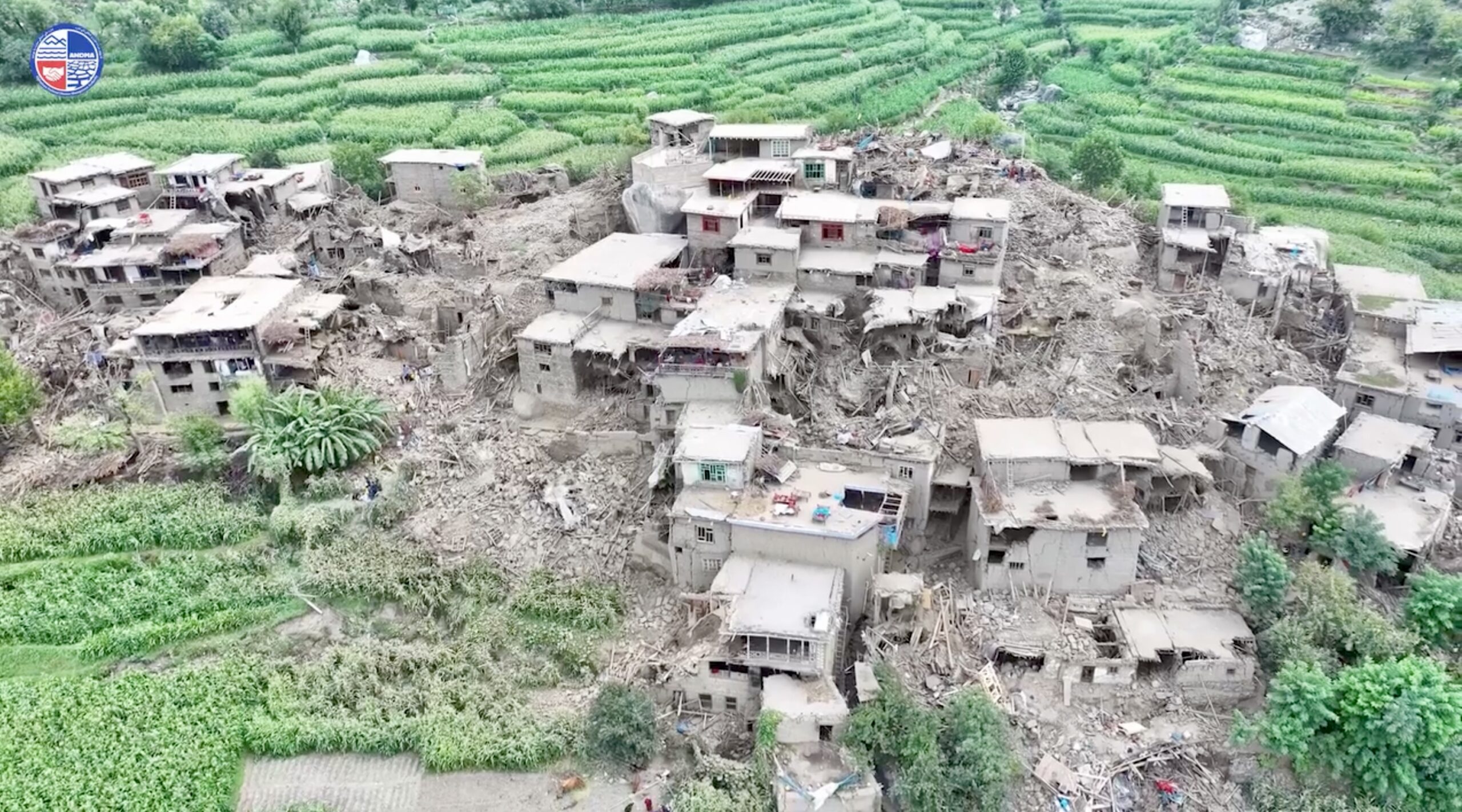 Earthquake damage in Kunar Province, Afghanistan.
Over the weekend, earthquakes in Afghanistan and a landslide in Sudan caused widespread damage and exacerbated existing humanitarian crises.
Afghanistan
A powerful 6.0 magnitude earthquake struck southeastern Afghanistan around midnight on Sunday, Aug. 31. At least 1,411 people died and more than 3,100 were injured, with the death toll expected to rise in the coming days. Rescue efforts have been hampered by difficult terrain and weather conditions. Save the Children reported that their aid workers walked 12 miles to reach villages cut off by rock falls, carrying medical equipment on their backs.

A second 5.5 magnitude earthquake shook the already devastated region near the epicenter of the first quake on Sept. 2, further complicating rescue efforts, although it did not result in more casualties.
About 5,400 homes were destroyed in the Kunar and Nangahar provinces, where most of the damage occurred. Most of these houses were made of wood and mud, collapsing on occupants when the earthquake hit in the middle of the night.
The earthquakes add to multiple crises in the country: the return of 1.2 million Afghans from Pakistan and Iran, extreme drought, a hunger crisis, gender apartheid, and political repression.
Let us help you take the guesswork out of researching who, what and when to fund.
Our Services
We evaluate your organization’s disaster mobilization in the immediate moments after a disaster, as well as in the long-term planning and the regular cadence of support and follow up.
Interested in learning more? Contact us at advising@disasterphilanthropy.org.
“CDP provides Fidelity Charitable with timely information about the latest disasters and helps us assist donors seeking reliable nonprofit organizations to support aid and recovery efforts.” – Elaine Martyn, Senior Vice President, Fidelity Charitable
“CDP is a trusted partner for helping us determine where to make our investments in communities affected by disasters.”
– John Brothers, President, T. Rowe Price Foundation
How you can help
- Give cash. As with most disasters, experts recommend cash donations, which allow on-the-ground agencies to direct funds to the greatest area of need, support economic recovery and ensure in-kind donation management does not detract from disaster recovery needs.
- Support immediate and long-term needs to help survivors recover now and better withstand future disasters.
- Give to locally led humanitarian and aid entities whenever possible. These organizations are vital to long-term equitable recovery in communities after a disaster.
Whether you’d like to speak with one of our expert staff or learn more about the disasters we’re tracking, our latest webinar or our disaster funds, the Center for Disaster Philanthropy would love to hear from you!
Together, we can make a lasting impact on disaster-affected communities worldwide.
Center for Disaster Philanthropy
One Thomas Circle, NW, Suite 700
Washington, DC 20005
Phone: 202-464-2018
Email: info@disasterphilanthropy.org
Report a concern
CDP is committed to nurturing a culture centered on racial and intersectional equity and the values of integrity, boldness and innovation, humility, and empathy. We provide our staff and community partners with a way to report concerns, suggestions, and suspected policy and compliance violations.
Join CDP’s effort to support recovery through our Global Recovery Fund.
Give with confidence The Center for Disaster Philanthropy is a 501(c)(3) charity that has earned Charity Navigator’s four-star rating and Candid’s Platinum Transparency seal. EIN: 45-5257937
Many thanks to CDP and your dedicated staff members who are helping the poor and needy during disasters around the globe …Keep it up!!!