



















By Shagufta Mobeen
Educationist
M.Sc. in Zoology+B.Ed.
Shocking Rise in Divorce Rates in Pakistan
پاکستان میں طلاق کی شرح میں حیران کن اضافہ
पाकिस्तान में तलाक की दरों में चौंकाने वाली बढ़ोतरी
“Divorce isn’t such a tragedy. A tragedy’s staying in an unhappy marriage, teaching your children the wrong things about love.”
“Owning your own story and loving yourself through the process is the bravest thing that we’ll ever do.”
“I used to hope that you’d bring me flowers. Now I plant my own.”
“When my marriage ended, I realized I hadn’t been losing love, I’d been losing myself. Divorce gave me the space to hear my own voice again.”
“Let your hopes, not your hurts, shape your future.”
Introduction
In almost all cultures, marriage is both a sacred union of spouses and a social and legal contract. Divorce happens when a husband says talaaq to his wife. Khula is the dissolution of marriage by mutual consent and at the request of the wife. Marriage is a significant social institution in Pakistan, but in recent years, there has been a sharp rise in divorce and khula cases, causing a lot of concern for policymakers, social scientists and the general public.
Divorce and Khula on the Rise in Pakistan
Divorce and khula are on the rise in Pakistan. Reports said Punjab had 16,942 khula cases in 2014, which rose to 18,901 in 2016. Similarly, a 2017 report said about 21,000 khula cases were registered in Karachi and Lahore.
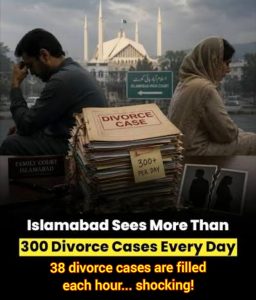
Things get even more alarming when we look at the latest data from Islamabad. The family courts of the federal capital are hearing a large number of divorce and maintenance cases. The courts say that, on average, 38 divorce-related cases are filed each hour during working proceedings. More than 45,000 divorce and khula cases have been filed in Islamabad since the beginning of the year. Officials say more than 300 new cases are being added each day, with monthly filings topping 9,000. Over the past three years the number of cases has grown from 85,000 in 2023 to over 100,000 in 2025.
Finding A Partner Beyond Strengths and Weaknesses
Marriage is a relationship between 2 souls who agree to be life partners of each other with all good and bad qualities. Nobody’s perfect, and a successful marriage requires patience, understanding and a willingness to grow together. The focus for spouses should be on supporting, guiding and encouraging positive change in each other rather than focusing only on each other’s faults.
Divorce should not be the first option; couples should try to resolve their differences through communication, tolerance and mutual respect. In some serious cases divorce might be necessary, but it should be the last option. So couples should try their best to save their relationship and build a stronger, healthier and harmonious family life.
Factors Affecting Marriage Dissolution
The following are the number of factors contribute to divorce and marital breakdown.
1. Insufficient Time and Communication of couples:
One of the primary causes of divorce is lack of communication and quality time for each other. Many husbands don’t give enough time to their wives because they are too busy with their jobs, businesses, friends, or other responsibilities. Women want to conversation to their husbands about their feelings, worries, and daily involvements. As a result of ignoring and discontent is a emotional detachment. In this modern era, the overuse of social media and cell phones has further diminished communication between husbands and wife. Misunderstandings lead towards separation or divorce. Therefore, mutual understanding, honest communication, and quality time is necessary for happy life.
2. Abuse and violence in the home.
One of the most frequent reasons for domestic violence is still divorce. Rosenbaum and O’Leary (1981) found that abusive marriages had rates of marital satisfaction that were significantly lower than those of non-abusive relationships.
A female respondent described her experience:
“My ex abused me physically and mentally. He was a psychotic patient. I remember him torturing me in various ways, such as burning my skin with a cigarette and a hot iron.

Another participant commented:
“The main reason I decided to end this toxic relationship was the mental and physical abuse.”
These experiences demonstrate how abuse erodes trust, emotional safety, and marital stability.
3: Sexual dysfunction and marital dissatisfaction.
Another big reason for divorce is sexual mismatch. In the responses, some partners concealed problems such as incapability, no sexual interest or sexual orientation prior to the marriage.
One respondent shared:
“My husband was very shy and didn’t want to get physical.”
Similarly, male participants expressed unhappiness with a lack of intimacy, which weakened emotional and physical bonds over time.
4: Family pressure and in-law interference.
Frequent mention is made of in-law interference as a significant source of marital conflict in Pakistan. Usually, excessive interference by family members in personal affairs leads to misunderstanding and conflict between spouses.
As one participant stated:
“My ex-mother-in-law had just one son, and she was so jealous she could not share him with me.
Another respondent said they liked each other, but the couple broke up when unwanted family involvement became an issue.
5: Temperamental Disparity.
Differences in personality, values, beliefs and goals in life can all cause marital breakdown. Many couples struggle to be on the same page when they see things very differently and have very different expectations.
One respondent noted:
‘Mental incompatibility was the final reason for separation. He was always putting me down and was jealous of my success.”
This incompatibility often results in ongoing strife and emotional separation between the couple.

Hidden Victims of Divorce: Children
Among all the consequences of divorce, children often suffer the most. They are usually not involved in the conflicts between their parents, yet they are forced to live with the outcomes. Many children experience sadness, insecurity, and emotional stress when their parents separate. They need the presence, guidance, and affection of both parents for healthy development. For this reason, when children are involved, parents should try their best to resolve disagreements through patience, understanding, and mutual respect before deciding to separate.
Divorce in High-Conflict Marriages
Divorce is not good, but there are some situations in which it is good for our mental health. When there is a regular fight, abuse, violence or any type of stress which leads towards suicide or death, then separation is best for you; otherwise, try to handle married life with patience. Because without a life partner, life is also tough for males and females both. There are many cases of divorce in Pakistan.
Divorce happens only when there is not a happy and good situation with a partner. Many famous and rich people are also passing through divorced life.
Some names are mentioned below.
Famous Pakistani YouTuber Rajab Butt. He is a handsome and rich man, but after the birth of one son, Rajab Butt cannot build a home with his wife.
Pakistani actress Sara Chaudhry left the drama industry and developed herself into a hijab and abaya wearer. She lives with their husband according to cultural traditions of the husband, and she is a mother of five children, but unluckily she cannot stabilize a married life, and she got divorced and is spending her life as a single mother.
Some more Pakistani actresses, like Tooba Anwar, got divorced at a young age. Farah Sadia, Hina Altaf, Sanam Baloch, Sajal Ali, Sana Javed, Saira Yousaf, and Sara Bhatti, with Mikaal Zulfiqar and Fiza Ali, all got divorced and are spending their lives independently. So, when anyone is facing stress or threats to life, the divorce is necessary.

Conclusion
The rising divorce rate in Pakistan shows a significant social challenge. Domestic violence, in-law interference, communication issues, and mental incompatibility are all factors of divorce. At the same time, divorce has serious side effects, including stress, financial problems and negative effects on children.
Marital issues can be reduced if husbands are willing to make positive changes in their attitude, seek proper counselling, learn skills of how to manage anger and improve their communication with their wives. Such change results in regulation and lower divorce rates.
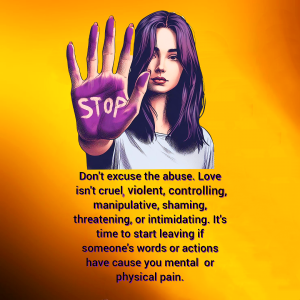
You may not think you are being abused if you’re not being hurt physically. But emotional and verbal abuse can have short-term and long-lasting effects that are just as serious as the effects of physical abuse. Emotional and verbal abuse includes insults and attempts to scare, isolate, or control you. It is also often a sign that physical abuse may follow. Emotional and verbal abuse may also continue if physical abuse starts. If you have been abused, it is never your fault.
A woman should consider getting a divorce when the relationship consistently undermines her safety, or well-being, or verbal or physical abuse and repeated attempts to resolve the issues have failed.
The protection of life and dignity must take precedence over all other considerations.
Disclaimer:
Sada-E-Watan provides news and opinion articles as a service to our readers. These articles and news items come from sources outside of our organization. Where possible, the author and the source are documented within each article. Statements and opinions expressed in these articles are solely those of the author (reporter/newspaper) or authors (reporters/newspapers) and may or may not be shared by the staff and management of Sada-E-Watan. Sada-E-Watan was created to provide one convenient central location where a user can quickly scan headlines from many news sources. The headlines listed on Sada-E-Watan pages are links to stories on the sites where these stories are located. The goal of Sada-E-Watan is to help readers access stories on web sites that they would normally not have time to view on a regular basis and to add value to the news source sites by mentioning their name on top, so readers can view these sites.
The Sada-E-Watan takes no responsibility for any loss or damage suffered as a result of using the linked websites or as a result of using the information published on any of the pages of the linked websites.
Whilst every effort is made to ensure downloadable content is free from viruses, Sada-E-Watan cannot accept any liability for damages resulting from virus infection. You should take adequate steps to ensure your virus check regularly when using any device. If you have any questions or comments about Sada-E-Watan, please contact us at: radio@sada-e-watan.com.