
















By Asma Ali
Master of Arts(MA)
English Literature
Stand up Against Racism
نسل پرستی کے خلاف اُٹھ کھڑے ہوں
नस्लवाद के खिलाफ खड़े हो जाओ

“Prejudice is a burden that confuses the past, threatens the future, and renders the present inaccessible.”
“It is not our differences that divide us. It is our inability to recognize, accept, and celebrate those differences.”
“Racism is the biggest danger people create for each other, showing the most hate for the
least reason.”
“Racism is not born, it’s taught.”
“Racism is a burden that confuses the past, threatens the future, and renders the present
inaccessible.”
“There is no such thing as race. None. There is just a human race – scientifically,
anthropologically.”
“I refuse to accept the view that mankind is so tragically bound to the starless midnight of racism and war that the bright daybreak of peace and brotherhood can never become a reality… I believe that unarmed truth and unconditional love will have the final word”. – Dr. Martin Luther King Jr.
“If you are neutral in situations of injustice, you have chosen the side of the oppressor.” – Desmond Tutu
“As long as there is racial privilege, racism will never end.”
“Racism In Pakistan”
Racism is a word derived from an Arabic word “ra’s” meaning “head, beginning or origin” or it may be derived from an Hebrew word “rosh” having the same meaning. Racism occurs when someone is treated unfairly subjected to inequality, mistreated, embarrassed, or belittled due to their race or ethnicity.
Racism is the ideology that humans can be categorized into distinct and isolated biological groups referred to as “races”. Racism is that there is a direct connection between inherited physical characteristics and attributes of personality, intelligence, morality, as well as other cultural and behavioral traits; and that certain races are inherently superior to others Racism is the unfair treatment and bias against individuals due to their race or ethnic background. It refers to the mechanism through which systems, policies, behaviors, and mindsets generate unequal opportunities and results for individuals based on their race. It goes beyond mere bias in thoughts or actions. Racism happens when this bias—whether on an individual or organizational level—is paired with the authority to discriminate, oppress, or restrict the rights of others.
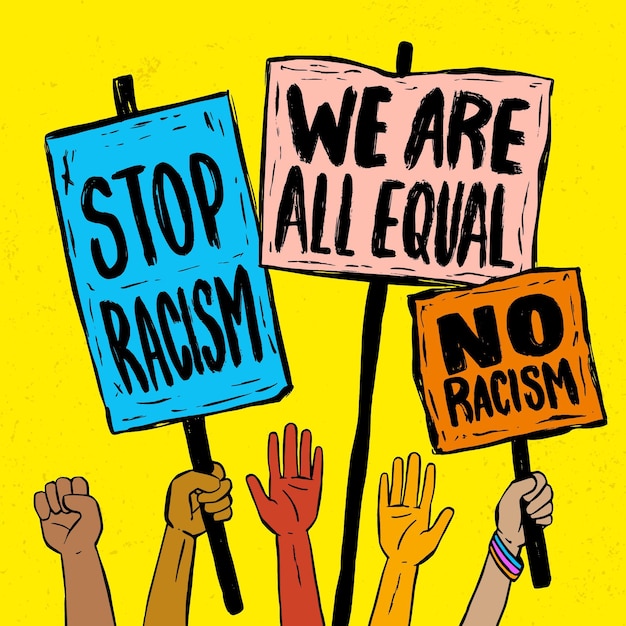
“Racism is toxic for every society”
Theory of racism is “The belief that different races possess distinct characteristics, abilities, or qualities, especially so as to distinguish them as inferior or superior to one another.” To understand racial prejudice, we must first comprehend the concept of race. For thousands of years, humans were unaware of the idea of race. In the 16th century, the concept of race emerged due to slavery, and in the 17th century, this idea became further strengthened in the name of knowledge and science.
A racist believes that humans can be divided into different “races,” and that some of these races are naturally superior to others. This belief results in discrimination and prejudice. Racists may knowingly or unknowingly act or support ideas that maintain racial inequality and contribute to the marginalization (oppression or exclusion) of certain racial groups. In essence, a racist holds harmful beliefs about race that influence how they treat others, often leading to unjust social, political, or economic inequalities.
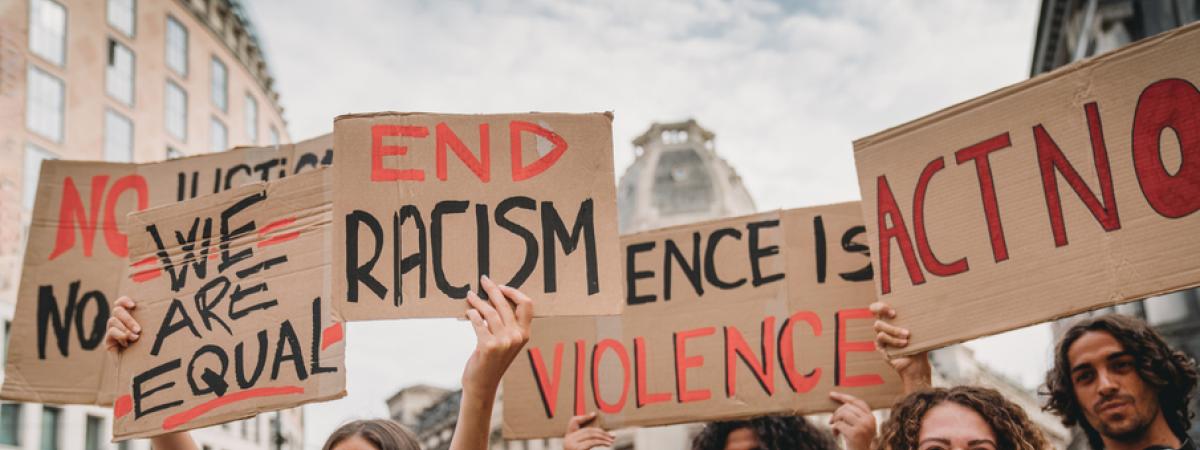
Racism is subdivided into several categories. Here are some common types:
Self- hate racism is a kind of racism whereby a person harbours negative thoughts about
their own ethnicity. They are all sinful but this one is the worst because it messes up with
someone’s identity and self esteem.
It is also referred to as individual racism, whereby one treats another individual with envy
or discriminates on grounds of his or her race. This can be defined as prejudice or biased conduct towards the latter in light of his/her race.
Systemic Racism also known as institutional Racism is actually a discrimination where
individuals, organizations or even certain communities of a particular color are favored over the others while the other color preference is neglected or suppressed. This type of racism is however manifested through the rules, laws and policies of organizations. It means discrimination based on the color of people’s skin. The devaluing of one’s culture involves dismissing or undermining the traditions and practices of a community, often replacing them with the culture of more dominant nations, which are seen as superior or more advanced.
Interpersonal racism is racism which occurs within social relations of individuals. This can be spoken by using a racial slur to insult the race, using racially insensitive humor or acting aggressively towards the person.
Another form is environmental racism that is mostly so where the minority groups are settled in regions which are near industrial areas which emit hazardous products or where they are not able to obtain products such as air and water which are clean.
These forms of racism are normally mutual; they build on each other to amplify inequalities in the racial relations in society.

Racism is a social evil which has been around since time immemorial across the world. On the one hand, Pakistan is called a multicultural country with ethnic, language, and cultural diversity, but on the other hand, racism in the country is still a hidden problem. To start with, employment discrimination, police brutality, ethnic stereotyping and institutional biases are rampant and touch almost every community or an individual in this country.
These divisions exist in a country that prides in unity and diversity. How does it happen to be like this? This article will thus endeavor to unravel the layering of Racism in Pakistan, and its effects on various groups ranging from ethnic to migrant and intra-national. We will also look into how these social; cultural; and institutional frameworks help maintain these biases and look into how to address racism.
Pakistan has a closely intertwined social, cultural and historical context of beauty which is an unhealthy practice, a racism tendency, which discriminates the dark complexioned from the fair skinned. The ‘beauty racism’ in Pakistan, therefore, not only imposes the society’s prejudice on the citizens but also enshrines racism against the citizens on the basis of their color. Light skin is rather associated with beauty, success, and high social rank in a society of the Islamic Republic of Pakistan. This is because media, advertising and even the general cultural values promote and uphold light skin as the best standard. Skin tone reduces beauty perception in everyday life as depicted by the fairness creams, promises to lighten skin color and matrimonial ads looking for “fair brides”. This color discrimination we see today can be attributed to colonial history in which light skin color was linked to power. This is the reason as to why people with light skin are considered to be better than those with dark skin tones even to this day. This is evident in social relations, employment, marriage and even feelings of inferiority especially by women. Due to having dark or wheatish complexions, girls often face difficulties in getting married. They suffer from inferiority complexes, and their self-confidence diminishes. This issue is not
limited to women; men also face this problem in society. They have to struggle a lot to secure jobs, which affects their self-confidence. People with wheatish or dark skin are often called by derogatory names, which is a very wrong practice. “We all should know that diversity makes for a rich tapestry, and we must understand that all the threads of the tapestry are equal in value, no matter their color.” (Maya Angelou)

Pakistan has the largest African immigrant population known as “Sheedi” community and mostly living in Karachi, Pakistan. Sheedis belong to black race and They continue to face colorism, racism and prejudice from mainstream Pakistani society. Majority of sheedis are confined to “Lyari”, a city slum known for drugs, gangs and a struggling education system. It’s an example of colour discrimination.
Regionalism or provincialism in Pakistan is a type of racism that reveals ethnic hatred between Pakistan’s provinces and ethnic groups. As is evident from the above discussion, even though Pakistan is a country that shares religious and cultural bonds, internal provincial differences, in actuality, promote racism and discrimination. This kind of provincialism results in social, economical and political divides in different regions with ethnic stereotyping and prejudice making the issue worse. Pakistan has been divided into different provinces that have been having different culture, language and ethnic background and those are Punjab, Sindh, Balochistan and Khyber Pakhtunkhwa. On the one hand, these differences are very enriching from the multicultural perspective, on the other hand, they have led to inter-provincial prejudices and competitions. This way many times people of different provinces are stereotyped; Punjabi as Provincial, Sindhi as conservative, Baloch as primitive and Pukhtun as militant.
 The racism of provincialism is seen based on different aspects such as; development, political power, and economical power. Punjab continues to be accused of exploiting the federal resources more than the others, despite the fact that it is the most populous province and holds political power in the country while provinces like Balochistan and Sindh always get ignored. This inequality leads to feelings of resentment thus provoking provincial complaints and hostility that may cause division of the country.There are migrant people like Muhajir, Hazara and others; some minor tribes of Pakistan are Saraiki, Kashmiri, Gilgit etc. On the one hand, it boosts the cultural pluralism of the country,on the other hand, ethnic tensions in the Pakistani ethnic areas affect their social, political and economical relations. Muhajirs, Urdu-speaking immigrants who migrated to Pakistanafter partition, are concentrated in Karachi and other urban areas of Sindh. Initially politically dominant, they now face ethnic conflict with Sindhis and Pashtuns. The Hazara community, a Shia ethnic minority primarily in Quetta, Balochistan, faces both ethnic and sectarian persecution. Hazaras are frequently targeted in terrorist attacks by extremist groups, and their distinct features make them easily identifiable, making them particularly vulnerable to violence and discrimination.
“Injustice anywhere, is a threat to justice Everywhere”
Racism in its manifestation of religious discrimination continues to be a burning issue in Pakistan’s diverse society. In a country that has its founding based on the Islamic solidarity, religious minorities live through being discriminated against, socially persecuted and at times physically attacked. It is not just a matter of people of different religions having different beliefs but religion as a premise for discriminating against people based on caste, color, ethnicity and political status in urban Pakistan.
Although most people in Pakistan are Muslims there are different minority groups like the Christians, Hindus, Ahmadis, Sikhs and more that experience high levels of intolerance. They are socially marginalized and discriminated groups of people who are barred from practicing their rights, are unemployed or even if they are employed their rights to practice Employees’ rights, cannot practice the right to education since they are prohibited from going to school or accessing education institutions, are always at risk of being charged with blasphemy. Among religious minorities the Ahmediyya community being declared legally non-Muslim by the state faces extreme institutional and social oppression.
Religious intolerance is also mutual when it comes to the two sects of the Muslims; Sunnis and Shias. This has been marked with incidents of sectarian violence whose causes are mostly rooted in political and radical religious beliefs where minority sects have been prone to targeted killings and feel insecure.
Religion in Pakistan becomes racism in which the principles of discrimination are supported by laws and policies. In addition, prejudice based on ethnicity or religion further isolates members of religions in the society so that hate and prejudice become the dominant mindset of the society.

“No one is born hating another person because of the color of his skin, or his background,
or his religion.”
Feudalism in Pakistan has strong roots in the society and the economy; however, it is not limited to mere classism; it actually incorporates a quite raw and rather new form of racism defined by power and property. The feudal racism means the caste that puts the rights of the lords owning fields in the first place discriminates and oppresses the peasants of the rural areas who are frequent low castes or ethnic groups. This form of oppression leads to the society developing a caste system in which economic status and social status in terms of an individual’s ancestry and tribe are well associated. The feudal Lord dominates in the provinces of especially Sindh, Punjab as well as Balochistan and controls the local people completely. Often these landowners are economically and politically powerful, owning large
cereal-producible land and owning peasants who are bound by socio-political structures and have hardly any rights to own land or demand fair wages for their work. Most of them belong to marginalized or discriminated ethnic or caste groups in their respective home country and due to their illiteracy and poverty, they end up being bonded laborers, and having no education at all.
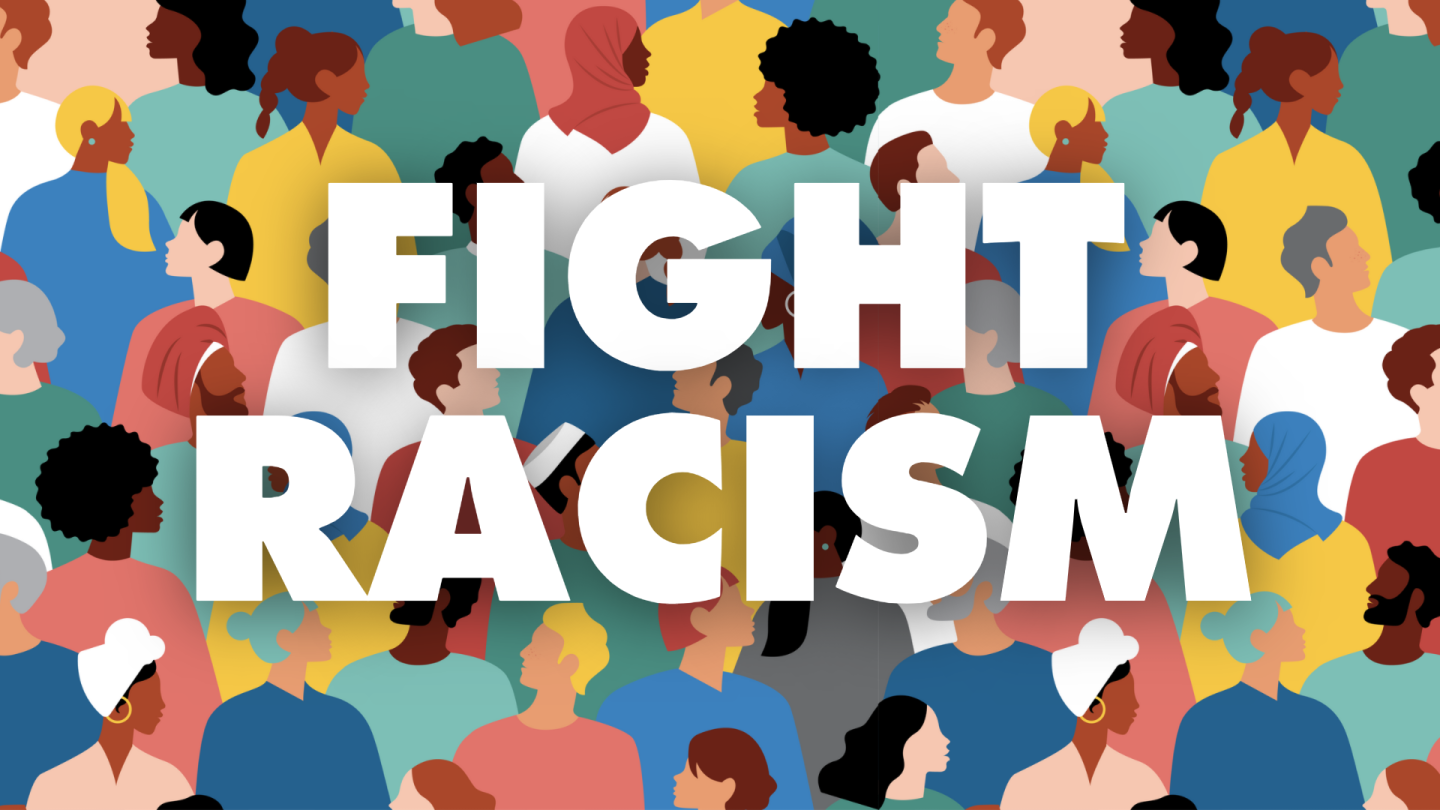
Another facet of racists of feudalism includes how several nobility vested land owners regard themselves superior to the employees they hire or engage for labor purposes with the aid of their wealth coupled with claimed pure blood. Being part of a superior family or clan maintains social inequality since marriage among the different classes or caste groups that are perceived to be of different status is prohibited, and the chances of promoting one’s status are almost non-existent for people in the lower class. While not strictly ethnic, class-based racism in Pakistan often overlaps with ethnic and tribal backgrounds, where individuals from poorer or rural communities are treated as inferior.
Ethnic racism in Pakistan creates deep divides in society, weakening national unity and fostering resentment among different groups. It also impacts social mobility, economic opportunities, and political representation for ethnic minorities.
Self-hate racism in Pakistan can also be expressed in the way that some or many people or some groups of the population start following prejudices and stereotyping and discriminating against their ethnic, linguistic or regional identity. This form of racism is especially subtle, but its origins are truly cultural and social. The following are some of the ways through which self-hate racism can manifest itself in Pakistan.
People with regional languages like Sindhi, Pashto, Balochi, Saraiki, etc. may feel very ashamed to speak their own language rather than Urdu or English. Some parents, for instance, do not allow their children to speak their native language but compel them to speak Urdu or English with a view of being associated with refinement or sophistication or being educated. This is a phenomenon, which is associated with self-hatred in as much as one’s own language is considered as barbarian or unsophisticated.
There are several reports on colorism experienced in different parts of the world but particularly in South Asian countries such as Pakistan, where hue is very symbolic; fair skin being a path to beauty, success as well as superiority. Most of the Sindh and Balochistan people with the dark complexion feel that they are ugly or their life is of no importance because they are black.
Mohajirs are people whose ancestors settled in Pakistan after partition from India and many of them have a complex that they do not really feel like they are Pakistanis even though they were born and raised in Pakistan. A good number of people in the rural settings and especially those who find themselves in the urban centres such as Karachi, Lahore or Islamabad may be embarrassed to admit that they are from a rural setting. Sindhis are culturally represented as either the rich feudal lords or the poor illiterates, this results in some Sindhi people to feel ashamed of their origin. They may feel embarrassed because they have been labelled as coming from a corrupt society. As a result, there is a good chance that a large number of Pakistanis, especially in urban centers, feel inferior to anything ‘Western’ or ‘Foreign.’ Some of them may assume that embracing such things as dressing like Americans or Europeans, speaking English, or acting like them is a means of evading the backwardness of the people’s indigenous ethnicity.
As with many other societies of the world, Pakistan also has the problem of caste discrimination and racism, even though it is rarely talked about or even denied. This form of discrimination is linked with societal categorization in South Asian countries that include Pakistan, where, even today, the systems of social classification such as caste hierarchy is prevalent. Although, majority of the Pakistanis are Muslims and in their context there is no legal acceptance of caste system. The higher classes that are Syed, Sheikh as well as landlords continue to dominate especially in issues to do with wealth, education as well as influence within the political systems.
In this context the Kammi’ means communities having low status and oriented towards services such as sweepers. Likewise, “Musalli” relates to folks associated with occupations, such as, cleaner, sweeper, particularly the lower castes, continue to be subjected to bonded labor, in such forms as the brick kilns and farming.
The Pakistan Constitution provides every person with equal rights irrespective of the cast, creed or religion. But in real life, casteism is still quite integrated into the society of the country. Caste status is not documented, yet it dictates who should marry whom, available job positions and promotions. Some NGOS have tried to fight caste discrimination, but such efforts fail to gain much attention due to other emerging social problems. The topic is still hushed and many people in Pakistan still do not believe that there is such a thing as caste system in Pakistan; people in Pakistan regard caste system to be an Indian problem only.
How to eradicate Racism from Pakistan:
It is a challenging operation to make people of Pakistan free from racism and caste discrimination. Nevertheless the job can and has to be done on governmental, societal, educational, and personal levels.
Here are some key steps that can help address these
deeply rooted issues:
Though Pakistan has laws that prevent any discrimination and that every person is equal before the law it is required to proclaim these laws in their true form to combat the caste and racial discrimination. Changes may be directed on clarifying that discriminations on the basis of caste, color, religion or profession are prohibited and punishable. Establish legally actionable rights and environments where the victims of racial and caste discrimination can report the incidences.. Make sure these systems do not allow organizations to punish those who report it or does not allow organizations to exploit such groups any further and that justice is served quickly.
Schools should have programs that will teach students with effects of cast, racial, and ethnic discrimination. Ethnicity must be embraced in the curriculum so that everyone is valued with everyone else and people should learn to accept everyone. It is also imperative that educational systems implore the learner’s critical thinking skills on the social aspects within the context and challenge discriminative ethnic or religious standards or ‘untouchability’ systems. Educate teachers to look at the question of race and caste, and to combat prejudice in teaching practices. Teachers should also act as models in many areas including in considering the inclusion of everyone.

Encourage the use of TV and Radio and other Social sites to create awareness of the need to eradicate caste and racial discrimination. The future campaigns should focus on the stories of present-day uplift of various minorities, which, in effect, downplays the function of categories that create division.
Religious leaders such as scholars of Islamic religion and other religious leaders can also help to change this by advocating the teachings of no discrimination on any one on grounds of caste, race or ethnicity.
Promote non-governmental organizations and civil society lest they help in creating awareness on caste and racial discriminations especially since most of the regions that practice them are in rural areas. This might go a long way to help in eradicating poverty and discrimination in the cycle of the next generation.
Promote economic liberation processes of the marginalized groups through micro-finance, vocational training and business development so that they can escape from the shameful jobs which are traditionally offered to them.
Promote programs such as inter ethnic and inter caste programs that bring together people of different groups for objective discussions and constructive cooperation. An emphasis for middle management involvement in building relations, schools, universities, and local councils can make significant contributions to reduce barriers between the communities.
Invite different ethnicities and castes for festivals and events so that people feel they are all one and belong to the same country. Explain to directors, producers of TV shows and script writers the importance of promoting characters of different color- in various and more positive roles. Media has the potential to go a long way to change the perceptions of society and demonstrate the strengths and achievements of all groups of people.

Demand the media to be penalized for any promoting hate or racism. Tough legal measures should be taken to make sure that the forms of casteism and racism are prohibited and restricted from the platforms and web-based social media applications.
Extend legal coverage and social acceptance for the marriages with different castes or ethnic-origin couples where these unions are disapproved in various segments of society. They can also assist in the gradual neutralization of societally imposed partitions in the course of time.
It is also important to make sure that the minority groups have input in decision making at local and at national level. Enable them to be involved in political processes and able to contribute to what affects their surroundings. Support mentorship for leadership development of people from the minority groups to enable them hold leadership positions in the community.
Social justice can be achieved in the long run by involving youths through movements with a specific focus on prejudice. Leaders of religious groups have to inform and condemn any tradition in their communities that practices racially or castes biased. Cultural emphasis in line with the Islamic principles of equality and justice can therefore work wonders in the process of transforming people’s attitudes. Embrace and appreciate the culture of other communities in the country and embrace the unity of our nation. This is true because the elements of pride without necessarily having to imply one’s culture as being superior or inferior to the other’s can help in the prevention of discriminating against the other The ultimate aim is to change the perception of a nation’s populace so that one cannot be
judged by their caste, race or color.
Encourage a spirit of nationalism where everyone is felt to have a common heritage disregarding ethnic, racial, and caste differences. Emphasize on the principle that all the citizens of Pakistan are equal in the eyes of the law and the society.
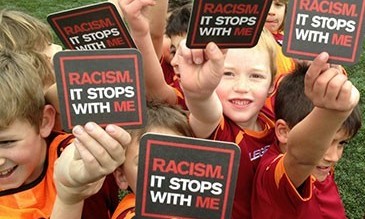
Conclusion:
In conclusion, it can be said that racial prejudice is a threat to Pakistan’s survival. If Pakistan is to emerge as a strong nation, it must rid itself of all kinds of prejudice and hatred. This cannot be achieved solely at the governmental level; we must also make individual efforts, and the first step must begin within our own homes.
In a country as culturally diverse as Pakistan which still continues to experience racism and caste prejudices, the country’s growth is limited. On paper the country prides itself on equality, however the prejudice sewn into the very tapestry of the society opposes this claim. It means a process of positiveness in our nation that is in itself more than the legal positivity; it is the process of social reformation. Only then, can the class-divisions in the name of caste, ethnic, religious etc., can be done away with and can be replaced by an unchanging principle of unity, feeling, respect etc. As Pakistan experiences more changes in decades, the country needs to establish the principles of diversity for everyone democratic and equal citizens of the country in the future. The strength of Pakistan does not rest in these divisions
but in its ability to refute them.
The issue of racism in Pakistan can hardly be fought through legal approaches only; the focus should be made on educating people. Being a multicultural country, Pakistan’s strength comes from the inclusion of its people across caste, ethnic or religions. As soon as we start to recognize our differences as such – as incredible colors in the weave of our society rather than the barriers that alienate us, we will be able to unleash the full potential of our society. Equality is not something that lies somewhere in the stars for it is also here today and it starts with any one of us. And it is only when Pakistani people, regardless of race, color, creed, sexual orientation or gender remain united that it can turn into a symbol of hope that one day anyone wishing to make a difference, to make a change in the world can do so without worrying about what might happen next.
We must have complete faith in it,
“Our true nationality is Mankind.”
“I see no colors, only Humans.”
And more importantly, we should also put it into action.