













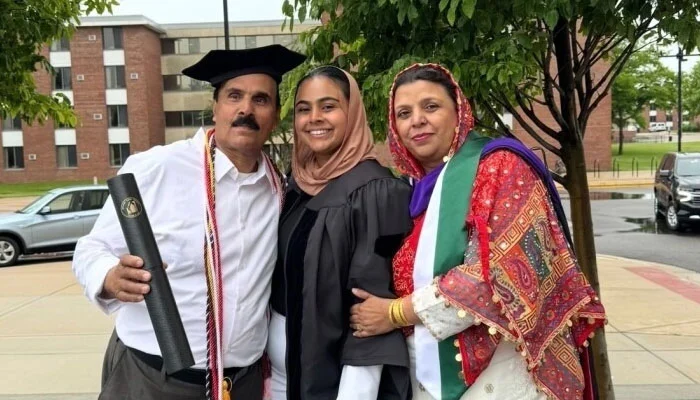










By Ayesha Bashir
Master of Arts (MA)
English Literature
The Growing Threat of Child Sexual Violence in Pakistan:
Causes, Effects, and Preventive Strategies
:پاکستان میں بچوں کے خلاف جنسی تشدد کا بڑھتا ہوا خطرہ
وجوہات، اثرات اور روک تھام کی حکمت عملی
पाकिस्तान में बच्चों के ख़िलाफ़ यौन हिंसा का बढ़ता ख़तरा:
कारण, प्रभाव और रोकथाम के उपाय
A Nation Failing Its Children
Pakistan is confronting a child protection crisis that can no longer be dismissed as a series of
isolated incidents. With disturbing regularity, news emerges of another child sexually assaulted, raped, tortured, or murdered after abuse. The victims are not confined to one city, province, socioeconomic class. They are children from villages and metropolitan centers alike, boys and girls whose lives are permanently altered before they have had the chance to truly begin. Each headline sparks public outrage for a few days, yet the cycle continues, exposing a deeper failure of society and the institutions entrusted with protecting its most vulnerable members. This article examines the scale of the crisis, why it keeps growing, what happens to a child and family in its aftermath, and what it would actually take to change course.

Understanding the Scale of the Crisis:
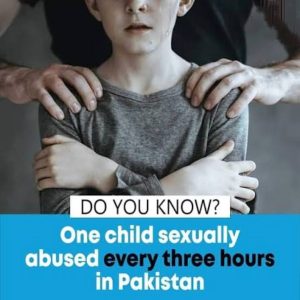
The statistics reveal only part of this grim reality. In 2025, child-protection monitoring data recorded 3,630 reported cases of child abuse, an 8% increase over the previous year —more than nine children reportedly abused every day. Separate figures documented over 2,900childabuse cases in 2024, while other monitoring data for the same year showed over 4,200 children experienced sexual violence, with girls (53%) and boys (47%) both heavily represented. Children aged 11–15 were the most frequently victimized age group. Punjab consistently accounts for the largest share of reported cases — around three-quarters nationally followed by Sindh, Khyber Pakhtunkhwa, and the remaining regions.
Two figures make the scale of institutional failure even clearer. First, roughly 83–93%of reported cases are formally registered with police so the shortfall is not primarily about families refusing to file complaints. Second, despite that registration rate, conviction outcomes are almost negligible: a 2025 parliamentary briefing put the conviction rate for child sexual abuse cases at just 0.7% nationally, with Punjab as low as 0.2% and Sindh at 3.1%, while related crimes like child trafficking and labor saw conviction rates in the low single digits. Separate reporting has cited conviction rates hovering between 5–10% depending on methodology and year, but every estimate places it far below what any functioning justice system would consider acceptable. In a documented 56 cases in a single year, the abuse ended in the child’s murder.
Even these numbers understate the true scale. They represent only the children whose suffering reached the police, courts, or a newspaper reporter much of this monitoring relies on media coverage across roughly 80 newspapers, meaning abuse in remote areas or cases deliberately suppressed by families or communities never enter the record at all. Every serious study of the issue agrees the real number of affected children is significantly higher than what is reported.
The nature of the crimes themselves is equally alarming: rape, gang rape, sodomy, abduction, torture, and, in the most horrific cases, murder following abuse. These are not merely criminal
offences; they are profound violations of childhood itself, leaving families shattered and communities questioning how such brutality continues with such frequency.
Why Child Sexual Violence Is Increasing
1. Parental Supervision Gaps and Communication Failures
Economic hardship undoubtedly places immense pressure on parents, particularly in large households where five or more children may be competing for limited time, attention, and money. These pressures are real, and they deserve to be acknowledged rather than dismissed. However, they cannot replace the need for consistent supervision, communication, and awareness of a child’s daily environment. Research shows child sexual abuse occurs across all socioeconomic classes — poverty and overcrowding can increase vulnerability by reducing supervision and increasing exposure to unsupervised, risky environments, but abuse is also well documented in affluent households where children are left with domestic staff, drivers, or tutors with equally little oversight. This is a supervision and communication problem before it is a class problem.
Where it does show up most visibly is in households where children are routinely sent to shops alone, left to play in the street for hours, or handed off to whichever relative, neighbor, or informal caregiver happens to be available, often so that stretched parents can get some relief from the demands of constant childcare. Time spent this way is time spent outside anyone’s direct supervision, and predators whoever they may be look for precisely these unguarded windows.
Beyond physical supervision, most children are never taught the basics of personal safety: how to recognize inappropriate behavior, whom to trust, what to say if someone touches them wrongly, or that they are allowed to refuse an adult. Conversations about the body, boundaries, and consent remain taboo in most households, so children grow up without the vocabulary to describe what happened to them — and a child who cannot name what occurred cannot ask for help. This silence is precisely what abusers rely on. Data consistently shows that acquaintances— people already inside the family’s circle of trust are the most common category of perpetrator, alongside strangers and, notably, religious teachers. The danger is rarely a stranger on the street; it is very often someone the family already let in.
None of this diminishes the real constraints many parents face. But supervision, open conversation, and basic safety education cost far less than the alternative, and no economic hardship changes the fact that watching over a child’s environment from birth onward is parent’s core responsibility.
2. Perpetrators: Access, Power, and Entitlement:
Discussions of this crisis often focus heavily on parenting, education, and technology and rightly so but they can end up saying remarkably little about the people who actually commit these crimes. That omission matters, because understanding the offender is essential to understanding the crime.
Most offenders are not strangers lurking in unfamiliar places. Case data and investigative reporting repeatedly point to fathers, uncles, teachers, religious instructors, neighbors, domestic employers, coaches, and family friends. The common thread connecting these categories is not primarily sexual desire it is access and power. Children are taught from the young age to obey adults and defer to authority; abusers exploit exactly that trained obedience and the trust an adult’s position automatically confers. Child sexual abuse is, at its core, an abuse of power over someone with far less capacity to resist, refuse, or be believed. Framing it this way changes the prevention conversation: the goal is not only to warn children about “strangers, “but to build systems in which no adult regardless of relationship or status has unsupervised, unaccountable access to a child.
3. Institutions Without Safeguarding Policies:
Children spend enormous amounts of time in institutions outside the home: schools, tuition centers, madrassas, sports academies, orphanages, and workplaces. This is not an accusation against any one type of institution — the overwhelming majority of teachers, religious instructors, and coaches in Pakistan are not abusers. The point is structural: any institution that lacks basic safeguarding policies — background checks, restrictions on being alone with a child, clear reporting channels, and independent oversight creates conditions where abuse can occur and go undetected for years, regardless of the institution’s intentions. Very few Pakistani schools, madrassas, or academies have such policies in any formal, enforced sense. Building them in is one of the more concrete, achievable reforms available, and one of the most neglected.
4. Grooming: A Process, Not an Event:
One of the most widespread misconceptions about child sexual abuse is that it begins with abduction or a sudden, violent encounter with a stranger. In reality, most abuse —especially by someone already known to the family — follows a slower, deliberate pattern known as grooming. It typically starts with small gifts, special attention, and displays of affection that make a child feel singled out and valued. The abuser gradually builds trust with both the child and often the family, positioning themselves as reliable, generous, or trustworthy. Secrecy is introduced early and normalized, and requests are made not to mention certain interactions to parents. Physical boundaries are tested and pushed gradually rather than violated all at once, so the child does not immediately register what is happening as wrong. By the time abuse occurs, the child has often already been conditioned to stay silent, feel complicit, or believe the
relationship is special rather than exploitative. Recent cases, including one in Punjab where children were filmed inside what was made to look like a recreational gaming club and later blackmailed with the footage, illustrate how grooming increasingly extends into digital spaces as well. Recognizing these patterns rather than waiting for signs of a stranger-danger scenario is essential for parents, teachers, and communities to intervene earlier.
5. Why Children Stay Silent:
A recurring question after every case is: why didn’t the child say something sooner? The answer is rarely simple indifference. Children stay silent because:
-They fear punishment or disbelief if they speak up.
- They have been directly threatened by the abuser, sometimes with harm to themselves or their family. - They do not have the vocabulary or understanding to recognize what happened as abuse, especially at a young age.
- They feel ashamed or believe, wrongly, that they are somehow to blame.
- They have seen how previous disclosures — by themselves or others —were met with disbelief, blame, or family pressure to stay quiet.
Understanding these barriers is critical, because it shifts responsibility away from asking “why didn’t the child tell us” and toward asking “what did we do, or fail to do, that made telling us
feel unsafe.”
6. Conservative Schools and a Broken Approach to Sex Education
If parents are the first line of defense, schools are the second — and in Pakistan, that second line barely exists. There is effectively no age-appropriate safety or sex education at the primary or middle-school level, the stage at which children most need to learn about body boundaries and inappropriate touch, precisely because that is when they are most vulnerable and least equipped to protect themselves.
By the time students reach Matric and FSc, the entire subject is reduced to a single chapter on the human reproductive system within the biology syllabus, and even that chapter is often handled poorly. Teachers frequently appear visibly uncomfortable teaching it, rushing through the material, skipping diagrams, or telling students to “read it at home” instead of explaining it in class — a pattern that persists even in gender-segregated settings, such as a female teacher instructing a class of only girls. The chapter is technically read aloud so it is “covered” for the syllabus, but rarely explained in a way that ensures students actually understand it, and the same pattern holds in boys’ classes. Students can recite that the chapter exists without grasping what it means, let alone how it connects to consent, safety, or recognizing abuse.
This is the core of the problem: when a child’s two most essential sources of knowledge —parents at home and teachers at school — both fail to educate them properly, the child does not simply remain uninformed. They go looking for answers elsewhere, and today “else where” almost always means the internet.
7. Unregulated Digital Exposure and the Normalization of Exploitation:
Pakistan’s digital landscape has expanded at an unprecedented pace. Smartphones and affordable internet packages have connected millions of young people to the online world, but this transformation has occurred without a parallel investment in digital literacy, age verification, parental supervision, or comprehensive sexuality education. Many children and adolescents now enter online spaces exposing them to explicit and often violent sexual content long before they have the emotional maturity to critically evaluate it.
Unlike previous generations, today’s youth can access pornography within seconds, often without any meaningful restriction, and increasingly without even searching for it. Recommendation algorithms on major platforms are built to maximize engagement, and they frequently escalate a user — including a curious teenager — toward increasingly explicit or extreme content simply by following what keeps them watching. A child no longer needs to seek this material out; it is often served to them.

Much of this content does not portray healthy, respectful, or consensual relationships. It
frequently depicts aggression, domination, humiliation, and coercion, treating people as objects for gratification rather than partners in a relationship. Some illegal material circulating online also involves the direct exploitation of children, which is criminal rather than merely inappropriate. Repeated exposure during adolescence, absent any parental or class room guidance to contextualize it, can gradually distort a young person’s understanding of intimacy, consent, and relationships, replacing respect and mutual regard with messages centered on domination and gratification.
Mental health professionals additionally warn that excessive and unregulated exposure to explicit content is associated with compulsive consumption patterns, social isolation, anxiety, and depression, and in some individuals can progressively desensitize them, driving a search for increasingly extreme material to achieve the same effect. Exposure to such content does not automatically make someone an offender, but it functions as one of several risk factors —particularly when combined with poor supervision, unresolved trauma, or entrenched attitudes of entitlement over women and children.
Addressing this cannot rest on parents alone. Schools must incorporate digital literacy and online-safety education; technology companies need stronger age verification and faster detection and removal of illegal content; and policymakers must invest in cybercrime enforcement capacity that currently lags far behind the speed of the problem.
8. Poverty, Child Labor, and Domestic Work:
Economic desperation pushes many families to send children into domestic labor, street work, or informal apprenticeships — environments with minimal oversight and high vulnerability to exploitation. Trafficking for forced labor and sexual exploitation remains a documented problem, with hundreds of cases recorded annually, and overlapping harms are common: a trafficked child, for instance, frequently experiences sexual abuse or forced labor simultaneously rather than one or the other.
9. Government and Institutional Underperformance:
Despite an existing legal framework the Criminal Law (Amendment) Act of 2016, the Zainab Alert, Response and Recovery Act of 2020, and various provincial child-protection statutes that criminalize abuse and expand definitions of exploitation — implementation lags far behind legislation and is inconsistent across provinces. Child-protection units, helplines, and rescue mechanisms exist on paper but are frequently underfunded or understaffed. Advocates describe Pakistan as a country with a surplus of protective laws and a severe deficit of enforcement: the legislation exists, but the political will to fund and prioritize it consistently does not.
10. A Justice System That Rarely Delivers Justice:
The conviction statistics cited earlier are not an abstraction — they are the product of specific,
well-documented failures at every stage of the legal process:
Delayed FIR registration, where police are slow or reluctant to formally register a complaint, sometimes under social or financial pressure from the accused.
- Poor investigation and evidence collection, including mishandled or lost forensic
evidence, which has allowed cases in Punjab to collapse even when suspects were identified.
- Witness intimidation, particularly where perpetrators hold social, political, or economic influence in their community, and where Pakistan’s near-absence of witness protection mechanisms leaves families exposed to ongoing threats.
- Hostile cross-examination of child witnesses in court, often without the trained, trauma-informed judicial procedures used in many other countries.
- Multi-year delays, which exhaust a family’s financial and emotional resources long before a verdict is reached, pushing many toward informal “settlements” instead.
- Acquittals driven by procedural failure rather than innocence — cases lost not because the evidence didn’t exist, but because it wasn’t properly collected or preserved.
This combination has been described by child-protection monitors as a “ticking time bomb”: a justice system whose near-total failure to convict sends offenders, and the wider public, an
unmistakable signal that the real-world risk of consequence is close to zero.
The Societal Dimension: Stigma and Victim-Blaming
Perhaps the most damaging social response to child sexual abuse is the instinct to protect family honor rather than the child. Survivors and their families frequently face:
- Victim-blaming, where a child’s clothing, behavior, or mere presence near the abuser is used to imply some degree of fault, despite the child being a minor incapable of consent.
- Silencing and “compromise” settlements, where families are pressured — sometimes by community elders, sometimes by the perpetrator’s family — to withdraw complaints in exchange for money or a promise of marriage between families, effectively erasing the crime.
- Social ostracization of the victim’s family, who may be seen as bringing shame rather than as having been wronged.
This culture of blame does two things simultaneously: it discourages reporting, and it re-traumatizes children who do come forward, sending the message that speaking up creates more punishment than staying silent.
Consequences:
Psychological Impact on the Child
Child sexual abuse can have devastating psychological consequences that often persist long after the abuse itself has ended. Many survivors experience symptoms consistent with post traumatic stress, including nightmares, flashbacks, heightened anxiety, and intense fear triggered by reminders of the event. Depression and anxiety disorders are also common and, left untreated, can continue well into adulthood.
The abuse frequently damages a child’s ability to trust others — particularly when the perpetrator is someone known to them — making it harder to build healthy relationships later in life. Many children struggle with shame, guilt, and self-blame, especially in environments where victims are questioned or discouraged from speaking out. Behavioral changes such as withdrawal, sudden aggression, emotional instability, regression in younger children, and declining academic performance are common early warning signs. In severe cases, prolonged trauma can increase the risk of self-harm, substance misuse, or suicidal ideation, underscoring the importance of early psychological intervention.
The Cycle of Violence and Intergenerational Trauma
It is important to state clearly that being a victim of abuse does not make someone destined to
become an offender the overwhelming majority of survivors never harm anyone. But psychologists have documented a related and more subtle pattern: children raised around violence, or whose trauma is never acknowledged or treated, can develop distorted templates for what relationships, intimacy, and authority are supposed to look like. Left unaddressed across a lifetime, and sometimes across generations, this intergenerational trauma can quietly reshape how a survivor later parents, forms relationships, or responds to conflict. This is one more reason why timely psychological support is not a peripheral concern but a central part of breaking the cycle.
Impact on the Family
The effects of child sexual abuse extend beyond the victim and deeply affect the entire family. Parents and siblings often experience trauma, helplessness, guilt, and anger while trying to support the child, and delays or failures in the justice system intensify that distress. Many families face significant financial burdens from medical treatment, psychological counselling, and legal expenses. In a society where sexual abuse carries such heavy stigma, families may experience social isolation and community judgment, and in some cases the trauma strains family relationships further, with blame or conflict arising over perceived failures to protect the child.
The Missing Healthcare Response
A question rarely asked publicly is: where does a child actually go after abuse is disclosed? In
principle, the path should involve a hospital visit for medical care, a proper forensic examination to preserve evidence for prosecution, and sustained psychological counselling and trauma therapy. In practice, Pakistan has very few trauma-informed child psychologists, and even fewer facilities equipped to conduct forensic examinations in a way that is both medically sound and sensitive to a child’s age and distress. This gap means that even when a family does everything right — reporting quickly, cooperating with police — the child may still receive little to no structured psychological support afterward, leaving the deepest wounds of the experience essentially untreated.
Long-Term Societal Consequences
The impact of child sexual abuse extends beyond individual families and becomes a broader societal issue. Untreated childhood trauma contributes to long-term mental health problems, reduced educational and economic productivity, and increased pressure on healthcare and social welfare systems. It also weakens public trust in the very institutions responsible for protecting children, particularly when victims fail to receive timely justice or adequate support.
A society that fails to address this crisis risks perpetuating cycles of violence, silence, and stigma
across generations.
What Pakistan Must Do?
For parents and families: Supervision is a baseline duty, not a luxury reserved for smaller or better-resourced families. Open, age-appropriate conversations about body safety, consent, and trusted adults should begin early, not after abuse has occurred, and children should not be routinely left to roam streets or shops unaccompanied simply for parents’ convenience.
Believing a child’s disclosure rather than questioning it is the single most protective response a
parent can offer.
For institutions: Schools, madrassas, sports academies, tuition centers, and orphanages need
enforced safeguarding policies — background checks, restrictions on unsupervised one-on-one
contact, clear and confidential reporting channels, and independent oversight — regardless of
how trusted the institution or its staff are assumed to be.
For the education system: It is not enough to add a chapter to a textbook. Schools need age
appropriate personal-safety education starting in primary grades, not a single reproductive
system chapter reserved for Matric and FSc, and teachers need proper training and support to
deliver this material clearly and without embarrassment. Until schools can actually teach this
material rather than technically include it, children will keep learning about their bodies and
relationships from the internet instead.
For technology platforms and regulators: Stronger age verification, content moderation, and
algorithmic safeguards for minors are needed, alongside public awareness campaigns about
online grooming risks, to match the pace at which children are going online.
For government and law enforcement: Existing laws need consistent funding and enforcement —faster FIR registration, specialized child-protection investigation units, trained forensic
capacity, witness protection mechanisms, and fast-track courts with defined resolution timelines, so that a 0.7% conviction rate stops being the norm.
For the healthcare system: Pakistan needs a genuine expansion of trauma-informed child
psychologists and accessible forensic and counselling services, so that medical and psychological
care after disclosure is the rule rather than the exception.
For communities: Shifting the social response from protecting the abuser’s reputation to protecting the child is a cultural change, but it is achievable through sustained media campaigns, engagement with religious and community leaders, and visible, consistent consequences for perpetrators.
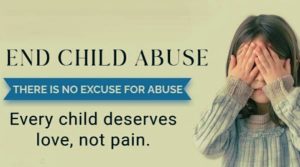
Every reported case represents far more than a statistic. It represents a childhood interrupted, a family forever changed, and a society that failed in its most fundamental responsibility. Pakistan’s child protection crisis cannot be solved by stronger laws alone. It requires a cultural transformation in how children are valued, educated, protected, and heard. Until safeguarding children becomes a shared responsibility of families, schools, communities, institutions, and the state, the headlines will continue — and another generation of children will bear the cost.
Disclaimer:
Sada-E-Watan provides news and opinion articles as a service to our readers. These articles and news items come from sources outside of our organization. Where possible, the author and the source are documented within each article. Statements and opinions expressed in these articles are solely those of the author (reporter/newspaper) or authors (reporters/newspapers) and may or may not be shared by the staff and management of Sada-E-Watan. Sada-E-Watan was created to provide one convenient central location where a user can quickly scan headlines from many news sources. The headlines listed on Sada-E-Watan pages are links to stories on the sites where these stories are located. The goal of Sada-E-Watan is to help readers access stories on web sites that they would normally not have time to view on a regular basis and to add value to the news source sites by mentioning their name on top, so readers can view these sites.
The Sada-E-Watan takes no responsibility for any loss or damage suffered as a result of using the linked websites or as a result of using the information published on any of the pages of the linked websites.
Whilst every effort is made to ensure downloadable content is free from viruses, Sada-E-Watan cannot accept any liability for damages resulting from virus infection. You should take adequate steps to ensure your virus check regularly when using any device. If you have any questions or comments about Sada-E-Watan, please contact us at: radio@sada-e-watan.com.