

























By Dr. Mahnoor Javed Janjua
MBBS/MD
Internal Medicines
The ‘ICE’ Epidemic:
How A Silent HIV Surge is Tearing
Through The Heart of Islamabad.
The Hook; A Silent Crisis in The Capital.
Islamabad is often portrayed as a city of manicured boulevards, quiet suburban enclaves, and orderly administration. But beneath this polished exterior, the federal capital is grappling with a public health emergency that the Ministry of National Health Services recently labeled “alarming.” The infection of children and spouses shatters the myth that this is a localized problem or a distant threat. Rather than isolated outbreaks, the data reveals a sustained, month-on-month increase in HIV infections, exposing a deeply rooted urban transmission network that is expanding silently through the city’s heart. This is no longer a crisis confined to the shadows; it is an urgent urban epidemic that demands we look past the city’s facade of modern stability.
The ‘ICE’ Factor; How Methamphetamine is Fueling The Spread.
The surge is being driven by a lethal intersection of substance abuse and high-risk behavior known as “chemsex.” In the urban corridors connecting Islamabad and Rawalpindi, the use of methamphetamine—locally known as “Ice”—has become a catalyst for the virus. This potent stimulant strips away inhibitions, leading to prolonged and unprotected sexual encounters that drastically increase the risk of transmission. This trend is moving aggressively through networks of young men, transgender individuals, and sex workers, creating a bridge for the virus to cross into new populations.
“More than half of the people being diagnosed are young men, and the majority of them admit to using drugs and engaging in unsafe sexual practices while under the influence of drugs, particularly methamphetamine,” stated a senior health official from the Pakistan Institute of Medical Sciences (PIMS).
The Demographic Shift; Why This is not Confined to High Risk Group Only?
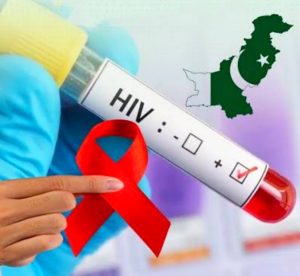
The latest data from the Ministry of National Health Services challenges the comfortable assumption that HIV is restricted to specific “high-risk” subcultures. The statistics reveal a “spillover effect” where the virus is migrating from urban networks into the broader community, affecting partners and families who may never have used a needle or entered a high-risk setting. Between January 2025 and March 2026, the 618 recorded cases followed a hauntingly diverse demographic path:
* Adult Males: 64% (397 cases)
* Adult Females: 17% (106 cases)
* Transgender Individuals: 15% (93 cases)
* Children: Approximately 3.5% (22 cases, including 14 boys and 8 girls)
The presence of 22 children—innocent victims of systemic and social failure—serves as a devastating indicator that the epidemic is no longer contained. When the virus reaches the nursery, the narrative of “lifestyle choice” collapses.
Beyond Behavior; The Hazard of Unsafe Medical Practices.
While drug-fueled interactions are a primary driver, Islamabad is also falling victim to “primitive” medical failures that feel out of place in a modern capital. Pakistan’s persistent “injection culture” remains a major engine of transmission, powered by the reuse of syringes, improperly sterilized surgical instruments, and the use of unscreened blood. Even in the capital, the basic safety of a medical procedure cannot be taken for granted.
The Drug Regulatory Authority of Pakistan (DRAP) recently ordered a countrywide crackdown on unsafe syringes, a reactionary move that highlights a deeper systemic rot. The fact that unscreened blood transfusions continue to occur in the shadow of the nation’s highest health authorities underscores a critical gap between policy and enforcement. These are not new problems; they are old, preventable failures that continue to claim lives because of institutional neglect.
A City Under Siege; A 600 Cases Milestone.
The scale of this crisis is most evident in the relentless consistency of the data. Over a 15-month period from January 2025 to March 2026, the capital territory recorded 618 new HIV cases. This is not a series of spikes, but a steady heartbeat of infection:
* 2025 Calendar Year: 498 cases.
* 2026 First Quarter (Jan–Mar): 120 cases.
* The Peak: July 2025, which saw 63 recorded cases in a single month.
The national burden is staggering, with over 350,000 individuals in Pakistan living with a virus that the WHO notes has killed 40 million people globally. For those infected, the threat is not just the virus itself, but the way it renders the body defenseless against tuberculosis, cryptococcal meningitis, and various cancers. The consistent detection of new cases in Islamabad and Rawalpindi proves that transmission has reached a dangerous state of “ongoing urban circulation.”
The Path Forward; Prevention Over Silence.
Confronting this surge requires the state to move beyond mere identification and into aggressive, community-led prevention. We cannot test our way out of an epidemic that is being fueled by economic desperation and systemic healthcare flaws. A meaningful response requires:
* Urgent Health Funding: Expanding testing facilities and ensuring that every public hospital has a guaranteed supply of disposable syringes and preventive medication.
* Healthcare Accountability: Rigorous, zero-tolerance enforcement of sterilization protocols and blood screening.
* Breaking the Silence: Moving awareness campaigns out of clinical white-papers and into schools, universities, and places of worship. Community leaders must be engaged to speak honestly about the dangers of “Ice” and responsible behavior.
* Livelihood Protection: Addressing the economic necessity that often drives high-risk behaviors among the city’s most vulnerable.
The transition from tracking a crisis to stopping it requires a collective societal shift toward transparency and empathy. As the statistics continue to climb, we must ask: Is Islamabad’s silence a symptom of the stigma, or the cause of the surge?
Disclaimer:
Sada-E-Watan provides news and opinion articles as a service to our readers. These articles and news items come from sources outside of our organization. Where possible, the author and the source are documented within each article. Statements and opinions expressed in these articles are solely those of the author (reporter/newspaper) or authors (reporters/newspapers) and may or may not be shared by the staff and management of Sada-E-Watan. Sada-E-Watan was created to provide one convenient central location where a user can quickly scan headlines from many news sources. The headlines listed on Sada-E-Watan pages are links to stories on the sites where these stories are located. The goal of Sada-E-Watan is to help readers access stories on web sites that they would normally not have time to view on a regular basis and to add value to the news source sites by mentioning their name on top, so readers can view these sites.
The Sada-E-Watan takes no responsibility for any loss or damage suffered as a result of using the linked websites or as a result of using the information published on any of the pages of the linked websites.
Whilst every effort is made to ensure downloadable content is free from viruses, Sada-E-Watan cannot accept any liability for damages resulting from virus infection. You should take adequate steps to ensure your virus check regularly when using any device. If you have any questions or comments about Sada-E-Watan, please contact us at: radio@sada-e-watan.com.