






















By Linta Adnan
Bs. Business Data Analytics
The Serious issue of Abandoned Children
on Pakistan’s streets and Homelessness
پاکستان کی گلیوں میں لاوارث بچے
اور بے گھر لوگوں کا سنگین مسئلہ
पाकिस्तान की सड़कों पर बेसहारा बच्चे
और बेघर लोग एक गंभीर समस्या हैं।
“Street children are lovely blossoms just dropped from the tree after a heavy storm. Now they need to be put together with a needle and threads of security and shelter to live into a beautiful circle of life’s garland”
“On the street there is no tomorrow. There is only here and now and nothing else. And yesterday is just another day you’re trying to forget.”
“Home is not where you live, but where they understand you.”
“A house is a home when it shelters the body and comforts the soul.”

Between 1.5 million and 2.5 million street children live in urban centers across Pakistan. Driven by extreme poverty, domestic violence, and displacement, these children survive primarily through begging, scavenging, or informal labor. They are highly vulnerable to violence, trafficking, substance abuse, and exploitation
There is this specific kind of tranquility that settles over a traffic signal in Karachi or Lahore the moment the lights go red. For three seconds before the engines accelerate again, a tiny figure appears at the car window, unshod, suntanned, holding out a hand that doesn’t know how to hold a toy. Sometimes it’s a bundle of pens, sometimes it’s a packet of tissues and sometimes it’s nothing at all, just empty hands reaching out, palm up, waiting. Majority of the drivers look away. Some close the window really quick, while some hand over a few rupees without even making a single eye contact. The signal turns green, the cars disappear and the child is swallowed by a city that has concluded, somewhere along the way that this is how things work.
It isn’t how things should work, but it is, undoubtedly, how things are for about one or two million children across Pakistan today, a population larger than the entire city of Multan, composed up almost entirely of people too young to even vote, too young to work and too young to defend themselves in a way that so many of them must.
This is their story, it should’ve been entirely different. Their story should’ve been about chalk dust and schoolbags not garbage dumps and traffic lights. It should’ve been about their favorite toy held tight at bedtime and not hands held out at a car window. It should’ve been about a grazed knee from falling on the playground and not about the scars that no one talked about. It should’ve been about growing up and not growing up too fast. Somewhere along the way, the world, the society and all of us owed them a childhood, and never paid the debt.
How a child ends up on the streets
It would be a bit comforting to imagine that street children come from a single, recognized cause, that if we fixed only one thing, the whole problem would be solved. The reality is more chaotic and harder to solve accurately because the cause are deeply intertwined.
Poverty is at the top most roof of almost every case, but poverty alone doesn’t push a child out of a house. Its poverty along with something else: a father who has stopped coming home clear-headed, a mother who passed away and left no one willing enough to keep the children, a family of 8 packed into two rooms where there isn’t simply enough food to go around. Nearly 40% of Pakistani population faces food insecurity and more than three million children are known to suffer chronic hunger. For a child watching younger siblings crying from empty stomachs, the street, with its scraps, odd jobs and insults from strangers, can start to look less like an abandonment and more like a desperate alternative.
Domestic violence pushes others out the door entirely. Children leave homes where they are beaten, where they watch their mothers battered, where the dwelling has become more dangerous than the open roads. Broken families, divorce, death, abandonment and a parent’s remarriage that leaves no room for children from the first marriage, scatter children under relatives who often see them as another mouth to feed rather than a child to love. Many simply run.

What a day actually looks like
It’s easy to idealize endurance from a distance, calling these children ‘tough’ or ‘street smart’ in a way that totally neglects what they had to bear and go through. But take even a little time learning about their actual days and idealization fades away quickly.
Mornings start before the world wakes up, not because of discipline but because hunger doesn’t wait for daylight. Many children search through garbage dumps, looking through trash to find anything of resale value like plastic bottles, cardboard, scrap metals, or anything that can be sold for a few rupees to a recycling dealer who knows how desperate his suppliers are for money and this is where they take advantage of their desperation. Others station themselves at traffic signals, bus terminals and markets begging, selling tissues, pens and flowers or washing car windscreens for whatever money the stranger would give.
Many of these children aren’t working for themselves at all. Investigations and reports, including from Pakistan’s own Ombudsman secretariat, have documented planned and structured begging rings that expertly traffic children, compelling them to beg for hours and confiscating their earned money at the end of the day. A child who returns with too little money may face violence. A child who tries to run may be tracked down. What looks like a poor child hard on his luck, trying to survive, is sometimes the visible edge of an organized exploitation that most of us don’t even realize.
Food is whatever can be found, items pulled from garbage, leftovers from restaurant bins, the occasional act of kindness from a shopkeeper or a stranger. A balanced meal is a foreign concept. Malnutrition, untreated illness and parasitic infections are constant companions not exceptions.
Nighttime possesses its own dangers. Children without homes will find a place to sleep wherever it may be safer from the worst of the night, under bridges, in mosques’ courtyards, in the doorway of closed shops, lain huddled together in groups for warmth and security. Groups provide some measure of safety to be preyed upon, but they necessarily expose the children to older street children who will introduce them to drugs, stealing and gang structures as a way to survive. Researches indicate that as many as one-third of children in some cities report their participation in some kind of street gang, not as an option, but because being alone on the street sets them as a target.

The abuses that rarely make the news
This is the part of the story that is hardest to write, and harder still to read, but it cannot be left out, because leaving it out would be its own kind of dishonesty.
Poverty and lack of access to education create extreme difficulties for street children in Pakistan. Unfortunately, street children in Pakistan have found to be significantly at risk for sexual abuse and have been the focus of many studies that show that most of them at some point in their lives have suffered sexual, verbal or physical abuse. Abuse rarely limits itself to one setting, it stalks them from homes that failed to protect them, onto the streets that misuse them and sometimes even into schools meant to shelter them. Physical violence is usually the first lesson learned by these children through parents’ hands, employer’s stick or another old street child in the brutal chain of survival. Verbal abuse also does damage to a child’s sense of self beyond being visible, when a child gets to hear something repeated often enough over several years, it builds into how they see themselves and makes every good relationship, much harder if not impossible, to develop. Of all the types listed, sexual abuse is the most debilitating. Research conducted on street children in Pakistan has shown that there are epidemic levels of sexual exploitation and that the public spaces have become the hunting grounds for sexual predators.
Many of the adult abusers of street children are well aware that there are very low chances of them being caught and reported and there are few places where children could safely seek help if they try to report. Public spaces, bus terminals, parks, transport hubs, and whichever place could be thought of are now sites where this exploitation occurs, hidden in plain sight because society has conditioned itself not to look too closely at street children in the first place.
In many countries around the world, including Pakistan there exists a cultural stigma that boys are safe from such abuse simply because of their gender which leaves no avenues for boys to report and disclose violations they have suffered. This creates additional barriers for boys who have faced abuses, as they many not know how to break their silence, may fear being blamed for the incident by someone else or will not be believed if they do come forward. Boys who have suffered abuse often live with this silence because they are ashamed, scared or think that they will be blamed.
This is a critical issue that needs more attention than it currently receives and should be treated with the same seriousness as other forms of child abuse.

Names behind the numbers
Some statistics are astonishing and inspire imagination, however, they also become abstract over time. It helps to remember that each statistic is a child with a name, although that name may not be recorded anywhere. The boy who sells roses at red light in Lahore has never been inside of a classroom, he does not have a formal education but can tell you what intersection at what time of the day gets him earn the most money. This is a knowledge that no ten-year old should have.
There are sets of siblings who have learned how to divide their efforts at traffic stops so as to maximize their coverage of a particular area, then after sunset they meet, combine what they gathered together and share food the way that people share who have experienced hunger.
These children display stunning level of intelligence and resourcefulness such as being able to instantly read a stranger’s face, having great negotiation skills, being able to move around in a big city with no map and being able to care for their young siblings with gentleness that comes from their own unmet needs. The tragedy behind this crisis is that there is an immense amount of human potential that has been wasted in just surviving for another day rather than building something extraordinary because of lack of support they have received from their family to help them achieve something move productive after reaching this level of intelligence and resourcefulness described above.
What is being done and why it is not enough yet
It’s not fair to assert that nothing is being done. In Pakistan, there exists a comprehensive legislative framework to safeguard children that includes: the National Commission on the Rights of Child Act (passed in 2017); the Juvenile Justice System Act (passed in 2018); numerous provincial child protection laws and welfare agencies; NGOs (such as Street Child International and its local partners) providing education and protection programs; and, coordination of effort among other NGOs involved in these same areas (education, financial management and capacity building). Additionally, many NGOs work with children and families in Pakistan, including: Save the Children; UNICEF; SOS Children’s Villages; and, a number of smaller local charities that operate shelters, informal schools, and outreach programs in the major metropolitan areas of Pakistan (i.e., providing meals, basic literacy/Vocational training, etc.), and some of the more fortunate children, with some hope of reunited with their families or going to school formally.
As noted in a recent Policy Brief released by the National Commission on the Rights of Child, Pakistan, the major issue facing advancement of children’s rights is implementation. Many of the laws related to children’s rights have no regulations defining how they are enforced, or their requirements have never been made publicly available. This suggests that children’s rights have a lower priority compared to other goods and services in a context where there is little political will, an ineffective system, and little collaboration or coordination across ministries and other entities to ensure that the laws are uniform, across all parts of the country, in their implementation.
The funding for child welfare programs is in comparison to the size of the problem constantly inadequate; shelters for street children, when they do exist, are frequently overcrowded, underfunded and can use only a fraction of the number of street children that require shelter. In addition, at best, coordination between all three levels of government, federal, provincial and local, is inconsistent. There also is a cultural perception that street children are an annoyance or a problem that need to be controlled rather than as victims of systemic failure who need urgent, long-term intervention.

Why this should matter to everyone
While it would be easy to read all this and have a fleeting feeling of sadness to simply move past it, which is what most people do, as soon as the traffic light changes for the child who is at the intersection waiting for food; there are good reasons beyond compassion alone that this situation and the children on the street should get more than a passing thought.
Street children in one nation will be the working-age population of another nation tomorrow. Without access to basic needs (education, job training, safe housing), children can become unprepared for participating in the formal economy. Because of this, children raised without stable homes and/or no access to education are statistically much more likely than their peers to have children who will experience homelessness, creating an intergenerational poverty and exclusion cycle that continues to affect millions of deserving families every day. In addition, every child who grows up without access to the three basic needs has two losses: individual and collective, unknown future skills take years to benefit society and fulfill potential.
The economic ramifications are only one part of living without a stable home; however, what society does to support or mistreat those in greatest need (who have the least ability and/or means to advocate for themselves) reveals what its actual culture values.
What a change could actually look like
None of this means that the situation is hopeless, countries with far lesser resources than Pakistan have made meaningful progress on child homelessness when they treat this issue as a national priority rather than a backdrop to everyday life.
Real change would mean properly funding and staffing the child protection laws that already exist on paper. It would mean investing in shelters with enough beds and trained staff to provide more than just a bed but also real rehabilitation, including medical care, counseling, vocational training and a path to either reunification with family or independent lives. It would also mean cracking down on the networks of human trafficking that exploit children for begging, rather than viewing children themselves as the problem and being treated like a nuisance to be removed from the street.
It would mean training law enforcement and municipal officials to view street children as victims needing their protection, not as a public nuisance.
And finally, it would mean something simple that any reader can do: making a conscious effort, at least sometimes, to not look away from children in need of help – by supporting a reputable, local NGO; donating to organizations that are doing real and verifiable work with street children; advocating (in whatever small way is possible) for political will, which the National Commission’s own findings identify as missing.

A closing thought
Somewhere tonight in Pakistan, there are children going to sleep with no roof over their heads, no blanket waiting for them except whatever they could find, no parent holding their hand. No voice whispering that they are safe, that morning will be kinder. They will fall asleep hungry, or frightened, or both, the way they have every night before, and the way they will tomorrow, unless something changes. They did not ask for this life. No child asks to be unwanted, unfed, unprotected. Somewhere, a mother who should have held them couldn’t. Somewhere, a nation that should have claimed them as its own simply didn’t notice they were gone.
We tell ourselves that we would never let a child suffer if we saw it happening in front of us. And yet it is happening, in front of us, every single day, at the traffic signal, outside some restaurant, beneath the bridge we drive past without a second glance. Maybe the tragedy isn’t that we don’t care. Maybe it’s that we’ve taught ourselves not to look long enough to care. Every child who is sleeping on road tonight is someone’s son, someone’s daughter, someone who once had a name whispered over them with hope, and who deserved, simply by being born, a chance at softness this world never gave them.
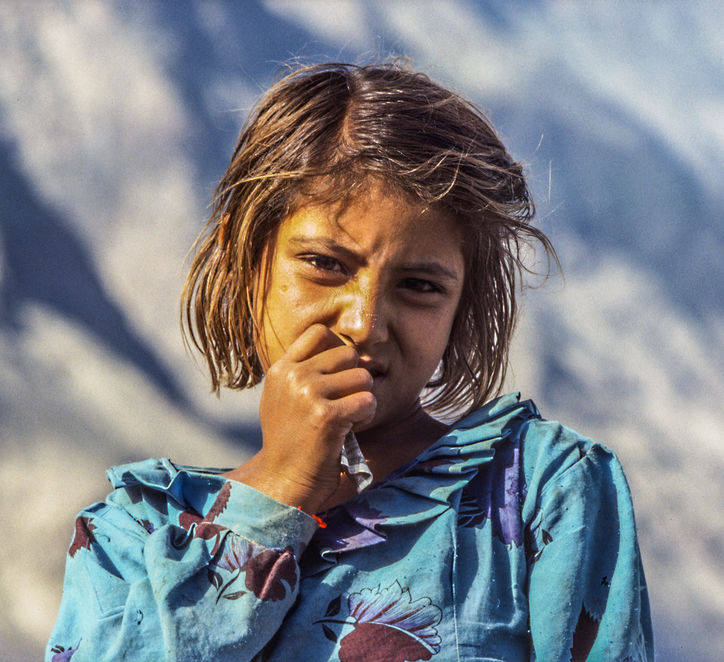
“To walk past a hungry child is to walk past a piece of our own humanity”
The lights will turn red again tomorrow. A small hand will reach towards a window again. And somewhere under the noise of traffic and rush of our own lives lies a silent question waiting for an answer we haven’t provided yet: if not us then who? If not now then when?
“Every child who goes unfed, unseen or unheld is a debt the world has yet to repay”
Disclaimer:
Sada-E-Watan provides news and opinion articles as a service to our readers. These articles and news items come from sources outside of our organization. Where possible, the author and the source are documented within each article. Statements and opinions expressed in these articles are solely those of the author (reporter/newspaper) or authors (reporters/newspapers) and may or may not be shared by the staff and management of Sada-E-Watan. Sada-E-Watan was created to provide one convenient central location where a user can quickly scan headlines from many news sources. The headlines listed on Sada-E-Watan pages are links to stories on the sites where these stories are located. The goal of Sada-E-Watan is to help readers access stories on web sites that they would normally not have time to view on a regular basis and to add value to the news source sites by mentioning their name on top, so readers can view these sites.
The Sada-E-Watan takes no responsibility for any loss or damage suffered as a result of using the linked websites or as a result of using the information published on any of the pages of the linked websites.
Whilst every effort is made to ensure downloadable content is free from viruses, Sada-E-Watan cannot accept any liability for damages resulting from virus infection. You should take adequate steps to ensure your virus check regularly when using any device. If you have any questions or comments about Sada-E-Watan, please contact us at: radio@sada-e-watan.com.