
















By Mishal Gill
Academic Excellence
Gold Medalist
Lahore, Pakistan
——————-
Asma Ali
Master of Arts (MA)
English Literature
Myth or Reality?
The Truth About Social Media & Privacy
افسانہ یا حقیقت؟
سوشل میڈیا اور رازداری کے بارے میں حقیقت
मिथक या हकीकत?
सोशल मीडिया और गोपनीयता के बारे में सच्चाई
“Social media has made privacy an illusion and data a currency.”
“The internet never forgets. Be careful what you post.”

In today’s digital age, social media has become an integral part of our daily lives. We share our thoughts, photos, locations, and even personal details without a second thought. But how secure is this information? Are we truly in control of our digital footprint? Everyone is using social media nowadays but it comes with a price. Our data is at risk and many innocents are getting robbed of the information. To understand this let’s take a closer look at social media and how it work۔
Social media consists of web pages for information sharing and virtual community participation in a range of content forms. As of 2024, more than five billion individuals, or 62% of the world’s population, used social media. They consist of messaging applications, social networks such as Facebook and TikTok, and discussion forums such as Reddit and Discord.
In the early days of social networking, MySpace and LiveJournal allowed people to connect. MySpace allowed people to create their own personal profiles, the first to reach one million active users per month in 2004. LiveJournal, where people could write publicly or privately in their journals, had over 2.5 million accounts in 2005. Social networking accelerated in the 2000s and 2010s with the emergence of Facebook and X (formerly Twitter). Similar to MySpace, Facebook allows users to make profiles and post personal information, which elicits comments. Social networking first gained popularity among college students but picked up speed in a wider age group. X debuted in 2006 with a feed that aggregated updates from accounts that people were following. Facebook subsequently introduced its News Feed, another ubiquitous feature on social media. More people are linked to external sites for news and personal information. They interacted with other people’s updates by liking, sharing, and commenting. During this time, social networking sites began adding business-focused profile pages and options to purchase targeted ads that could be seen by other users, making them more attractive to companies and increasing revenue for the sites.6

Consequently, social media consumers started spending more and more time browsing through feeds and reading daily news and opinion on things. In 2024, barely more than half (54%) of American adults reported getting their news from social media “sometimes” or “often,” and just 28% of American adults reported never getting news from them. Globally, only 22% of consumers receive news directly from news websites or apps, and younger consumers are the least likely to. With more time being spent on social media, different types of websites have evolved, and they can be generally classified as follows:
Social media: Facebook, NextDoor. Microblogging: X, BlueSky, Mastodon, Threads. Blogging platforms: Substack, Ghost. Professional networking sites: LinkedIn, Behance, ResearchGate. Video and photo-sharing platforms: Instagram, TikTok, YouTube, Snapchat. Visual curation websites: Pinterest, Houzz, DeviantArt. Messaging apps: WhatsApp, Signal, WeChat, Marco Polo. Community platforms: Reddit, Discord, Clubhouse. They are designed for many purposes and to meet the needs of different people. They may be social networking, professional networking sites or career portals. They bring individuals sharing common political convictions or passions. Most social media users engage in professional activities. For example:
● Writers and actors speak to fans on social media.
Politicians employ these sites to communicate with electors.
● Charities make use of social media for campaigning for philanthropic causes and
fundraising.
● Government organizations can employ social media in informing the public during
emergencies.
● Social media content creation, whether company-sponsored or endorsed by the fans, is a job in itself. Producers of such content are referred to as influencers or content creators, with roughly one-fifth of users claiming to be professionals. Social media is at the forefront of marketing. Businesses use it to find trends, engage with customers, collect data, and advertise. The majority also work with influencers, paying them to promote products to their followers. 94.7% of all online adults aged between 16 and 64 have used a social networking site in the past month.
So, it means emails, Pictures, conversations, either public or not, bank details, personal details, Location, and many more are on social media. Have you ever considered what businesses are doing with this data?
 Social media websites use data to study the market, show targeted ads, personalize services, and recommend content. Likes and dislikes can help build a user’s social media profile. Companies use this information to discover what their customers like. They can inquire about whether the ads are appropriate for their websites. These rapid surveys help tailor ads to personal preferences. Companies also use social media data to train AI algorithms, allowing these algorithms to understand human speech and what’s popular better. Social media polls typically gather data on your likes. These responses are monitored, and companies that match user interests can gain access to this information, as well as other
types such as pet ownership, car interests, or gaming. Using the data from the polls, companies can categorize users to keep them engaged with social media content. When a site advertises a brand, it gets paid for it. These posts can be marked as sponsored content for users whose information matches the promoted brand. Companies pay to be placed on social media feeds that reach users who match their products. This specific information is gathered using tracking cookies or information users give. If users give an email address or phone number, companies can also use that information to notify them of
products and services. Have you ever noticed why something you’re thinking about seems to pop up everywhere on your phone? Here’s why. You may be surprised to learn that social media platforms such as Facebook and Instagram earn a lot of money selling users’ data to data collection firms. The firms resell the data to other parties for targeted advertisements. That is why, once you express interest in something on Facebook, you may begin to see advertisements for it everywhere on the internet.
Data collection firms and social media platforms earn money from user data but the users do not receive payment. The notion that we can be connected openly has gigantic issues: our privacy is lost and there is the potential for secret manipulation. We are not the customers; we are the product. Our data is being pulled out piece by piece, little by little, interaction by interaction.

DEEP FAKE:
The digital age has created a unique feeling of connection, but it has also created new problems: deepfakes. These artificially manipulated videos enable people to be made to seem like they are doing something or have said something that they never did. As wonderful as technology can be in supporting imagination, the integration with social media has made the spread of misinformation easier than ever before, with some adverse effects on people and society in general. Social media platforms are meant to spread information at a faster rate, and they are therefore the right place for deepfakes to quickly spread. The attributes that make such platforms entertaining, such as share options and algorithms that display trending materials, cause deepfakes to spread, even without verifying their truthfulness. A politician’s deepfake uttering outlandish statements spreads around the globe within no time, shaping perceptions or even deciding elections before fact-checkers can act. It is harder to regulate this problem because of inherent issues with controlling this type of content. Social media sites typically struggle to identify and remove deepfakes quickly for fear of censorship and free speech. This reluctance to act firmly puts users in danger of being misled and receiving false information. Even when seen as possibly misleading, deepfakes can go viral because algorithms may favor user interaction over accuracy. Thus,
an echo chamber in the virtual world is established where false stories are amplified and it becomes even harder to differentiate between what is real and what is not. Moreover, the magnitude of information that exists on social media sites means that it is practically impossible to manually verify every video as being genuine. Automated detection systems are still in their early stages and are struggling to keep up with the fast-evolving sophistication of deepfake technology. This technological arms race leaves us in a
precarious position, where the capacity for damage vastly exceeds the current ability for mitigants.
Phishing:
Social networking risks exposing you to identity theft if you are prone to clicking phishing links, revealing sensitive information too openly, or being deceived through a technique called social engineering. Using the following methods, they can gain access to personal details such as your phone number, mailing address, name of your pet, email, password, financial information, Social Security number, and employment history. After getting enough personal information, scammers might:
Make a false account to impersonate you and deceive your friends and family. Seize your social media platforms to post false information, ruin your reputation, or mislead
your followers. Create a fake identity to make false claims, establish credit accounts, submit false tax
returns, or even get loans in your name. Sell your own data on the dark web to other cybercriminals.
Depending on your situation, you are likely to sustain financial, legal, and reputation damage.
Catfishing:
Catfishing is when a person creates a false online profile to deceive others into beginning a false romantic relationship. A romance scammer or a person who catfishes tends to do it in order to obtain money or personal data, but they may also desire to exact revenge on a person. They might ask you to provide your user name, password etc. if you ask them to meet or video call they might cancel it or maybe even vanish from the platform.
Misinfo:
Misinformation, such as election misinformation, can spread quickly on social media. Why is this? Because algorithms will present you with content of interest to you and not necessarily the truth. This might lead to making decisions that you don’t actually want to make. Everyday there are new things regarding health and so much more and innocent people get trapped in those lies.
Clickjacking:
This type of fraud includes hidden links and buttons that a user might click unknowingly. It may hack or install malicious software exposing personal information. On social media sites, clickjacking can happen with fake posts or ads with concealed content. When you click on the apparent content, you unknowingly initiate concealed actions, such as liking a page, sharing a post, or downloading malicious software.
Frauds:
Fraudsters utilize improper methods of generating money on social media and affiliate marketing schemes. They deceive businesses by making fake clicks, impressions, or sales. This maximizes payments to the fraudsters substantially and less profit for businesses. How it is done: A scammer manipulates social media metrics in a bid to earn more payments by using tactics like click fraud, which is typically done via automated scripts, botnets, or fake accounts. These actions mimic clicks or interactions that do not represent genuine human interest. They are paid for their ad “efforts” they did not merit.

What to do?
Think twice before opening a new social networking site account, as each site carries more risks. Make sure the site is safe and reliable before you sign up. If you want to leave a site, be sure to close your account for good.
The following are some other methods of protecting your data: Use strong passwords. Never reuse a password across different apps or sites. To keep your login information in mind, use a password manager to store your information securely. Stay away from public computers. Log out when you are finished when you are using a public computer. Don’t disclose too much information about yourself. Only provide what is required. You do not need to provide your address and birthday on each website.
Turn off geolocation features. Turn off the feature to share your location in the device’s security and privacy settings. Avoid clicking suspicious links. If a link should be from a known source, you do not click it unless from a site you know is safe. Enable two-factor authentication. Including two-factor authentication, like a code and fingerprint verification, provides additional security to the app.
Optout of AI training. Every social network site provides you with settings that keep your data from being used to train AI. Review the privacy settings periodically to determine how your data is gathered and disseminated on the site.
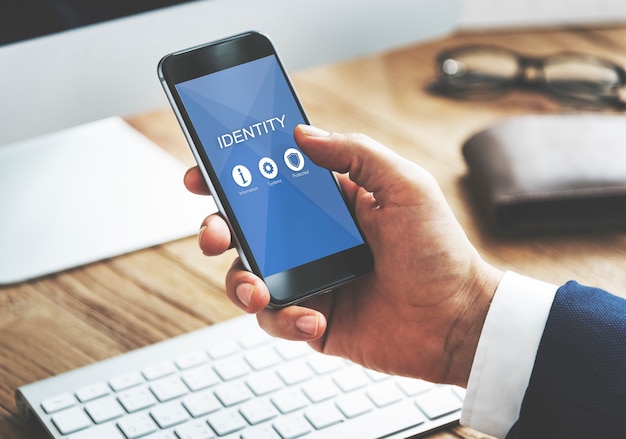 Conclusion:
In short, easy availability of information, sophisticated tricks such as deep fakes, and the influential position of social media make the situation dangerous with numerous risks. The risks are loss of privacy, manipulation of how people think, identity theft, and targeted harassment. The risks of social media information are diverse and pervasive. Denial of these issues is no longer possible. We need all people, social media platforms, lawmakers, and technology developers to collaborate and minimize these risks and safeguard our online life. This is the only way we can enjoy social media while minimizing its risks.
Social media is a powerful tool for connection and expression, but it comes with risks. Understanding how your data is collected, used, and potentially exploited is crucial in protecting your privacy. In the digital world, awareness is your best defense.
“You may have nothing to hide, but you definitely have something to protect—your personal
data.”





 Cybersecurity: Are you safe online?