















By Ayesha Bashir
Master of Arts (MA)
English Literature
When AI Becomes a Weapon:
How Deepfakes Transformed Personal Identity
Into a Digital Tool,
Blackmail and Reputational Warfare.
:جب مصنوعی ذہانت ایک ہتھیار بن جائے
نے کس طرح ذاتی شناخت کو ایک ڈیجیٹل آلے Deepfakes
(دھوکے سے کسی کی ہُوبُہو شکل و آواز دھار لینا)
بلیک میلنگ اور ساکھ کو نقصان پہنچانے کی جنگ میں تبدیل کر دیا۔
जब AI एक हथियार बन जाता है:
कैसे डीपफेक ने व्यक्तिगत पहचान को
एक डिजिटल टूल,
ब्लैकमेल और प्रतिष्ठा को नुकसान पहुँचाने वाले हथियार में बदल दिया।
AI deepfakes are synthetically manipulated audio, video, or images that make people appear to say or do things they never actually did.
“The advent of deepfakes sort of presents employers with a whole new frontier of challenges.”
“No single tool is considered fully reliable yet for the general public to detect deepfake audio. A combined approach using multiple detection methods is what I will advise at this stage.”
“Machine intelligence is the last invention that humanity will ever need to make.”
“AI is like electricity. Just as electricity transformed every major industry a century ago, AI is now poised to do the same.”
“A computer would deserve to be called intelligent if it could deceive a human into believing that it was human.”
“Artificial intelligence is potentially more dangerous than nuclear weapons.”


A Photograph That Was Never Meant to Become a Weapon
A woman uploads a photograph online at a graduation, a wedding, or simply a professional headshot on LinkedIn. She is fully dressed, surrounded by people, doing nothing wrong. She never imagines that photograph could be turned against her.
Someone downloads it. Within minutes, her face can be placed onto a body that isn’t hers, inside a situation that never happened. The image is fake. The consequences are not: family members may see it, classmates may receive it, a stranger may threaten her with it, money may be demanded to stop its spread, an employer may discover it, a fiancé may question her, a community may judge her.
A woman no longer needs to be photographed naked for someone to manufacture her nakedness. The technology has changed. The exploitation has not. Sexual abuse has always been built around power, humiliation and control AI hasn’t created that impulse, but it has made acting on it faster, cheaper and available to people who previously lacked the ability to create such material. No hacking, no stolen private photograph, no technical skill is required — often just a public photo and a tool designed to manipulate it.
“With artificial intelligence, we are summoning the demon.” – Elon Musk
Generative AI brings real benefits writing, translating, designing, analysis, discovery. But every powerful technology carries the possibility of misuse, and deepfake sexual abuse is one of its most disturbing expressions. When humiliation becomes cheap and easy to produce, the question isn’t whether abuse is possible it’s whether society will let an ecosystem built around exploitation, attention and profit keep growing.

A Woman Doesn’t Need to Be Naked for Someone to Manufacture Her Nakedness
Traditional image-based sexual abuse usually involved something real: a leaked private photo, a stolen intimate video. AI-generated imagery removes that requirement entirely there may be no private material, nothing stolen. A public selfie is enough.
This matters because it challenges a dangerous misconception: that fake images can’t cause real harm because they aren’t authentic. The image may be fabricated, but the harassment, fear, blackmail, reputational damage, trauma and loss of control over one’s own identity are all real. A woman can follow every social expectation around privacy and modesty and still be portrayed online as having violated them. She is punished for an act she never committed.
From Digital Experiment to Commercial Abuse Industry
The danger deepens when abuse stops being an individual’s malicious act and becomes a commercial product. AI “nudify” and “undress” services have turned what once required real skill into an accessible app or website. Researchers have documented nudification services attracting large numbers of visitors, some promoted through mainstream platforms despite rules against non-consensual sexual content.
This raises an uncomfortable question: if platforms claim to prohibit harmful content but abusive tools keep operating within their ecosystems, who is responsible? This is no longer only about individual criminals it’s about platform design and corporate accountability. The same accessibility that lets ordinary people build useful tools also lets a teenager manipulate a classmate’s photo, an anonymous user threaten a woman, or a commercial service profit from fabricated sexual imagery. When creating harm takes only a few clicks, society must ask: are we buildin g technology faster than we’re building responsibility?

Why Women Bear the Greatest Burden
Deepfake abuse doesn’t happen in a vacuum it’s connected to older patterns of inequality and control over women’s bodies. A fabricated sexual image becomes a social weapon: in societies where reputation and family honour carry heavy weight, it can create suspicion, damage relationships, isolate victims, and affect education and employment — even when the victim is completely innocent.
Victims often face the wrong question: “Why was your picture online?” The responsibility belongs to the person who created and distributed the abuse. The attacker doesn’t need the image to be real only for the victim to fear what others might believe. That gap between technology and social trust is the actual weapon.
From a Fake Photograph to a Very Real Threat: Sextortion
Deepfake abuse frequently escalates into sextortion threats to send the image to family, university or employer, to publish it, or to demand payment or further images to stop. The victim faces an impossible bind: cooperating may invite escalating demands; refusing risks exposure; reporting may feel like it risks spreading the material further.
This is why the issue can’t be reduced to “fake pictures.” It’s about power, coercion and using fear as leverage the same old pattern of control through fear, executed with new tools.
The Impossible Burden of Proving a Digital Lie
Photographs have long carried an assumption of authenticity seeing was believing. Generative AI breaks that assumption: a convincing image can show an event, person or situation that never existed, while families, employers and friends may react emotionally before questioning whether it’s genuine. Victims are forced into the humiliating position of defending themselves against something that never happened. “Fake” should never be confused with “harmless” the damage comes from how believable the content appears, not from whether it’s true.
The Internet’s Greatest Weakness: Harm Spreads Faster Than Protection
Unlike a physical photograph, a digital image can multiply endlessly one creator, unlimited copies, screenshots that survive deleted accounts, content that reappears on new platforms after removal. Creating harmful content takes minutes; removing every copy can take months or may never be fully possible. Victims aren’t fighting one image they’re fighting a system capable of endlessly reproducing it.
When Humiliation Becomes a Business Model
Behind much of this content is an attention economy: outrageous thumbnails create curiosity, curiosity drives clicks, clicks generate followers, ad revenue and traffic. Even small rewards become powerful incentives when content is nearly free to produce and can reach millions. AI-generated sexualised imagery used as clickbait works because viewers believe something scandalous is behind it even when the image is entirely artificial. The creator gains attention, the platform gains engagement, advertisers gain impressions, and the person whose identity was exploited pays with privacy and dignity. This unequal exchange is why the problem can’t be solved by identifying individual criminals alone it’s a digital economy that rewards sensationalism, and AI has made producing that content cheaper and faster.
When Children Become the Audience
A related, growing concern is cheap AI-generated content flooding children’s digital spaces. Bright colours and cartoon characters don’t guarantee safety investigations have raised concerns about disturbing or inappropriate material, including sexualised or boundary-violating content involving childlike characters. Recommendation algorithms aren’t built to understand childhood: a child sees entertainment, the platform sees watch time. Young children cannot be expected to understand consent, manipulation, exploitation or sexual boundaries, yet they’re increasingly placed in environments engineered to maximize time spent watching.

Recognising Risk Without Creating Panic
Discussing this responsibly means avoiding exaggeration a single piece of sexualised content doesn’t automatically turn a child violent; human behaviour is more complex than that. Research on young people’s exposure to sexual content has found associations with permissive sexual attitudes, gender stereotypes, risky sexual behaviour and, in some studies, greater acceptance of sexual aggression though researchers caution this evidence is largely observational and doesn’t prove direct causation. That caution matters, but it shouldn’t excuse ignoring the problem. The better question isn’t “will one video create a harmful adult?” but “what ideas are we repeatedly placing in developing minds?” Society already protects children from inappropriate material without needing to prove a direct causal link to a specific crime; digital childhood deserves the same standard.
Pakistan’s Uncomfortable Reality
Pakistan’s digital expansion has outpaced digital awareness. Millions have smartphones, but many don’t understand algorithms; parents often don’t know how deepfakes are made; teachers lack training in synthetic media; law enforcement struggles to keep pace; and conversations about sexuality, privacy and consent remain difficult within many families. That silence breeds vulnerability. When a family discovers fabricated sexual material involving their daughter, the instinct is often “Why was her picture online?” — the right questions are: who created it, who distributed it, who threatened her, who let it spread? Focusing on victims’ behaviour instead of abusers’ actions only teaches the next victim that silence feels safer than justice.
The Azma Bukhari Case
In 2024, an AI-generated sexually explicit video falsely portraying Punjab Information Minister Azma Bukhari circulated widely; she pursued legal action through the Federal Investigation Agency. The case illustrates how sexualised deepfakes can be weaponised against women in public life — politicians, journalists, activists — sending a chilling message that public visibility invites identity-based attack, which can indirectly restrict women’s participation in society.
Vulnerability Without Simple Causation
Pakistan’s broader child-protection picture organisations like Sahil document thousands of child abuse cases annually shows children already face a vulnerable environment, now layered with more content, more strangers, more platforms and more algorithmic recommendation than previous generations encountered. The real question isn’t whether AI simplistically “causes” crime, but whether protective systems are keeping pace with an increasingly hard-to-control digital environment.

Laws Written for Yesterday
Pakistan’s main cybercrime law, PECA (2016), predates AI capable of fabricating events that never happened, and now faces questions it wasn’t built for: Does privacy get violated even without a real photo? How is non-consent to an image’s creation legally recognised? Who is responsible when hundreds reshare it? How fast must platforms act, especially when the victim is a child? Other countries have begun adapting laws to address synthetic intimate imagery; Pakistan needs a similar conversation — not toward censorship, but toward protecting dignity even when the harm-tool is artificial.
Why Victims Remain Silent
Victims stay silent out of fear of blame, family reaction, social judgment, retaliation, further exposure, disbelief, or officials not understanding the technology. In reputation-conscious societies, reporting can feel riskier than suffering privately. A law is meaningless if victims are too afraid to use it, and no protection system that re-exposes victims is a real protection system.
Who Must Take Responsibility
Responsibility is shared: perpetrators for creating and distributing abuse; platforms for effective moderation and removal; AI developers for safeguards against foreseeable misuse; app stores for enforcing their own policies; regulators for updating laws; law enforcement for technical expertise; schools for digital-safety education; parents for understanding modern platforms; and society for no longer treating victims as the ones who must defend themselves.

Building Protection Before More Damage Is Done
Five priorities emerge:
Speed and reporting — Reporting must be simple, confidential, accessible and capable of triggering rapid action; victims can’t wait weeks while content spreads. Tools like digital fingerprinting can stop known harmful material from resurfacing, shifting the goal from removing abuse after it spreads to stopping it from spreading at all.
Legal reform — Laws must recognise harm even without a real original photo, clarify responsibility for mass resharing, and set obligations for platform removal speed — aimed at protecting dignity, not enabling censorship.
Technological responsibility — AI companies can’t treat misuse as someone else’s problem once it’s foreseeable. Safeguards against generating sexualised imagery of real people (especially minors) must be built in from the start, not bolted on after a crisis, and app stores must actually enforce their own rules.
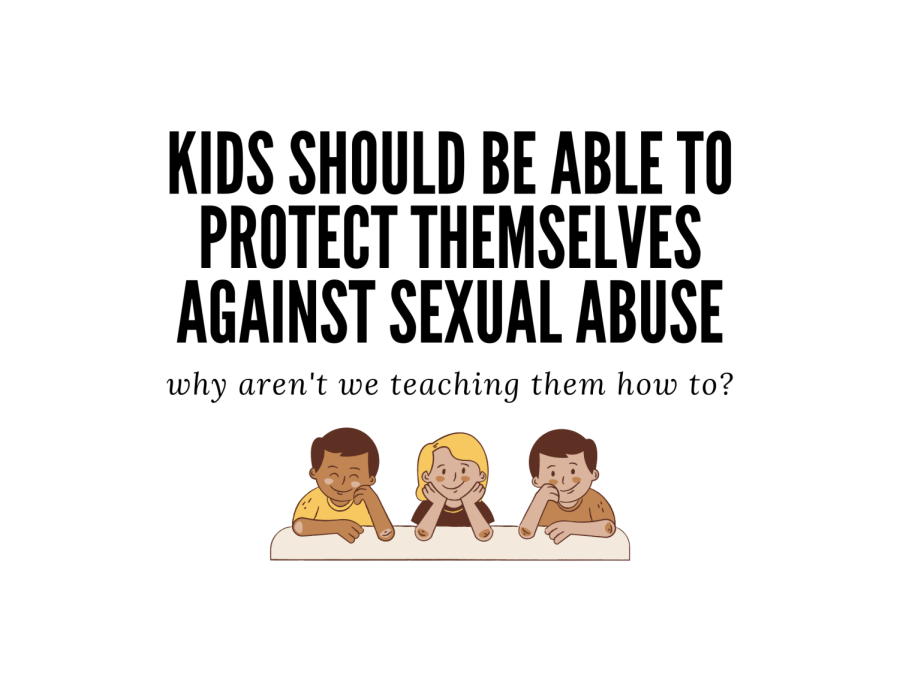
Education — Digital safety must go beyond “don’t talk to strangers” to cover privacy, consent, manipulation, image-sharing and digital permanence — for children, parents and teachers alike, since a parent who doesn’t understand deepfakes can’t protect a child from them.
Victim support — Victims need legal assistance, emotional support and practical help removing content, alongside a clear message: this is not your fault, and you are not responsible for someone else’s decision to manipulate your identity.
We Must Stop Rewarding Exploitation With Attention
Everyone shares a responsibility: don’t share fabricated sexual content, don’t forward “leaked” images because they look shocking, don’t spread someone’s humiliation even to criticise it, and don’t reward creators who use sexual deception for followers. When exploitation stops generating engagement, one of its strongest incentives disappears.
AI Is Not the Villain. Unchecked Power Is.
The same technology behind harmful deepfakes also advances education, business, science and problem-solving. The problem isn’t that AI exists it’s what happens when powerful technology meets an environment where exploitation is profitable, accountability is weak, victims are socially vulnerable, and harmful content outruns the systems meant to stop it. A fake image can still destroy a reputation; a false threat can still create real fear. The pixels are artificial — the consequences are not.

Pakistan Has a Choice
Pakistan can wait for the next scandal, the next victim, the next viral deepfake, the next child exposed to harmful content or it can build stronger protection now: better laws, stronger enforcement, responsible technology, digital education, survivor support, and a culture that rejects victim-blaming. AI is already part of everyday life; the real question is whether society lets its most harmful uses become normal before deciding the human cost is too high. A woman should be able to upload a photograph without wondering if it will be turned into her own humiliation. A child should be able to watch online content without entering an uncontrolled environment. And no victim should have to disprove a lie about themselves before society decides to protect them — because technology may create the image, but society decides whether it becomes a weapon.
Disclaimer:
Sada-E-Watan provides news and opinion articles as a service to our readers. These articles and news items come from sources outside of our organization. Where possible, the author and the source are documented within each article. Statements and opinions expressed in these articles are solely those of the author (reporter/newspaper) or authors (reporters/newspapers) and may or may not be shared by the staff and management of Sada-E-Watan. Sada-E-Watan was created to provide one convenient central location where a user can quickly scan headlines from many news sources. The headlines listed on Sada-E-Watan pages are links to stories on the sites where these stories are located. The goal of Sada-E-Watan is to help readers access stories on web sites that they would normally not have time to view on a regular basis and to add value to the news source sites by mentioning their name on top, so readers can view these sites.
The Sada-E-Watan takes no responsibility for any loss or damage suffered as a result of using the linked websites or as a result of using the information published on any of the pages of the linked websites.
Whilst every effort is made to ensure downloadable content is free from viruses, Sada-E-Watan cannot accept any liability for damages resulting from virus infection. You should take adequate steps to ensure your virus check regularly when using any device. If you have any questions or comments about Sada-E-Watan, please contact us at: radio@sada-e-watan.com.





 Pakistan was described as “among the world’s worst performing countries in education,”

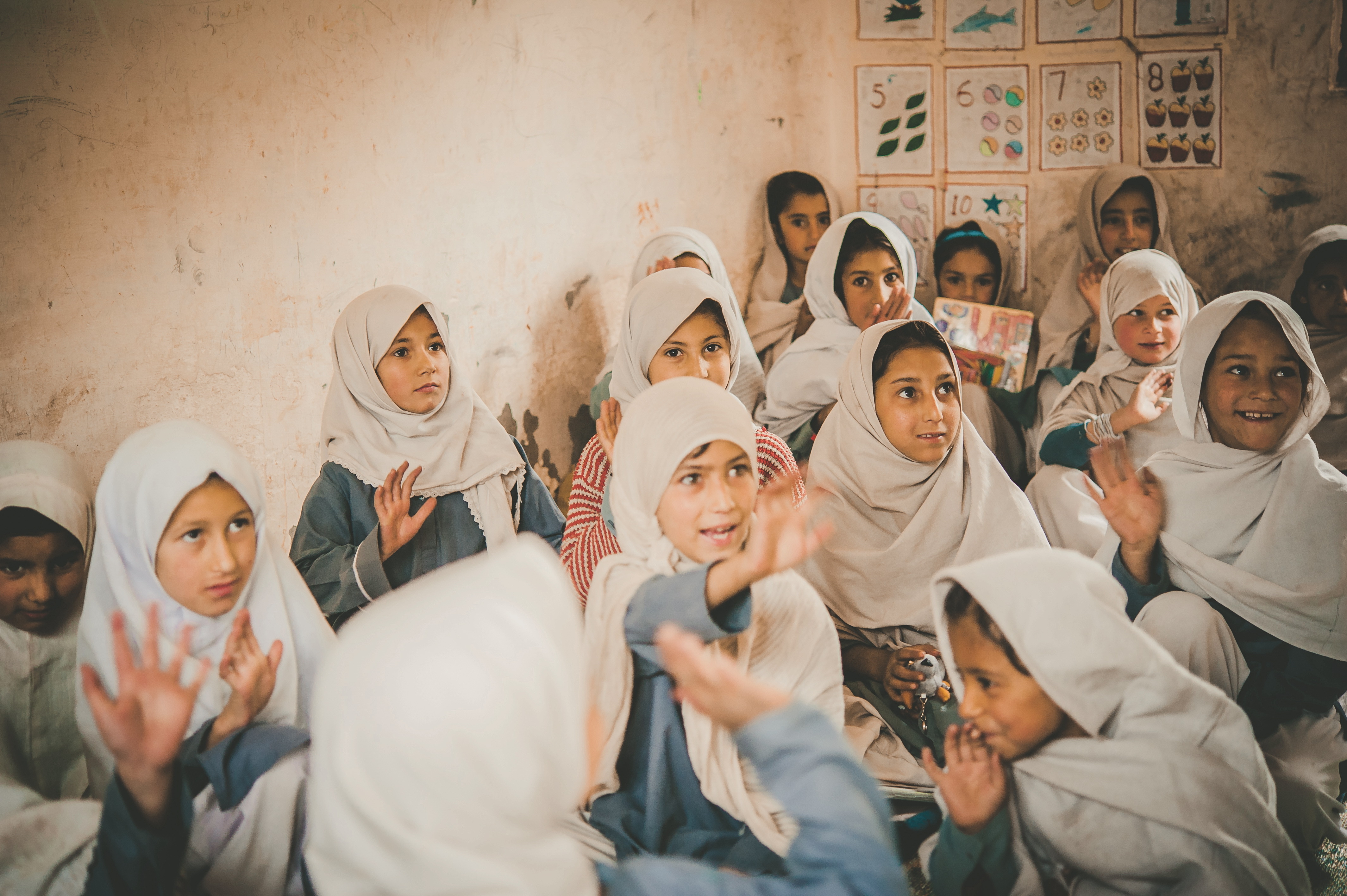



 “Educate a woman, and you educate a family, a generation, and the world.”

 Maulvi Naimat Yaseen raped a 12 year old boy in the Mehrab of Masjid in Larkana Sindh. SSP Larkana Rohail khoso confirmed the arrest of Pedophilia