













USA

USA

INDIA

India

BANGLADESH

BANGLADESH

NEPAL

Nepal

FIJI

FIJI

PAKISTAN

Pakistan

Melody Media Productions

Excellence in Broadcasting!

Pervez Saleem

(Producer/Director)

Social Issues

The Growing Threat of Child Sexual Violence in Pakistan: Causes, Effects, and Preventive Strategies

By Ayesha Bashir
Master of Arts (MA)
English Literature

The Growing Threat of Child Sexual Violence in Pakistan:
Causes, Effects, and Preventive Strategies
:پاکستان میں بچوں کے خلاف جنسی تشدد کا بڑھتا ہوا خطرہ
وجوہات، اثرات اور روک تھام کی حکمت عملی
पाकिस्तान में बच्चों के ख़िलाफ़ यौन हिंसा का बढ़ता ख़तरा:
कारण, प्रभाव और रोकथाम के उपाय

A Nation Failing Its Children
Pakistan is confronting a child protection crisis that can no longer be dismissed as a series of
isolated incidents. With disturbing regularity, news emerges of another child sexually assaulted, raped, tortured, or murdered after abuse. The victims are not confined to one city, province, socioeconomic class. They are children from villages and metropolitan centers alike, boys and girls whose lives are permanently altered before they have had the chance to truly begin. Each headline sparks public outrage for a few days, yet the cycle continues, exposing a deeper failure of society and the institutions entrusted with protecting its most vulnerable members. This article examines the scale of the crisis, why it keeps growing, what happens to a child and family in its aftermath, and what it would actually take to change course.

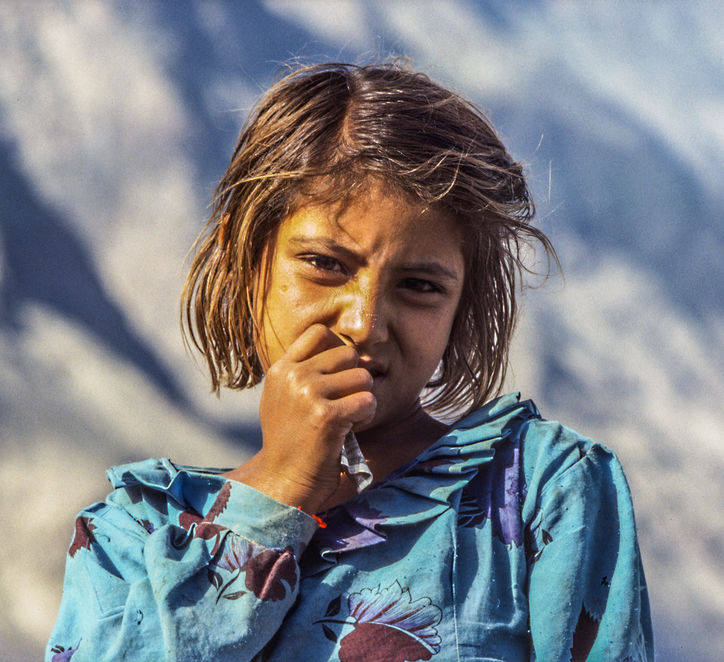
Sexual violence - UNICEF DATA

Understanding the Scale of the Crisis:
The statistics reveal only part of this grim reality. In 2025, child-protection monitoring data recorded 3,630 reported cases of child abuse, an 8% increase over the previous year —more than nine children reportedly abused every day. Separate figures documented over 2,900childabuse cases in 2024, while other monitoring data for the same year showed over 4,200 children experienced sexual violence, with girls (53%) and boys (47%) both heavily represented. Children aged 11–15 were the most frequently victimized age group. Punjab consistently accounts for the largest share of reported cases — around three-quarters nationally followed by Sindh, Khyber Pakhtunkhwa, and the remaining regions.

Two figures make the scale of institutional failure even clearer. First, roughly 83–93%of reported cases are formally registered with police so the shortfall is not primarily about families refusing to file complaints. Second, despite that registration rate, conviction outcomes are almost negligible: a 2025 parliamentary briefing put the conviction rate for child sexual abuse cases at just 0.7% nationally, with Punjab as low as 0.2% and Sindh at 3.1%, while related crimes like child trafficking and labor saw conviction rates in the low single digits. Separate reporting has cited conviction rates hovering between 5–10% depending on methodology and year, but every estimate places it far below what any functioning justice system would consider acceptable. In a documented 56 cases in a single year, the abuse ended in the child’s murder.

Even these numbers understate the true scale. They represent only the children whose suffering reached the police, courts, or a newspaper reporter much of this monitoring relies on media coverage across roughly 80 newspapers, meaning abuse in remote areas or cases deliberately suppressed by families or communities never enter the record at all. Every serious study of the issue agrees the real number of affected children is significantly higher than what is reported.

The nature of the crimes themselves is equally alarming: rape, gang rape, sodomy, abduction, torture, and, in the most horrific cases, murder following abuse. These are not merely criminal
offences; they are profound violations of childhood itself, leaving families shattered and communities questioning how such brutality continues with such frequency.
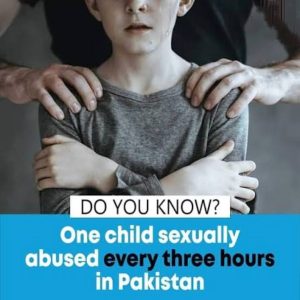
Why Child Sexual Violence Is Increasing
1. Parental Supervision Gaps and Communication Failures
Economic hardship undoubtedly places immense pressure on parents, particularly in large households where five or more children may be competing for limited time, attention, and money. These pressures are real, and they deserve to be acknowledged rather than dismissed. However, they cannot replace the need for consistent supervision, communication, and awareness of a child’s daily environment. Research shows child sexual abuse occurs across all socioeconomic classes — poverty and overcrowding can increase vulnerability by reducing supervision and increasing exposure to unsupervised, risky environments, but abuse is also well documented in affluent households where children are left with domestic staff, drivers, or tutors with equally little oversight. This is a supervision and communication problem before it is a class problem.

Where it does show up most visibly is in households where children are routinely sent to shops alone, left to play in the street for hours, or handed off to whichever relative, neighbor, or informal caregiver happens to be available, often so that stretched parents can get some relief from the demands of constant childcare. Time spent this way is time spent outside anyone’s direct supervision, and predators whoever they may be look for precisely these unguarded windows.

Beyond physical supervision, most children are never taught the basics of personal safety: how to recognize inappropriate behavior, whom to trust, what to say if someone touches them wrongly, or that they are allowed to refuse an adult. Conversations about the body, boundaries, and consent remain taboo in most households, so children grow up without the vocabulary to describe what happened to them — and a child who cannot name what occurred cannot ask for help. This silence is precisely what abusers rely on. Data consistently shows that acquaintances— people already inside the family’s circle of trust are the most common category of perpetrator, alongside strangers and, notably, religious teachers. The danger is rarely a stranger on the street; it is very often someone the family already let in.

None of this diminishes the real constraints many parents face. But supervision, open conversation, and basic safety education cost far less than the alternative, and no economic hardship changes the fact that watching over a child’s environment from birth onward is parent’s core responsibility.

2. Perpetrators: Access, Power, and Entitlement:
Discussions of this crisis often focus heavily on parenting, education, and technology and rightly so but they can end up saying remarkably little about the people who actually commit these crimes. That omission matters, because understanding the offender is essential to understanding the crime.

Most offenders are not strangers lurking in unfamiliar places. Case data and investigative reporting repeatedly point to fathers, uncles, teachers, religious instructors, neighbors, domestic employers, coaches, and family friends. The common thread connecting these categories is not primarily sexual desire it is access and power. Children are taught from the young age to obey adults and defer to authority; abusers exploit exactly that trained obedience and the trust an adult’s position automatically confers. Child sexual abuse is, at its core, an abuse of power over someone with far less capacity to resist, refuse, or be believed. Framing it this way changes the prevention conversation: the goal is not only to warn children about “strangers, “but to build systems in which no adult regardless of relationship or status has unsupervised, unaccountable access to a child.

3. Institutions Without Safeguarding Policies:
Children spend enormous amounts of time in institutions outside the home: schools, tuition centers, madrassas, sports academies, orphanages, and workplaces. This is not an accusation against any one type of institution — the overwhelming majority of teachers, religious instructors, and coaches in Pakistan are not abusers. The point is structural: any institution that lacks basic safeguarding policies — background checks, restrictions on being alone with a child, clear reporting channels, and independent oversight creates conditions where abuse can occur and go undetected for years, regardless of the institution’s intentions. Very few Pakistani schools, madrassas, or academies have such policies in any formal, enforced sense. Building them in is one of the more concrete, achievable reforms available, and one of the most neglected.

4. Grooming: A Process, Not an Event:
One of the most widespread misconceptions about child sexual abuse is that it begins with abduction or a sudden, violent encounter with a stranger. In reality, most abuse —especially by someone already known to the family — follows a slower, deliberate pattern known as grooming. It typically starts with small gifts, special attention, and displays of affection that make a child feel singled out and valued. The abuser gradually builds trust with both the child and often the family, positioning themselves as reliable, generous, or trustworthy. Secrecy is introduced early and normalized, and requests are made not to mention certain interactions to parents. Physical boundaries are tested and pushed gradually rather than violated all at once, so the child does not immediately register what is happening as wrong. By the time abuse occurs, the child has often already been conditioned to stay silent, feel complicit, or believe the
relationship is special rather than exploitative. Recent cases, including one in Punjab where children were filmed inside what was made to look like a recreational gaming club and later blackmailed with the footage, illustrate how grooming increasingly extends into digital spaces as well. Recognizing these patterns rather than waiting for signs of a stranger-danger scenario is essential for parents, teachers, and communities to intervene earlier.

5. Why Children Stay Silent:
A recurring question after every case is: why didn’t the child say something sooner? The answer is rarely simple indifference. Children stay silent because:
-They fear punishment or disbelief if they speak up.
- They have been directly threatened by the abuser, sometimes with harm to themselves or their family. - They do not have the vocabulary or understanding to recognize what happened as abuse, especially at a young age.
- They feel ashamed or believe, wrongly, that they are somehow to blame.
- They have seen how previous disclosures — by themselves or others —were met with disbelief, blame, or family pressure to stay quiet.

Understanding these barriers is critical, because it shifts responsibility away from asking “why didn’t the child tell us” and toward asking “what did we do, or fail to do, that made telling us
feel unsafe.”
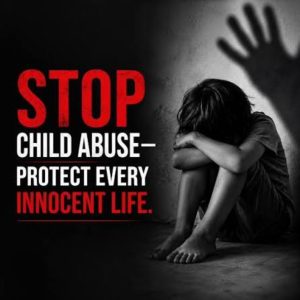
6. Conservative Schools and a Broken Approach to Sex Education
If parents are the first line of defense, schools are the second — and in Pakistan, that second line barely exists. There is effectively no age-appropriate safety or sex education at the primary or middle-school level, the stage at which children most need to learn about body boundaries and inappropriate touch, precisely because that is when they are most vulnerable and least equipped to protect themselves.

By the time students reach Matric and FSc, the entire subject is reduced to a single chapter on the human reproductive system within the biology syllabus, and even that chapter is often handled poorly. Teachers frequently appear visibly uncomfortable teaching it, rushing through the material, skipping diagrams, or telling students to “read it at home” instead of explaining it in class — a pattern that persists even in gender-segregated settings, such as a female teacher instructing a class of only girls. The chapter is technically read aloud so it is “covered” for the syllabus, but rarely explained in a way that ensures students actually understand it, and the same pattern holds in boys’ classes. Students can recite that the chapter exists without grasping what it means, let alone how it connects to consent, safety, or recognizing abuse.

This is the core of the problem: when a child’s two most essential sources of knowledge —parents at home and teachers at school — both fail to educate them properly, the child does not simply remain uninformed. They go looking for answers elsewhere, and today “else where” almost always means the internet.

7. Unregulated Digital Exposure and the Normalization of Exploitation:
Pakistan’s digital landscape has expanded at an unprecedented pace. Smartphones and affordable internet packages have connected millions of young people to the online world, but this transformation has occurred without a parallel investment in digital literacy, age verification, parental supervision, or comprehensive sexuality education. Many children and adolescents now enter online spaces exposing them to explicit and often violent sexual content long before they have the emotional maturity to critically evaluate it.

Unlike previous generations, today’s youth can access pornography within seconds, often without any meaningful restriction, and increasingly without even searching for it. Recommendation algorithms on major platforms are built to maximize engagement, and they frequently escalate a user — including a curious teenager — toward increasingly explicit or extreme content simply by following what keeps them watching. A child no longer needs to seek this material out; it is often served to them.

Much of this content does not portray healthy, respectful, or consensual relationships. It
frequently depicts aggression, domination, humiliation, and coercion, treating people as objects for gratification rather than partners in a relationship. Some illegal material circulating online also involves the direct exploitation of children, which is criminal rather than merely inappropriate. Repeated exposure during adolescence, absent any parental or class room guidance to contextualize it, can gradually distort a young person’s understanding of intimacy, consent, and relationships, replacing respect and mutual regard with messages centered on domination and gratification.

Mental health professionals additionally warn that excessive and unregulated exposure to explicit content is associated with compulsive consumption patterns, social isolation, anxiety, and depression, and in some individuals can progressively desensitize them, driving a search for increasingly extreme material to achieve the same effect. Exposure to such content does not automatically make someone an offender, but it functions as one of several risk factors —particularly when combined with poor supervision, unresolved trauma, or entrenched attitudes of entitlement over women and children.
Addressing this cannot rest on parents alone. Schools must incorporate digital literacy and online-safety education; technology companies need stronger age verification and faster detection and removal of illegal content; and policymakers must invest in cybercrime enforcement capacity that currently lags far behind the speed of the problem.
8. Poverty, Child Labor, and Domestic Work:
Economic desperation pushes many families to send children into domestic labor, street work, or informal apprenticeships — environments with minimal oversight and high vulnerability to exploitation. Trafficking for forced labor and sexual exploitation remains a documented problem, with hundreds of cases recorded annually, and overlapping harms are common: a trafficked child, for instance, frequently experiences sexual abuse or forced labor simultaneously rather than one or the other.

9. Government and Institutional Underperformance:
Despite an existing legal framework the Criminal Law (Amendment) Act of 2016, the Zainab Alert, Response and Recovery Act of 2020, and various provincial child-protection statutes that criminalize abuse and expand definitions of exploitation — implementation lags far behind legislation and is inconsistent across provinces. Child-protection units, helplines, and rescue mechanisms exist on paper but are frequently underfunded or understaffed. Advocates describe Pakistan as a country with a surplus of protective laws and a severe deficit of enforcement: the legislation exists, but the political will to fund and prioritize it consistently does not.

10. A Justice System That Rarely Delivers Justice:
The conviction statistics cited earlier are not an abstraction — they are the product of specific,
well-documented failures at every stage of the legal process:

Delayed FIR registration, where police are slow or reluctant to formally register a complaint, sometimes under social or financial pressure from the accused.
- Poor investigation and evidence collection, including mishandled or lost forensic
evidence, which has allowed cases in Punjab to collapse even when suspects were identified.
- Witness intimidation, particularly where perpetrators hold social, political, or economic influence in their community, and where Pakistan’s near-absence of witness protection mechanisms leaves families exposed to ongoing threats.
- Hostile cross-examination of child witnesses in court, often without the trained, trauma-informed judicial procedures used in many other countries.
- Multi-year delays, which exhaust a family’s financial and emotional resources long before a verdict is reached, pushing many toward informal “settlements” instead.
- Acquittals driven by procedural failure rather than innocence — cases lost not because the evidence didn’t exist, but because it wasn’t properly collected or preserved.

This combination has been described by child-protection monitors as a “ticking time bomb”: a justice system whose near-total failure to convict sends offenders, and the wider public, an
unmistakable signal that the real-world risk of consequence is close to zero.

The Societal Dimension: Stigma and Victim-Blaming
Perhaps the most damaging social response to child sexual abuse is the instinct to protect family honor rather than the child. Survivors and their families frequently face:

- Victim-blaming, where a child’s clothing, behavior, or mere presence near the abuser is used to imply some degree of fault, despite the child being a minor incapable of consent.
- Silencing and “compromise” settlements, where families are pressured — sometimes by community elders, sometimes by the perpetrator’s family — to withdraw complaints in exchange for money or a promise of marriage between families, effectively erasing the crime.
- Social ostracization of the victim’s family, who may be seen as bringing shame rather than as having been wronged.

This culture of blame does two things simultaneously: it discourages reporting, and it re-traumatizes children who do come forward, sending the message that speaking up creates more punishment than staying silent.
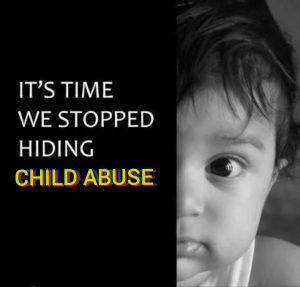
Consequences:
Psychological Impact on the Child
Child sexual abuse can have devastating psychological consequences that often persist long after the abuse itself has ended. Many survivors experience symptoms consistent with post traumatic stress, including nightmares, flashbacks, heightened anxiety, and intense fear triggered by reminders of the event. Depression and anxiety disorders are also common and, left untreated, can continue well into adulthood.

The abuse frequently damages a child’s ability to trust others — particularly when the perpetrator is someone known to them — making it harder to build healthy relationships later in life. Many children struggle with shame, guilt, and self-blame, especially in environments where victims are questioned or discouraged from speaking out. Behavioral changes such as withdrawal, sudden aggression, emotional instability, regression in younger children, and declining academic performance are common early warning signs. In severe cases, prolonged trauma can increase the risk of self-harm, substance misuse, or suicidal ideation, underscoring the importance of early psychological intervention.

The Cycle of Violence and Intergenerational Trauma
It is important to state clearly that being a victim of abuse does not make someone destined to

become an offender the overwhelming majority of survivors never harm anyone. But psychologists have documented a related and more subtle pattern: children raised around violence, or whose trauma is never acknowledged or treated, can develop distorted templates for what relationships, intimacy, and authority are supposed to look like. Left unaddressed across a lifetime, and sometimes across generations, this intergenerational trauma can quietly reshape how a survivor later parents, forms relationships, or responds to conflict. This is one more reason why timely psychological support is not a peripheral concern but a central part of breaking the cycle.

Impact on the Family
The effects of child sexual abuse extend beyond the victim and deeply affect the entire family. Parents and siblings often experience trauma, helplessness, guilt, and anger while trying to support the child, and delays or failures in the justice system intensify that distress. Many families face significant financial burdens from medical treatment, psychological counselling, and legal expenses. In a society where sexual abuse carries such heavy stigma, families may experience social isolation and community judgment, and in some cases the trauma strains family relationships further, with blame or conflict arising over perceived failures to protect the child.
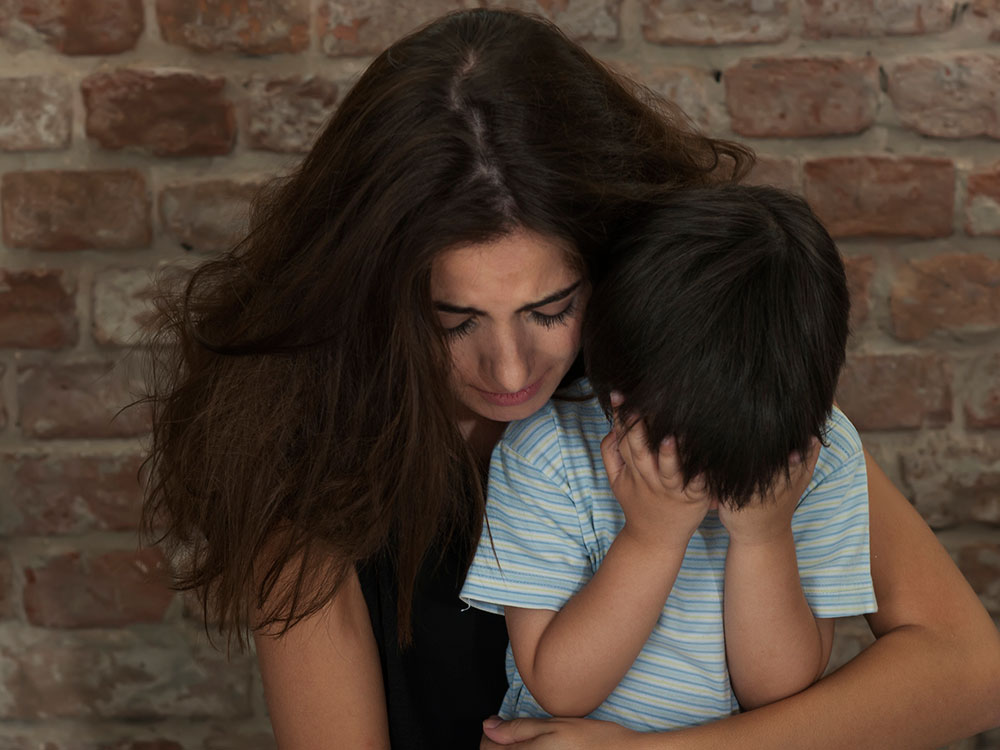
How to get help with family violence and abuse

The Missing Healthcare Response
A question rarely asked publicly is: where does a child actually go after abuse is disclosed? In
principle, the path should involve a hospital visit for medical care, a proper forensic examination to preserve evidence for prosecution, and sustained psychological counselling and trauma therapy. In practice, Pakistan has very few trauma-informed child psychologists, and even fewer facilities equipped to conduct forensic examinations in a way that is both medically sound and sensitive to a child’s age and distress. This gap means that even when a family does everything right — reporting quickly, cooperating with police — the child may still receive little to no structured psychological support afterward, leaving the deepest wounds of the experience essentially untreated.

Long-Term Societal Consequences
The impact of child sexual abuse extends beyond individual families and becomes a broader societal issue. Untreated childhood trauma contributes to long-term mental health problems, reduced educational and economic productivity, and increased pressure on healthcare and social welfare systems. It also weakens public trust in the very institutions responsible for protecting children, particularly when victims fail to receive timely justice or adequate support.

A society that fails to address this crisis risks perpetuating cycles of violence, silence, and stigma
across generations.

What Pakistan Must Do?
For parents and families: Supervision is a baseline duty, not a luxury reserved for smaller or better-resourced families. Open, age-appropriate conversations about body safety, consent, and trusted adults should begin early, not after abuse has occurred, and children should not be routinely left to roam streets or shops unaccompanied simply for parents’ convenience.
Believing a child’s disclosure rather than questioning it is the single most protective response a
parent can offer.
For institutions: Schools, madrassas, sports academies, tuition centers, and orphanages need
enforced safeguarding policies — background checks, restrictions on unsupervised one-on-one
contact, clear and confidential reporting channels, and independent oversight — regardless of
how trusted the institution or its staff are assumed to be.
For the education system: It is not enough to add a chapter to a textbook. Schools need age
appropriate personal-safety education starting in primary grades, not a single reproductive
system chapter reserved for Matric and FSc, and teachers need proper training and support to
deliver this material clearly and without embarrassment. Until schools can actually teach this
material rather than technically include it, children will keep learning about their bodies and
relationships from the internet instead.

For technology platforms and regulators: Stronger age verification, content moderation, and
algorithmic safeguards for minors are needed, alongside public awareness campaigns about
online grooming risks, to match the pace at which children are going online.
For government and law enforcement: Existing laws need consistent funding and enforcement —faster FIR registration, specialized child-protection investigation units, trained forensic
capacity, witness protection mechanisms, and fast-track courts with defined resolution timelines, so that a 0.7% conviction rate stops being the norm.
For the healthcare system: Pakistan needs a genuine expansion of trauma-informed child
psychologists and accessible forensic and counselling services, so that medical and psychological
care after disclosure is the rule rather than the exception.
For communities: Shifting the social response from protecting the abuser’s reputation to protecting the child is a cultural change, but it is achievable through sustained media campaigns, engagement with religious and community leaders, and visible, consistent consequences for perpetrators.
Every reported case represents far more than a statistic. It represents a childhood interrupted, a family forever changed, and a society that failed in its most fundamental responsibility. Pakistan’s child protection crisis cannot be solved by stronger laws alone. It requires a cultural transformation in how children are valued, educated, protected, and heard. Until safeguarding children becomes a shared responsibility of families, schools, communities, institutions, and the state, the headlines will continue — and another generation of children will bear the cost.

Disclaimer:

Sada-E-Watan provides news and opinion articles as a service to our readers. These articles and news items come from sources outside of our organization. Where possible, the author and the source are documented within each article. Statements and opinions expressed in these articles are solely those of the author (reporter/newspaper) or authors (reporters/newspapers) and may or may not be shared by the staff and management of Sada-E-Watan. Sada-E-Watan was created to provide one convenient central location where a user can quickly scan headlines from many news sources. The headlines listed on Sada-E-Watan pages are links to stories on the sites where these stories are located. The goal of Sada-E-Watan is to help readers access stories on web sites that they would normally not have time to view on a regular basis and to add value to the news source sites by mentioning their name on top, so readers can view these sites.

The Sada-E-Watan takes no responsibility for any loss or damage suffered as a result of using the linked websites or as a result of using the information published on any of the pages of the linked websites.
Whilst every effort is made to ensure downloadable content is free from viruses, Sada-E-Watan cannot accept any liability for damages resulting from virus infection. You should take adequate steps to ensure your virus check regularly when using any device. If you have any questions or comments about Sada-E-Watan, please contact us at: radio@sada-e-watan.com. 
By Ayesha Bashir Master of Arts (MA) English Literature The Growing Threat of Child Sexual Violence in Pakistan: Causes, Effects, and Preventive Strategies :پاکستان میں بچوں کے خلاف جنسی تشدد کا بڑھتا ہوا خطرہ وجوہات، اثرات اور روک تھام کی حکمت عملی पाकिस्तान में बच्चों के ख़िलाफ़ यौन हिंसा का बढ़ता ख़तरा: कारण, प्रभाव और रोकथाम के उपाय A Nation Failing Its Children Pakistan is confronting a child protection crisis that can no longer be dismissed as a series of isolated incidents. With disturbing regularity, news emerges of another child sexually assaulted, raped, tortured, or murdered after abuse. The victims are not confined to one city, province, socioeconomic class. They are children from villages and metropolitan centers alike, boys and girls whose lives are
Dreams, Debt, and Death: The Reality of Illegal Migration from Pakistan to Europe

By Ammara Liaquat Ch
Doctor of Pharmacy
(Pharm.D.)

Dreams, Debt, and Death:
The Reality of Illegal Migration from Pakistan to Europe
:خواب، قرض اور موت
پاکستان سے یورپ کی جانب غیر قانونی ہجرت کی حقیقت
सपने, कर्ज़ और मौत:
पाकिस्तान से यूरोप तक अवैध प्रवास की सच्चाई

The phone is ringing, but nobody is answering. In a small village in Pakistan, families are gathering around one television, watching news from Greece; another migrant boat sinks. Mothers are checking their WhatsApp again and again. Fathers are sitting quietly.

 Migrants and refugees panic as they fall in the water during a rescue operation off the Libyan coast in the Mediterranean Sea — AFP/Andreas Solaro

Almost 44 Pakistanis died in January 2025 while trying to reach Europe through the Atlantic route. In June 2023, a fishing boat carrying more than 700 migrants sank near Greece. Nearly 300 Pakistanis were believed to be onboard. Months earlier, another incident happened near Libya, killing 57 people, including seven Pakistanis.

These examples are not rare. Every year, thousands of young Pakistanis are leaving home. They are taking dangerous routes toward Europe. Many have borrowed money or used family property as security for loans to pay smugglers.

The idea of illegal migration comes after seeing joblessness, rising inflation, low incomes, and false promises of a better life. Behind every number is a grieving family, unpaid debt, and dreams that never returned home.

Illegal Migration from Pakistan

Illegal or irregular migration means entering, leaving, or staying in a country without following its immigration laws. This may involve crossing borders without permission, using fake documents, or overstaying a visa.

Right now, it is important to understand the difference between human smuggling and human trafficking. Human smuggling happens when a person willingly pays a smuggler to help them cross a border illegally.

Human trafficking, on the other hand, involves forcing, deceiving, or exploiting people for profit through practices such as forced labour or sexual exploitation. Many Pakistanis voluntarily contact smugglers and ultimately become victims of violence during the journey.

 Participants hold flags and a banner during an anti-immigration rally organised by the far-right party in Slovakia. — AFP

Why More Young Pakistanis Are Leaving

Pakistan has millions of young people searching for a stable income. Many are unable to find a good job. Inflation keeps rising while incomes stay low. Electricity bills, rent, and food costs have become harder to manage. Even educated graduates often remain unemployed for years.

Some people are leaving legally for jobs abroad. Others are choosing dangerous routes because legal migration feels too expensive or too slow. In many villages, going overseas is seen as the only way to escape debt and poverty.

The Routes That Lead to Europe

Most irregular migrants from Pakistan are following well-known smuggling routes. One of the most common paths is:

Pakistan → Iran → Turkey → Libya → Mediterranean Sea → Italy or Greece

Another route passes through Eastern Europe:

Pakistan → Iran → Turkey → Bulgaria → Serbia → Hungary → Western Europe

These journeys are long and dangerous. Migrants cross mountains, forests, deserts, and seas. Some walk for days in freezing weather. Some hide inside trucks with little air. Others travel in overloaded rubber boats during rough seas. Many disappear before reaching Europe. Some never contact their families again.

Dunki is not a dream It is a deadly decision. Always choose legal channels to travel abroad.

The European Dream That Pulls Young Pakistanis Away

  • When Jobs No Longer Feel Enough

Many young Pakistanis want to leave because life at home feels uncertain. Every year, thousands of students graduate from universities but struggle to find stable jobs. Some remain unemployed for months. Others work long hours for salaries that barely cover food, rent, and transport.

Living costs continue to rise across the country. For many households, Europe looks safer and more stable. People see higher wages, stronger currencies, healthcare, and the chance to improve their lifestyle.

  • The Stories People Grow Up Hearing

Overseas success stories shape how young people think about their future. Families proudly talk about relatives living in Italy, Spain, or Greece. Showing off new houses, overseas weddings, and imported cars become signs of success.

Social media adds to this image. TikTok and Instagram often show a comfortable life abroad. Failed journeys rarely become public. Few people speak openly about detention, illegal work, homelessness, or abuse by smugglers. These stories hardly convince others that migration is risky.

  • When Migration Becomes a Family Decision

For many families, migration is not a personal decision alone. Parents, brothers, and relatives collect money for the journey. Some families borrow loans. Others sell land, livestock, or jewelry to fulfill their dreams.

Many people believe one successful migrant can support the entire family living there. Young men often feel responsible for changing their family’s future. After some time, many begin to feel they have no other choice except leaving for Europe, even through dangerous routes.

Video Courtesy: Samaa TV/YouTube

How Human Smugglers Turn Hope into a Business

  1. How Smugglers Find New Migrants

Human smuggling networks operate in many parts of Pakistan. They use local middlemen, travel agents, village recruiters, and sometimes former migrants to contact new clients. Some also advertise through WhatsApp groups, Facebook pages, and private Telegram channels.

Most smugglers target unemployed young men. They present illegal migration as a simple path to Europe. In many villages, people already know someone who used the same route, which makes the promises sound believable.

  1. The Promises Families Hear

Smugglers also promise safe travel and guaranteed arrival. Some claim jobs are already waiting in Europe. Others tell families that asylum is quick and easy.

Most families discover the truth too late. Migrants face police raids, exploitation, and long periods without legal status. Some become trapped between borders for months. Others lose their documents, savings, or contact with their families.

  1. The Cost Families Pay

The journey can cost between PKR 2 million and PKR 5 million, depending on the route. Most families cannot arrange this money easily. If the journey fails, the debt remains. Many families spend years trying to recover financially.

  1. The Route Known as Dunki

Many migrants travel through the Dunki route:

Pakistan → Iran → Turkey → Libya → Mediterranean Sea → Europe

Along the way, migrants cross deserts, mountains, and forests. They stay in unsafe houses given by smugglers. The final sea crossing is made in small overloaded boats without proper safety equipment.

  5. Violence During the Journey

For many migrants, the violence starts long before the sea crossing. Some smugglers beat migrants or demand more money from their families. Others keep people locked inside containers or crowded rooms for days.

Many migrants face hunger, exhaustion, illness, and abuse before they even reach the Mediterranean Sea. Some disappear during the journey and are lost contact with their families.

From Hope to Horror: The Journey That Changes Everything

  1. Crossing Deserts and Mountains

The journey usually begins quietly. A few phone calls. A goodbye at night. A crowded bus leaving the village before sunrise.

From Pakistan, many migrants travel into Iran and then toward Turkey. Soon, the journey becomes harder than they imagined. Some walk through deserts for days with little food or water. During the day, the heat burns their skin. At night, many sleep in freezing weather without blankets or shelter.

Migrants hide from border police and move through mountains in silence. Some fall sick. Some cannot continue walking. Others get separated in the dark. Smugglers even sometimes leave injured people behind without help.

  1. The Sea Crossing That Changes Everything

For many migrants, the Mediterranean Sea becomes the scariest part of the journey. Smugglers push dozens of people into small fishing boats or inflatable rubber boats. Many cannot swim. Some boats have no life jackets or enough fuel.

When the sea turns rough, panic spreads quickly. Children cry while people pray quietly under the sound of strong winds and crashing water. Some migrants jump into the sea after boats begin sinking.

For many families, that moment becomes the last time they hear voices of their sons.

“Survivor interviews and documentaries from Italy and Greece show similar accounts of desert crossings and truck journeys.”

  1. The Greece Boat Disaster

On 14 June 2023, a fishing trawler carrying more than 700 migrants sank near Pylos, Greece, while travelling from Libya to Italy. Nearly 300 Pakistanis were believed to be onboard.

After the incident, families across Pakistan waited outside government offices and passport centers for updates. Many gave DNA samples while searching for their missing relatives. Some families never received confirmation about what happened to their sons till now.

  1. The Survivors Who Returned With Trauma

The Greece disaster was not the only tragedy. In April 2023, a migrant boat sank near Libya, killing 57 people, including seven Pakistanis. In January 2025, at least 44 Pakistanis died while trying to reach Spain through the Atlantic route.

Those who survive often return with deep emotional scars. Many struggle with nightmares, fear of water, survivor’s guilt, and depression long after the journey ends.

Life After Reaching Europe: A Different Reality

  • When the Dream Starts Breaking Apart

For many migrants, reaching Europe does not end the struggle. The problems simply change. Those without legal documents often take whatever work they can find. Some work on farms. Others carry bricks at construction sites or wash dishes in restaurants for long hours.

Many stay quiet even when employers underpay them or refuse wages completely. Without legal status, they fear losing the little work they have.

  • The Rooms Where Migrants Live

Life in Europe often looks very different from social media videos. Many undocumented migrants cannot afford proper housing. Some share tiny apartments with six or seven people. Others sleep in crowded rooms near factories or construction sites.

In some cases, migrants stay in abandoned buildings or temporary shelters with poor sanitation and little privacy. After long working hours, many return to rooms that barely feel livable.

  • Living With Fear Every Day

For undocumented migrants, fear becomes part of daily life. Some avoid travelling far from work because they worry about police checks or immigration raids. Others stay away from hospitals even when they are sick.

Many migrants also avoid reporting abuse or unsafe conditions. They know they have little legal protection. Some spend years living this way, moving from one temporary job to another.

Why Many Never Tell the Truth

Back home, families often believe their sons are living successful lives in Europe. The truth, on the other hand, is different than reality.

Many migrants hide their struggles from parents and relatives. They know families borrowed money or sold property to pay for their dreams. Some fear becoming a disappointment after everything their families sacrificed.

So the phone calls continue. Smiles appear on social media. But behind those pictures, many migrants live with loneliness, pressure, and silence.

Video Courtesy: Samaa TV/YouTube

How Pakistani Migrants Survive After Reaching Europe

For many Pakistani migrants, reaching Europe does not bring stability straight away. The struggle usually continues after arrival. Without legal documents or work permits, finding secure work becomes difficult. Most accept whatever jobs they can find.

  • In Italy, many Pakistanis work on farms during harvest season. They pick tomatoes, grapes, olives, and oranges for long hours under strong heat. Some begin work before sunrise and return late in the evening. Others work at construction sites, small factories, warehouses, or restaurants where wages remain low.
  • In Greece, undocumented migrants often work in agriculture, fishing, construction, and seasonal tourism. During summer, some find temporary jobs in cafes, hotels, or restaurants near tourist areas.
  • In Spain, many migrants pick strawberries, citrus fruits, olives, and vegetables. Others work as cleaners, food delivery riders, factory labourers, or construction workers. Seasonal farming remains one of the few jobs available to undocumented workers.
  • In Austria, many Pakistanis work in takeaway shops, warehouses, cleaning services, food delivery, and small family-owned businesses where workers are hired informally.
  • In Germany, France, Belgium, and the Netherlands, migrants work in restaurants, recycling plants, warehouses, cleaning services, and construction sites. Many receive cash payments instead of proper salaries. Most have no health insurance, paid leave, or legal protection at work.

Still, many continue working quietly. Some are trying to repay loans taken for the journey. Others send money home every month so their families can survive. Behind their hard-earned money are long shifts, crowded rooms, exhaustion, and years spent living in uncertainty.

Families Left Behind After Migration

  1. The Wives Who Stay Behind

When a husband leaves for Europe, life at home changes quietly. The wife stays behind to handle everything alone. In many families, she moves in with her in-laws and loses much of her privacy. Small daily decisions often depend on other people in the house.

Days become long and repetitive. Children need school fees, food, and care, while the husband remains far away in another country. Some women wait every month for money transfers that arrive late or sometimes do not arrive at all. Many hide their stress from relatives and neighbours.

  1. Children Growing Up Without Fathers

After the father leaves, the house feels different. Empty chairs during meals and birthdays slowly become normal for children. Many grow up speaking to their fathers only during short phone calls or video chats.

As years pass, the emotional distance also grows. Some children become shy around fathers they meet once a year. Others struggle with sadness, anger, or loneliness inside the home.

  1. How Distance Affects Marriages

Years of separation slowly affect the marriage. Phone calls cannot replace daily life together. Poor internet signals, work schedules, and money problems often create misunderstandings.

Inside many homes, tension also grows between wives and in-laws over household decisions, children, or finances. Small disagreements slowly become part of everyday life.

  1. The Emotional Burden Women Carry Alone

For many women, uncertainty becomes part of daily life. They worry constantly about their husband’s safety during the journey and after reaching Europe. At the same time, neighbors and relatives closely watch their personal lives.

For families whose loved ones disappear during migration, the pain becomes even heavier. Some women spend years waiting for answers that never come, living somewhere between hope and grief. Even some women lost their husbands during this journey.

DUNKI IS NOT A SHORTCUT — IT'S A DEADLY TRAP! Illegal migration can lead to loss of life, human trafficking, arrest, deportation, and financial exploitation. Smugglers promise false dreams and abandon victims

Families After the Tragedy

  • When Debt Is All That Remains

Before the journey, many families sell land, livestock, or jewelry to pay smugglers. Some also take large loans with heavy interest. When a son dies or disappears, the family loses both a loved one and the money they invested in his future.

Many parents spend years struggling with unpaid debt after the tragedy.

  • Parents Waiting for Sons Who Never Return

For many families, the waiting never truly ends. Mothers keep checking their phones for messages that never arrive. Fathers contact embassies, police offices, and hospitals searching for information.

After major boat disasters, many Pakistani families gave DNA samples to identify bodies recovered from the sea. Some received answers. Others are still waiting.

  • Villages Living With Grief

When migrant boats sink, entire villages suffer together. In some areas, several young men disappear during the same journey. Streets become quieter, and many homes enter mourning at the same time.

Families gather for funerals and prayer meetings while photographs of missing sons remain hanging on walls for years.

Social Media and the Illusion of Success

  • The Life Online: Migrants post videos showing off cars, restaurants, shopping, and branded clothes in Europe.
  • What People Never See: Social media rarely shows illegal work, crowded rooms, unpaid wages, or fear of police raids.
  • Smugglers Online: Many smugglers use WhatsApp, Telegram, Facebook, and TikTok to contact young people.
  • False Promises: Some posts use fake success stories to make dangerous migration routes appear safe and easy.
  • Feeling Left Behind: Viral videos make many young Pakistanis compare their lives with people living abroad.
  • The Pressure From Phones: Apps keep showing images of success in Europe, pushing some young people toward risky decisions.

Europe’s Response to Illegal Migration

  1. Stronger Borders

Across Europe, border guards watch the sea and land routes used by migrants. Some countries have built large border walls and metal barriers to stop migrants. Cameras, drones, and night patrols now monitor many places where they try to cross secretly.

  1. Detention and Deportation

When migrants are caught without legal documents, many are taken to detention centres while authorities review their cases. Some wait for months without knowing whether they will stay or be deported.

Others are eventually placed on flights and returned to their home countries.

  1. The Human Rights Debate

Some human rights groups say European border policies are too harsh. Aid groups say border guards force migrant boats back into dangerous seas instead of helping the people on board.

European governments say stricter border controls are needed to stop smugglers and reduce illegal crossings. However, some groups believe these actions often put migrants in even greater danger.

Rescuers recover a body after a migrant

Why Pakistan Must Take This Crisis Seriously

Giving Young People a Reason to Stay

In many villages, young people leave because they see no future at home. Finding stable work has become difficult, even for graduates. Pakistan needs more local jobs, small business support, and technical training so young people can earn a living without risking their lives abroad.

Stopping the Smuggling Networks

Human smuggling has turned into a business built on desperation. Recruiters continue targeting poor families with false promises about Europe. Police and investigators need to trace these networks, arrest the people running them, and work with other countries to stop cross-border smuggling routes.

Telling Families the Truth

Many families still do not understand how dangerous these journeys have become. Awareness campaigns in schools, villages, colleges, and mosques can help people hear real stories from survivors and grieving families.

Making Safe Migration Easier

Many Pakistanis still want to work or study abroad. Expanding legal visas, seasonal jobs, and student programs can give young people safer options. For many families, a safe flight should never feel harder than a dangerous boat journey.

DUNKI IS NOT A SHORTCUT — IT'S A DEADLY TRAP! Illegal migration can lead to loss of life, human trafficking, arrest, deportation, and financial exploitation. Smugglers promise false dreams and abandon victims

Wrap Up

Across many villages in Pakistan, families still wait for sons who never returned home. Some continue paying loans taken for dangerous journeys to Europe. Others live for years without knowing whether their loved ones are alive or dead. In many homes, old photographs and silent phones are the only things left behind.

Illegal migration is not only a border issue. It is linked to unemployment, rising living costs, weak opportunities, and the false promises sold by smugglers. For many young people, leaving the country now feels like the only way to support their families.

But the consequences reach far beyond the sea crossing. Families lose savings, children grow up without parents, and entire communities carry grief after every boat disaster.

Stopping this crisis will require more than border walls and patrol boats. Pakistan also needs jobs, safer legal migration pathways, stronger action against smugglers, and honest public awareness about the risks of these journeys.

Disclaimer:

Sada-E-Watan provides news and opinion articles as a service to our readers. These articles and news items come from sources outside of our organization. Where possible, the author and the source are documented within each article. Statements and opinions expressed in these articles are solely those of the author (reporter/newspaper) or authors (reporters/newspapers) and may or may not be shared by the staff and management of Sada-E-Watan. Sada-E-Watan was created to provide one convenient central location where a user can quickly scan headlines from many news sources. The headlines listed on Sada-E-Watan pages are links to stories on the sites where these stories are located. The goal of Sada-E-Watan is to help readers access stories on web sites that they would normally not have time to view on a regular basis and to add value to the news source sites by mentioning their name on top, so readers can view these sites.

The Sada-E-Watan takes no responsibility for any loss or damage suffered as a result of using the linked websites or as a result of using the information published on any of the pages of the linked websites.
Whilst every effort is made to ensure downloadable content is free from viruses, Sada-E-Watan cannot accept any liability for damages resulting from virus infection. You should take adequate steps to ensure your virus check regularly when using any device. If you have any questions or comments about Sada-E-Watan, please contact us at: radio@sada-e-watan.com. 

By Ammara Liaquat Ch Doctor of Pharmacy (Pharm.D.) Dreams, Debt, and Death: The Reality of Illegal Migration from Pakistan to Europe :خواب، قرض اور موت پاکستان سے یورپ کی جانب غیر قانونی ہجرت کی حقیقت सपने, कर्ज़ और मौत: पाकिस्तान से यूरोप तक अवैध प्रवास की सच्चाई The phone is ringing, but nobody is answering. In a small village in Pakistan, families are gathering around one television, watching news from Greece; another migrant boat sinks. Mothers are checking their WhatsApp again and again. Fathers are sitting quietly. Almost 44 Pakistanis died in January 2025 while trying to reach Europe through the Atlantic route. In June 2023, a fishing boat carrying more than 700 migrants sank near Greece. Nearly 300 Pakistanis were believed to be
The Rights of Women and Children in Pakistan – By Iram

By Iram… 
Intermediate (Arts)

The Rights of Women and Children in Pakistan.
پاکستان میں خواتین اور بچوں کے حقوق۔
पाकिस्तान में महिलाओं और बच्चों के अधिकार।
 

 Under the current legal framework in Pakistan, women are disenfranchised or explicitly discriminated against in marriage, divorce, child custody battles and inheritance.
Women striving for gender equality in Pakistan
“Let woman share the rights and she will emulate the virtues of man.”
“The seeds of success in every nation on Earth are best planted in women and children.”
“Gender equality is the goal that will help abolish poverty that will create more equal economies, fairer societies and happier men, women and children.”
“We are a society where women, and children by the way, are not safe anywhere. Something absolutely and deeply wrong is happening in our society.”

Pakistani woman empowerment Images - Free Download on Magnific (formerly Freepik)

Introduction:

Women and children are important parts of every society. A country cannot truly progress without protecting their rights, dignity, and safety. The basic rights of women and children include education, healthcare, equality, respect, and protection.

In Pakistan, laws exist to protect women and children, but there is still a difference between laws and their practical implementation. Many people are not fully aware of these rights, and social problems sometimes create difficulties in achieving them.

A strong society is one where every woman and child feels safe, respected, and valued. Creating awareness and taking practical steps can bring positive change in Pakistan and around the world.

Rights of Women in Pakistan

Women in Pakistan have an important role in families, communities, workplaces, and national development. Supporting women’s rights means supporting the progress of the entire society.

Right to Education

Education is one of the most important rights of women. Education helps women become confident, independent, and able to make better decisions.

Educated women can:

– Support their families

– Build successful careers

– Understand their rights

– Contribute positively to society

However, some women still face challenges due to financial issues, social pressure, or lack of educational facilities. Promoting women’s education is an important step toward a better future.

Childrens rights illustration Photos - Download Free High-Quality Pictures | Freepik

Right to Work and Financial Independence

Women have the right to work and use their skills. Many Pakistani women are contributing in different fields, including:

– Education

– Healthcare

– Business

– Technology

– Government services

When women become financially strong, families and communities also become stronger.

Right to Safety and Protection

Every woman deserves a safe environment at home, school, workplace, and public places.

Women should be protected from:

– Harassment

– Violence

– Discrimination

– Unfair treatment

Respect and awareness from an early age can help create a safer society.

Page 19 | Womens rights are human rights Images - Free Download on Magnific (formerly Freepik)

Right to Make Decisions

Women have the right to participate in decisions related to their education, career, and personal lives. Respecting women’s opinions helps create stronger families and healthier communities.

Rights of Women in Islam

Islam gives great importance to the respect and dignity of women. Islamic teachings encourage kindness, justice, and fair treatment.

Islam gives women rights such as:

– Right to respect

– Right to education

– Right to own property

– Right to inheritance

– Right to express opinions

A society based on justice and kindness can create a better environment for everyone.Child rights day illustration | Premium AI-generated vector

Rights of Children in Pakistan

Children are the future of every nation. Protecting their rights is necessary for building a peaceful and successful society.

Right to Education

Every child has the right to receive education. Education helps children gain knowledge, confidence, and skills.

Education allows children to:

– Understand the world

– Develop positive thinking

– Create better opportunities

– Become responsible citizens

University secures major grant to boost maternal/child health in Pakistan | The Aga Khan University News

Right to Health

Children need proper healthcare, nutritious food, and a clean environment.

Important steps include:

– Regular medical care

– Clean drinking water

– Healthy food

– Good hygiene

Healthy children become strong adults who contribute positively to society.

Protecting children Images - Free Download on Magnific (formerly Freepik)

Right to Protection

Children should be protected from:

– Child labor

– Abuse

– Neglect

– Exploitation

Parents, schools, and communities all have a responsibility to keep children safe.

Simple Yet Powerful Acts To Raise Awareness About Women's and Children's Rights - Tahanan Sta Luisa

Right to Love and Care

Children need love, attention, and emotional support. A caring family environment helps children develop confidence and good character.

Challenges Faced by Women and Children

Some major challenges include:

– Lack of awareness

– Poverty

– Limited education opportunities

– Social restrictions

– Weak implementation of laws

Solving these issues requires cooperation between families, communities, and institutions.

Steps to Improve Women and Children’s Rights

Step 1: Spread Awareness

People should learn about rights through:

– Schools

– Media

– Community programs

– Awareness campaigns

Knowledge helps people understand the importance of equality and respect.

Step 2: Support Education

Education is the strongest tool for positive change. Both girls and boys should receive equal opportunities to learn.

Step 3: Encourage Respect and Equality

Children should be taught from an early age that every person deserves respect.

Families can promote equality by:

– Listening to everyone’s opinions

– Avoiding discrimination

– Supporting positive behavior

Step 4: Strengthen Legal Protection

Laws are important, but they must also be properly implemented to protect women and children.

Family Protect Stock Photos, Images and Backgrounds for Free Download

Positive Effects of Protecting Rights

When women and children receive their rights, society benefits in many ways:

– Stronger families

– Better education

– Economic growth

– Reduced social problems

– More peaceful communitiesPage 5 | Pakistani family Vectors - Download Free High-Quality Vectors from Freepik | FreepikConclusion

The rights of women and children are not only legal responsibilities but also moral responsibilities. A society grows when every person receives respect, fairness, and opportunities.

Pakistan has the potential to progress when women and children are given proper rights and protection. Islam also teaches justice, kindness, and respect, showing the importance of caring for women and children.

Every positive step toward education, awareness, and equality can create a better future. By protecting women and children, we can build a peaceful and successful society for everyone. If we follows these little steps about women and children’s rights . These steps and changing has leaving positive effect on the world and on the society.

Disclaimer:

Sada-E-Watan provides news and opinion articles as a service to our readers. These articles and news items come from sources outside of our organization. Where possible, the author and the source are documented within each article. Statements and opinions expressed in these articles are solely those of the author (reporter/newspaper) or authors (reporters/newspapers) and may or may not be shared by the staff and management of Sada-E-Watan. Sada-E-Watan was created to provide one convenient central location where a user can quickly scan headlines from many news sources. The headlines listed on Sada-E-Watan pages are links to stories on the sites where these stories are located. The goal of Sada-E-Watan is to help readers access stories on web sites that they would normally not have time to view on a regular basis and to add value to the news source sites by mentioning their name on top, so readers can view these sites.

The Sada-E-Watan takes no responsibility for any loss or damage suffered as a result of using the linked websites or as a result of using the information published on any of the pages of the linked websites.
Whilst every effort is made to ensure downloadable content is free from viruses, Sada-E-Watan cannot accept any liability for damages resulting from virus infection. You should take adequate steps to ensure your virus check regularly when using any device. If you have any questions or comments about Sada-E-Watan, please contact us at: radio@sada-e-watan.com. 

By Iram…  Intermediate (Arts) The Rights of Women and Children in Pakistan. پاکستان میں خواتین اور بچوں کے حقوق۔ पाकिस्तान में महिलाओं और बच्चों के अधिकार।   Under the current legal framework in Pakistan, women are disenfranchised or explicitly discriminated against in marriage, divorce, child custody battles and inheritance. Women striving for gender equality in Pakistan “Let woman share the rights and she will emulate the virtues of man.” “The seeds of success in every nation on Earth are best planted in women and children.” “Gender equality is the goal that will help abolish poverty that will create more equal economies, fairer societies and happier men, women and children.” “We are a society where women, and children by the way, are not safe anywhere. Something
Social media’s hidden impacts on women’s and children’s mental health and self-esteem.

By Ammara Khalid
A Bachelor of Science
(BS) in Artificial Intelligence

Social Media’s Hidden Impacts on
Women’s and Children’s

Mental Health and Self-esteem.
خواتین اور بچوں کی دماغی صحت اور خود اعتمادی پر
سُوشل میڈیا کے پوشیدہ اثرت۔
महिलाओं और बच्चों के मानसिक स्वास्थ्य और आत्म-सम्मान पर
सोशल मीडिया का छिपा हुआ असर

Konzept der Smartphone-Sucht | Premium Vektor

Introduction
The rapid spread of smartphones and affordable internet across Pakistan has transformed social media from a luxury into a daily necessity. Platforms such as Facebook, Instagram, TikTok, YouTube, and WhatsApp are no longer confined to urban centers — they have permeated rural towns and villages alike, reaching millions of households that were previously untouched by the digital world.

Yet beneath the surface of connectivity and entertainment lies a quiet and deeply troubling
reality: social media is silently eroding the mental health and self-esteem of two of Pakistan’s most
vulnerable populations — women and children. Although social media has improved communication,
its psychological effects on women and children remain largely unnoticed and insufficiently discussed.

This article offers a thorough examination of how social media affects the inner lives of Pakistani
women and children — the mechanisms at play, the visible and invisible consequences, and what can be
done to protect future generations from a harm that has no physical wound but leaves deep scars nonetheless.

Social media and depression - Strategian: Science Magazine

1. Social Media in Pakistan — A Snapshot

The Scale of Use
Social media usage in Pakistan has grown rapidly over the past decade, with millions of people relying on digital platforms for communication, entertainment, education, and information.

• TikTok has seen explosive growth, especially among youth aged 13–25
• YouTube is Pakistan’s most-visited streaming platform
• Instagram’s filtered lifestyle culture is rapidly gaining influence among urban youth

The sheer scale of usage means the psychological impact, whether positive or negative, is equally large. What makes this particularly serious is who is consuming this content the most: young women navigating identity and societal expectations, and children whose minds are still forming.

2.The Hidden Impact on Women

2. 1— False Beauty Standards and Body Image
Every day, millions of Pakistani women scroll through Instagram feeds and TikTok pages filled with heavily filtered, digitally altered images of faces and bodies. These images are not reality — they are constructed illusions. Yet for women between the ages of 16 and 40, these illusions quietly become the standard against which they measure themselves.

Couple with smartphones in their bed mobile phone addiction bored distant couple ignoring | Premium AI-generated image

The psychological consequences are significant:

• Deep dissatisfaction with one’s own appearance and body
• An obsession with fair skin, a slim waist, and ‘flawless’ features — all digitally manufactured
• Rising demand for whitening creams, cosmetic products, and even cosmetic procedures
• Body dysmorphia — a condition where a person becomes fixated on perceived physical flaws
• Depression and shame in women who do not conform to these artificial ideals

This phenomenon is explained in psychology through Social Comparison Theory: humans naturally compare themselves to others, and when those comparisons are consistently unfavorable — as they always will be against filtered perfection — self-esteem deteriorates steadily and silently.

2. 2— Comparison Culture and Domestic Discontent
Social media in Pakistan is filled with images of lavish homes, expensive outfits, foreign vacations, and seemingly perfect family lives. For a woman living in modest circumstances, this continuous exposure creates a painful gap between her reality and a fabricated ideal she is led to believe is normal.

• Growing resentment toward one’s husband or family for not meeting unrealistic expectations
• A persistent feeling that one’s own life is inadequate or incomplete
• Impulsive spending to replicate the lifestyles seen online
• Chronic restlessness and dissatisfaction at home — a significant contributor to marital strain

Excessive comparison through social media can create unrealistic expectations and may contribute to stress and dissatisfaction within some relationships.

2. 3— Cyberbullying and Online Harassment
For many Pakistani women, social media is not a safe space. It is a platform where they are frequently targeted, humiliated, and harassed:

• Images misused, morphed, or shared without consent — a form of image-based abuse
• Sexist comments, slurs, and public shaming on posts and videos
• Stalking and unwanted contact from strangers or ex-partners via online platforms
• Viral shaming campaigns that can devastate a woman’s reputation overnight

While Pakistan’s Prevention of Electronic Crimes Act (PECA 2016) offers some legal protection, enforcement remains weak and awareness among victims is limited. The psychological consequences of cyberbullying include severe anxiety disorders, post-traumatic stress, social withdrawal, and in extreme cases, self-harm and suicidal ideation.

2. 4— The Validation Trap

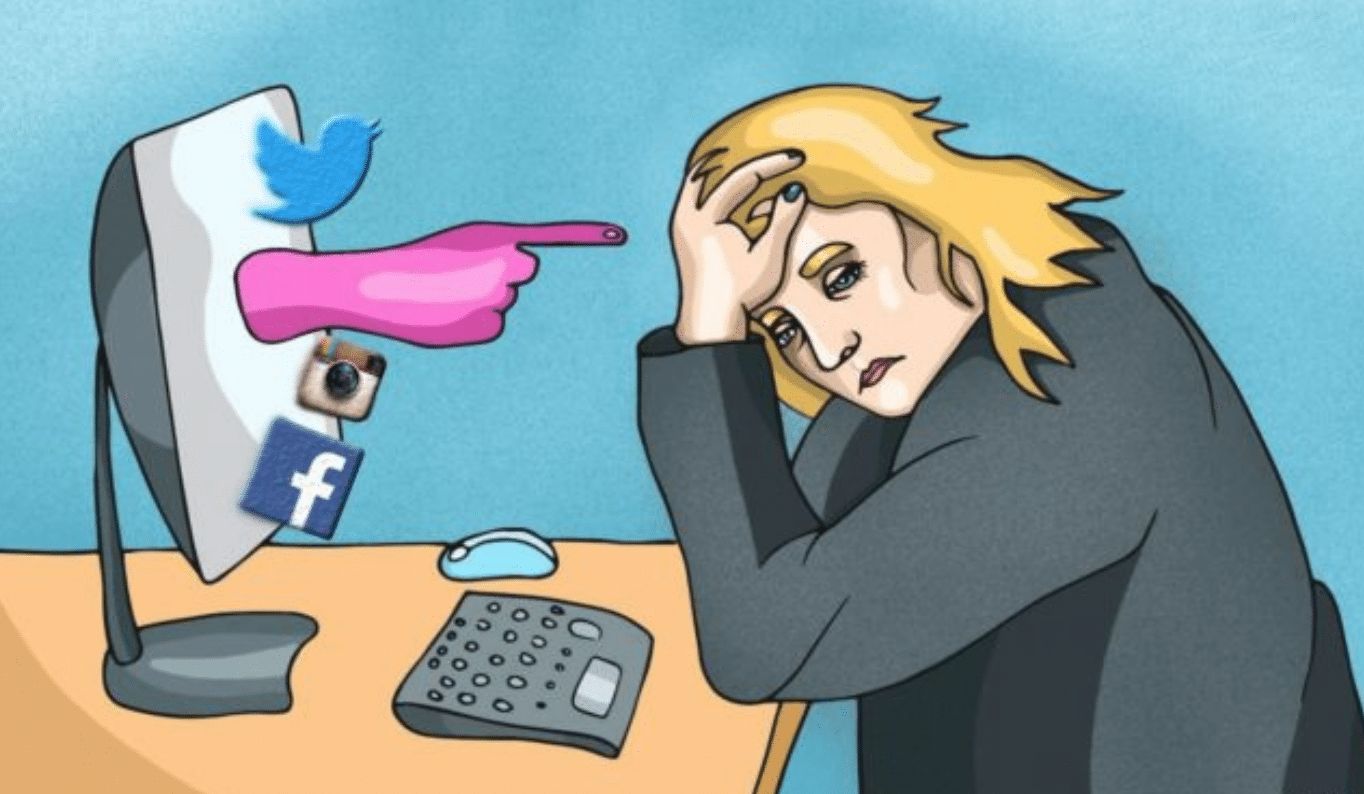
Social media conditions users to measure their self-worth through metrics — likes, shares, comments, and follower counts. For women who already face societal pressure to conform and perform, this external validation system becomes deeply addictive:

• Obsessively checking phones after posting for likes and comments
• Emotional distress when posts do not receive expected engagement
• Posting increasingly curated, unnatural, or revealing content to gain attention
• Inability to disconnect — returning to hurtful comments even when they cause pain

This cycle weakens a woman’s internal sense of self-worth and makes her identity contingent on the fleeting approval of strangers — a psychologically fragile and damaging state.

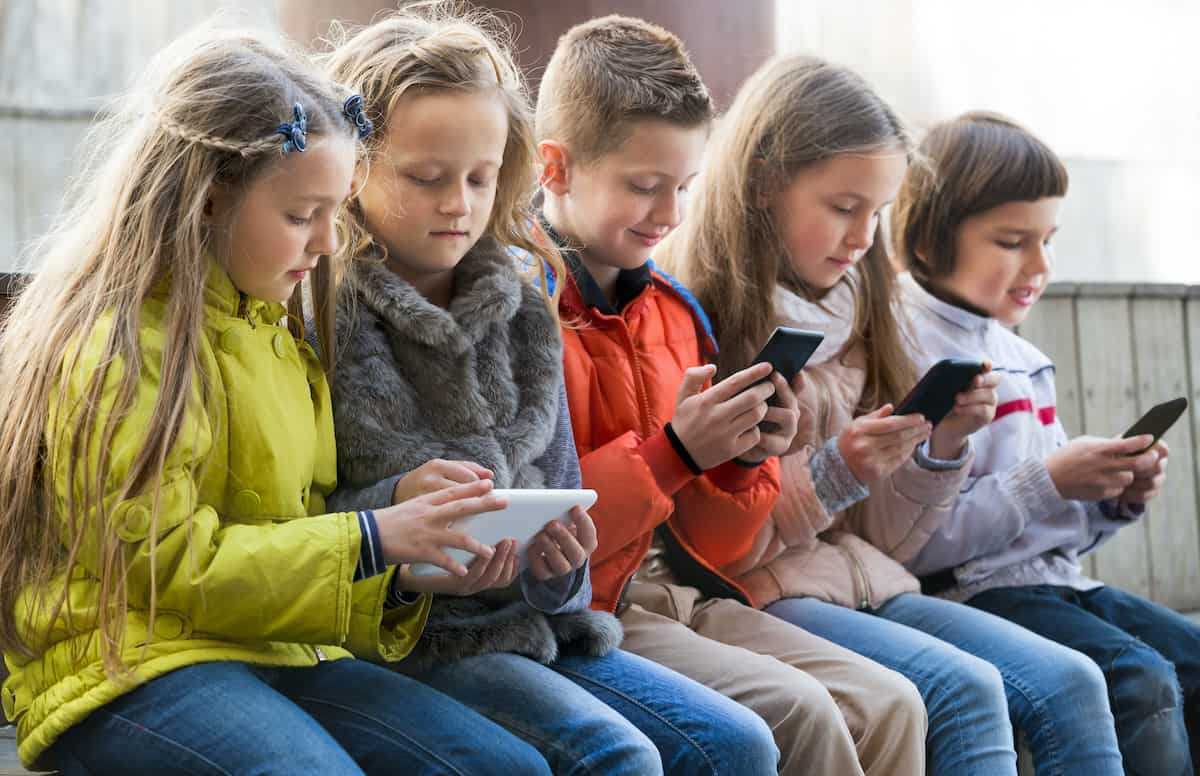
Debate #5: Social Media Is Running Childhood. | Fasiha Taha

3.The Alarming Impact on Children

3.1 — Premature Digital Exposure
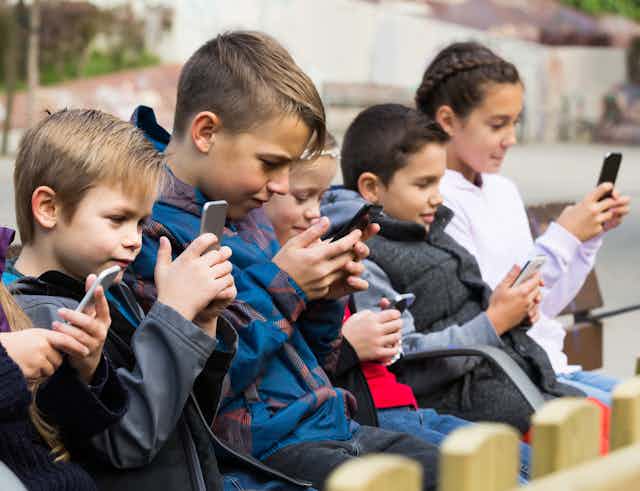
Pakistani children as young as 8 years old are now regularly using smartphones, often without parental supervision or guidance. At an age when the brain is still developing its emotional regulation, empathy, and critical thinking capacities, this unfiltered exposure is especially dangerous:

• Easy access to violent, adult, or extremist content
• Algorithms designed to maximize engagement time — keeping children glued to screens
• Disrupted sleep patterns due to late-night scrolling and screen use
• Online ‘friendships’ gradually replacing meaningful real-world connections
• Exposure to adult conversations and themes far beyond their emotional maturity

3. 2 — Academic Decline and Loss of Concentration

The impact of social media addiction on children’s education is well-documented and deeply concerning:

• Inability to focus in class due to constant distraction and urge to check phones
• Short-form video content — TikTok, Instagram Reels — is shrinking attention spans dramatically
• Homework and study time replaced by scrolling, gaming, and watching videos
• Significant drop in academic performance across age groups

Education researchers describe this growing crisis as ‘Attentional Collapse’ — where the brain becomes so conditioned to rapid, constantly-changing stimulation that it finds slow, sustained learning boring and intolerable.

3. 3 — Peer Pressure, Trends, and Dangerous Challenges

• Participation in harmful online trends and risky viral challenges
• Glamorization of smoking, alcohol, and drug use by influencers targeting young audiences
• Bullying of children who do not own the latest phone or wear trendy clothing
• Chronic FOMO (Fear of Missing Out) — an anxiety rooted in the need to be constantly online

3. 4 — Psychological and Emotional Damage
• Increased anxiety and severe mood swings, especially when devices are removed
• Aggression and emotional outbursts — symptoms consistent with digital withdrawal
• Deep loneliness — children with hundreds of online followers but no real friends
• Body image issues in girls as young as 10, who begin to dislike their appearance
• Self-worth entirely dependent on online validation — an unhealthy and unstable foundation

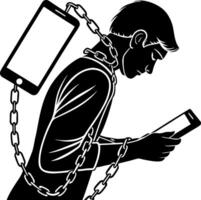
Digital Addiction Concept Art of Man Chained to Smartphone Representing Unplugging and Freedom 60229674 Vector Art at Vecteezy

4. The Psychological Mechanisms at Work

4.1 — The Dopamine Loop
Social media platforms are deliberately engineered to exploit the brain’s dopamine reward system. Every notification, every new like, every comment, and every unexpected piece of new content triggers a small dopamine release — the same neurochemical involved in addiction. For Pakistani women and children, this loop is particularly powerful because:

• Real-life emotional satisfaction and fulfillment are often limited
• Loneliness and social isolation are widespread, especially among women
• The digital world offers seemingly easy and immediate validation

This is not an accident — it is by design. Tech companies employ behavioral psychologists to ensure
their platforms are as addictive as possible.

4. 2 — Echo Chambers and Distorted Realities
Social media algorithms show users more of what they already engage with, creating enclosed echo chambers where a single perspective is constantly reinforced. In Pakistan, this leads to:

• Exposure to extreme religious or political content that radicalizes gradually
• Spread of dangerous medical misinformation — quack doctors, unverified home remedies
• Normalization of harmful behaviors such as domestic violence or emotional abuse
• Distorted perception of what ‘normal’ relationships, bodies, and lifestyles look like

Busy families Photos - Download Free High-Quality Pictures | Freepik

4. 3 — The Culture of Silence
Perhaps the most dangerous dimension of this crisis is how invisible it remains. In Pakistan, mental health is still a deeply stigmatized subject. Families rarely discuss emotional well-being openly, and seeking therapy is considered a sign of weakness or shame. As a result:

• Women suffer in silence, too ashamed to admit that social media is hurting them
• Parents do not notice — or choose to ignore — the psychological signs of excessive screen use
• Schools have no framework for addressing digital wellness or online harm
• Access to mental health professionals remains limited, expensive, and socially discouraged

5. What Can Be Done? — Practical Solutions

At the Family Level
• Establish clear ‘screen-free’ times at home — particularly during meals and before bedtime
• Have open, non-judgmental conversations with children about what they see online
• Lead by example — parents addicted to their own phones cannot expect discipline from their children
• Use parental control tools and app monitoring software to oversee children’s digital activity
• Actively encourage real-world activities: outdoor play, reading, family conversations, and hobbies

At the Societal and Policy Level
• Introduce ‘Digital Literacy’ as a formal and mandatory subject in schools across Pakistan
• Strictly enforce PECA 2016 — online harassment must carry swift, meaningful consequences
• Launch national mental health awareness campaigns that use social media as a vehicle for positive change
• Train educators, mental health professionals, and community leaders to counsel families on digital
wellbeing
• Make mental health services more accessible and affordable — particularly for women in rural areas

At the Individual Level
• Audit and curate your social media feed — unfollow accounts that consistently make you feel inadequate
• Practice regular ‘digital detox’ days — one day per week completely offline.
● Invest in real relationships: in-person connection is far more nourishing than online interaction
• If you are struggling emotionally, speak to a trusted person — a friend, a family member, or a professional
• Teach children that likes and followers do not define their value as human beings.

Person throws phone in the trash. phone, internet and social networks addiction. digital addiction and phone exit | Premium Photo

Conclusion
Social media is neither inherently good nor inherently bad — it is a tool. But in Pakistan, the unguided, uncritical, and increasingly compulsive use of this tool is steadily hollowing out the mental health and self-worth of women and children who deserve far better.

The rising incidence of anxiety and depression, and the quiet despair visible in children glued to screens, are not unrelated phenomena — they are symptoms of the same underlying crisis. Social media’s hidden impact is real, it is serious, and it demands urgent attention.

Change must begin at home. A mother’s emotional wellbeing, a father’s awareness, a child’s genuine smile in a moment of real connection — these are the foundations upon which a psychologically healthy society is built. The digital world will keep evolving. Whether we evolve with wisdom, or continue to scroll in silence, remains our choice.

This article is intended for educational and social awareness purposes. For personal mental health concerns, please consult a qualified professional.

Disclaimer:

Sada-E-Watan provides news and opinion articles as a service to our readers. These articles and news items come from sources outside of our organization. Where possible, the author and the source are documented within each article. Statements and opinions expressed in these articles are solely those of the author (reporter/newspaper) or authors (reporters/newspapers) and may or may not be shared by the staff and management of Sada-E-Watan. Sada-E-Watan was created to provide one convenient central location where a user can quickly scan headlines from many news sources. The headlines listed on Sada-E-Watan pages are links to stories on the sites where these stories are located. The goal of Sada-E-Watan is to help readers access stories on web sites that they would normally not have time to view on a regular basis and to add value to the news source sites by mentioning their name on top, so readers can view these sites.

The Sada-E-Watan takes no responsibility for any loss or damage suffered as a result of using the linked websites or as a result of using the information published on any of the pages of the linked websites.
Whilst every effort is made to ensure downloadable content is free from viruses, Sada-E-Watan cannot accept any liability for damages resulting from virus infection. You should take adequate steps to ensure your virus check regularly when using any device. If you have any questions or comments about Sada-E-Watan, please contact us at: radio@sada-e-watan.com. 

By Ammara Khalid A Bachelor of Science (BS) in Artificial Intelligence Social Media’s Hidden Impacts on Women’s and Children’s Mental Health and Self-esteem. خواتین اور بچوں کی دماغی صحت اور خود اعتمادی پر سُوشل میڈیا کے پوشیدہ اثرت۔ महिलाओं और बच्चों के मानसिक स्वास्थ्य और आत्म-सम्मान पर सोशल मीडिया का छिपा हुआ असर Introduction The rapid spread of smartphones and affordable internet across Pakistan has transformed social media from a luxury into a daily necessity. Platforms such as Facebook, Instagram, TikTok, YouTube, and WhatsApp are no longer confined to urban centers — they have permeated rural towns and villages alike, reaching millions of households that were previously untouched by the digital world. Yet beneath the surface of connectivity and entertainment lies a quiet and
The Serious Issue of Abandoned Children on Pakistan’s streets and Homelessness

By Linta Adnan
Bs. Business Data Analytics

The Serious issue of Abandoned Children
on Pakistan’s streets and Homelessness
پاکستان کی گلیوں میں لاوارث بچے
اور بے گھر لوگوں کا سنگین مسئلہ
पाकिस्तान की सड़कों पर बेसहारा बच्चे
और बेघर लोग एक गंभीर समस्या हैं।

“Street children are lovely blossoms just dropped from the tree after a heavy storm. Now they need to be put together with a needle and threads of security and shelter to live into a beautiful circle of life’s garland”

“On the street there is no tomorrow. There is only here and now and nothing else. And yesterday is just another day you’re trying to forget.” 

“Home is not where you live, but where they understand you.”
“A house is a home when it shelters the body and comforts the soul.”

Orphan child abandoned street children homeless orphans lonely and helpless an adolescent with no family living on the street forgotten and needed by no one generative ai | Premium AI-generated image

Between 1.5 million and 2.5 million street children live in urban centers across Pakistan. Driven by extreme poverty, domestic violence, and displacement, these children survive primarily through begging, scavenging, or informal labor. They are highly vulnerable to violence, trafficking, substance abuse, and exploitation

There is this specific kind of tranquility that settles over a traffic signal in Karachi or Lahore the moment the lights go red. For three seconds before the engines accelerate again, a tiny figure appears at the car window, unshod, suntanned, holding out a hand that doesn’t know how to hold a toy. Sometimes it’s a bundle of pens, sometimes it’s a packet of tissues and sometimes it’s nothing at all, just empty hands reaching out, palm up, waiting. Majority of the drivers look away. Some close the window really quick, while some hand over a few rupees without even making a single eye contact. The signal turns green, the cars disappear and the child is swallowed by a city that has concluded, somewhere along the way that this is how things work.

It isn’t how things should work, but it is, undoubtedly, how things are for about one or two million children across Pakistan today, a population larger than the entire city of Multan, composed up almost entirely of people too young to even vote, too young to work and too young to defend themselves in a way that so many of them must.

This is their story, it should’ve been entirely different. Their story should’ve been about chalk dust and schoolbags not garbage dumps and traffic lights. It should’ve been about their favorite toy held tight at bedtime and not hands held out at a car window. It should’ve been about a grazed knee from falling on the playground and not about the scars that no one talked about. It should’ve been about growing up and not growing up too fast. Somewhere along the way, the world, the society and all of us owed them a childhood, and never paid the debt.

How a child ends up on the streets

It would be a bit comforting to imagine that street children come from a single, recognized cause, that if we fixed only one thing, the whole problem would be solved. The reality is more chaotic and harder to solve accurately because the cause are deeply intertwined.

Poverty is at the top most roof of almost every case, but poverty alone doesn’t push a child out of a house. Its poverty along with something else: a father who has stopped coming home clear-headed, a mother who passed away and left no one willing enough to keep the children, a family of 8 packed into two rooms where there isn’t simply enough food to go around. Nearly 40% of Pakistani population faces food insecurity and more than three million children are known to suffer chronic hunger. For a child watching younger siblings crying from empty stomachs, the street, with its scraps, odd jobs and insults from strangers, can start to look less like an abandonment and more like a desperate alternative.

Domestic violence pushes others out the door entirely. Children leave homes where they are beaten, where they watch their mothers battered, where the dwelling has become more dangerous than the open roads. Broken families, divorce, death, abandonment and a parent’s remarriage that leaves no room for children from the first marriage, scatter children under relatives who often see them as another mouth to feed rather than a child to love. Many simply run.

Homeless Children on the streets of Karachi : r/pakistan

What a day actually looks like

It’s easy to idealize endurance from a distance, calling these children ‘tough’ or ‘street smart’ in a way that totally neglects what they had to bear and go through. But take even a little time learning about their actual days and idealization fades away quickly.

Mornings start before the world wakes up, not because of discipline but because hunger doesn’t wait for daylight. Many children search through garbage dumps, looking through trash to find anything of resale value like plastic bottles, cardboard, scrap metals, or anything that can be sold for a few rupees to a recycling dealer who knows how desperate his suppliers are for money and this is where they take advantage of their desperation. Others station themselves at traffic signals, bus terminals and markets begging, selling tissues, pens and flowers or washing car windscreens for whatever money the stranger would give.

Many of these children aren’t working for themselves at all. Investigations and reports, including from Pakistan’s own Ombudsman secretariat, have documented planned and structured begging rings that expertly traffic children, compelling them to beg for hours and confiscating their earned money at the end of the day. A child who returns with too little money may face violence. A child who tries to run may be tracked down. What looks like a poor child hard on his luck, trying to survive, is sometimes the visible edge of an organized exploitation that most of us don’t even realize.

Food is whatever can be found, items pulled from garbage, leftovers from restaurant bins, the occasional act of kindness from a shopkeeper or a stranger. A balanced meal is a foreign concept. Malnutrition, untreated illness and parasitic infections are constant companions not exceptions.

Nighttime possesses its own dangers. Children without homes will find a place to sleep wherever it may be safer from the worst of the night, under bridges, in mosques’ courtyards, in the doorway of closed shops, lain huddled together in groups for warmth and security. Groups provide some measure of safety to be preyed upon, but they necessarily expose the children to older street children who will introduce them to drugs, stealing and gang structures as a way to survive. Researches indicate that as many as one-third of children in some cities report their participation in some kind of street gang, not as an option, but because being alone on the street sets them as a target.

Homeless street Images - Free Download on Freepik

The abuses that rarely make the news

This is the part of the story that is hardest to write, and harder still to read, but it cannot be left out, because leaving it out would be its own kind of dishonesty.

Poverty and lack of access to education create extreme difficulties for street children in Pakistan. Unfortunately, street children in Pakistan have found to be significantly at risk for sexual abuse and have been the focus of many studies that show that most of them at some point in their lives have suffered sexual, verbal or physical abuse. Abuse rarely limits itself to one setting, it stalks them from homes that failed to protect them, onto the streets that misuse them and sometimes even into schools meant to shelter them. Physical violence is usually the first lesson learned by these children through parents’ hands, employer’s stick or another old street child in the brutal chain of survival. Verbal abuse also does damage to a child’s sense of self beyond being visible, when a child gets to hear something repeated often enough over several years, it builds into how they see themselves and makes every good relationship, much harder if not impossible, to develop. Of all the types listed, sexual abuse is the most debilitating. Research conducted on street children in Pakistan has shown that there are epidemic levels of sexual exploitation and that the public spaces have become the hunting grounds for sexual predators.

Many of the adult abusers of street children are well aware that there are very low chances of them being caught and reported and there are few places where children could safely seek help if they try to report. Public spaces, bus terminals, parks, transport hubs, and whichever place could be thought of are now sites where this exploitation occurs, hidden in plain sight because society has conditioned itself not to look too closely at street children in the first place.

In many countries around the world, including Pakistan there exists a cultural stigma that boys are safe from such abuse simply because of their gender which leaves no avenues for boys to report and disclose violations they have suffered. This creates additional barriers for boys who have faced abuses, as they many not know how to break their silence, may fear being blamed for the incident by someone else or will not be believed if they do come forward. Boys who have suffered abuse often live with this silence because they are ashamed, scared or think that they will be blamed.

This is a critical issue that needs more attention than it currently receives and should be treated with the same seriousness as other forms of child abuse.

Orphan child abandoned street children homeless orphans lonely and helpless an adolescent with no family living on the street forgotten and needed by no one generative ai | Premium AI-generated image

Names behind the numbers

Some statistics are astonishing and inspire imagination, however, they also become abstract over time. It helps to remember that each statistic is a child with a name, although that name may not be recorded anywhere. The boy who sells roses at red light in Lahore has never been inside of a classroom, he does not have a formal education but can tell you what intersection at what time of the day gets him earn the most money. This is a knowledge that no ten-year old should have.

There are sets of siblings who have learned how to divide their efforts at traffic stops so as to maximize their coverage of a particular area, then after sunset they meet, combine what they gathered together and share food the way that people share who have experienced hunger.

These children display stunning level of intelligence and resourcefulness such as being able to instantly read a stranger’s face, having great negotiation skills, being able to move around in a big city with no map and being able to care for their young siblings with gentleness that comes from their own unmet needs. The tragedy behind this crisis is that there is an immense amount of human potential that has been wasted in just surviving for another day rather than building something extraordinary because of lack of support they have received from their family to help them achieve something move productive after reaching this level of intelligence and resourcefulness described above.

What is being done and why it is not enough yet

It’s not fair to assert that nothing is being done. In Pakistan, there exists a comprehensive legislative framework to safeguard children that includes: the National Commission on the Rights of Child Act (passed in 2017); the Juvenile Justice System Act (passed in 2018); numerous provincial child protection laws and welfare agencies; NGOs (such as Street Child International and its local partners) providing education and protection programs; and, coordination of effort among other NGOs involved in these same areas (education, financial management and capacity building). Additionally, many NGOs work with children and families in Pakistan, including: Save the Children; UNICEF; SOS Children’s Villages; and, a number of smaller local charities that operate shelters, informal schools, and outreach programs in the major metropolitan areas of Pakistan (i.e., providing meals, basic literacy/Vocational training, etc.), and some of the more fortunate children, with some hope of reunited with their families or going to school formally.

As noted in a recent Policy Brief released by the National Commission on the Rights of Child, Pakistan, the major issue facing advancement of children’s rights is implementation. Many of the laws related to children’s rights have no regulations defining how they are enforced, or their requirements have never been made publicly available. This suggests that children’s rights have a lower priority compared to other goods and services in a context where there is little political will, an ineffective system, and little collaboration or coordination across ministries and other entities to ensure that the laws are uniform, across all parts of the country, in their implementation.

The funding for child welfare programs is in comparison to the size of the problem constantly inadequate; shelters for street children, when they do exist, are frequently overcrowded, underfunded and can use only a fraction of the number of street children that require shelter. In addition, at best, coordination between all three levels of government, federal, provincial and local, is inconsistent. There also is a cultural perception that street children are an annoyance or a problem that need to be controlled rather than as victims of systemic failure who need urgent, long-term intervention.

Abandon child Images - Free Download on Magnific (formerly Freepik)

Why this should matter to everyone

While it would be easy to read all this and have a fleeting feeling of sadness to simply move past it, which is what most people do, as soon as the traffic light changes for the child who is at the intersection waiting for food; there are good reasons beyond compassion alone that this situation and the children on the street should get more than a passing thought.

Street children in one nation will be the working-age population of another nation tomorrow. Without access to basic needs (education, job training, safe housing), children can become unprepared for participating in the formal economy. Because of this, children raised without stable homes and/or no access to education are statistically much more likely than their peers to have children who will experience homelessness, creating an intergenerational poverty and exclusion cycle that continues to affect millions of deserving families every day. In addition, every child who grows up without access to the three basic needs has two losses: individual and collective, unknown future skills take years to benefit society and fulfill potential.

The economic ramifications are only one part of living without a stable home; however, what society does to support or mistreat those in greatest need (who have the least ability and/or means to advocate for themselves) reveals what its actual culture values.

What a change could actually look like

None of this means that the situation is hopeless, countries with far lesser resources than Pakistan have made meaningful progress on child homelessness when they treat this issue as a national priority rather than a backdrop to everyday life.

Real change would mean properly funding and staffing the child protection laws that already exist on paper. It would mean investing in shelters with enough beds and trained staff to provide more than just a bed but also real rehabilitation, including medical care, counseling, vocational training and a path to either reunification with family or independent lives. It would also mean cracking down on the networks of human trafficking that exploit children for begging, rather than viewing children themselves as the problem and being treated like a nuisance to be removed from the street.

It would mean training law enforcement and municipal officials to view street children as victims needing their protection, not as a public nuisance.

And finally, it would mean something simple that any reader can do: making a conscious effort, at least sometimes, to not look away from children in need of help – by supporting a reputable, local NGO; donating to organizations that are doing real and verifiable work with street children; advocating (in whatever small way is possible) for political will, which the National Commission’s own findings identify as missing.

Homeless Images - Free Download on Magnific (formerly Freepik)

A closing thought

Somewhere tonight in Pakistan, there are children going to sleep with no roof over their heads, no blanket waiting for them except whatever they could find, no parent holding their hand. No voice whispering that they are safe, that morning will be kinder. They will fall asleep hungry, or frightened, or both, the way they have every night before, and the way they will tomorrow, unless something changes. They did not ask for this life. No child asks to be unwanted, unfed, unprotected. Somewhere, a mother who should have held them couldn’t. Somewhere, a nation that should have claimed them as its own simply didn’t notice they were gone.

We tell ourselves that we would never let a child suffer if we saw it happening in front of us. And yet it is happening, in front of us, every single day, at the traffic signal, outside some restaurant, beneath the bridge we drive past without a second glance. Maybe the tragedy isn’t that we don’t care. Maybe it’s that we’ve taught ourselves not to look long enough to care. Every child who is sleeping on road tonight is someone’s son, someone’s daughter, someone who once had a name whispered over them with hope, and who deserved, simply by being born, a chance at softness this world never gave them.

The Forgotten Street Children Of Pakistan - PrairieWifeinHeels.com

“To walk past a hungry child is to walk past a piece of our own humanity”

The lights will turn red again tomorrow. A small hand will reach towards a window again. And somewhere under the noise of traffic and rush of our own lives lies a silent question waiting for an answer we haven’t provided yet: if not us then who? If not now then when?

“Every child who goes unfed, unseen or unheld is a debt the world has yet to repay”

Disclaimer:

Sada-E-Watan provides news and opinion articles as a service to our readers. These articles and news items come from sources outside of our organization. Where possible, the author and the source are documented within each article. Statements and opinions expressed in these articles are solely those of the author (reporter/newspaper) or authors (reporters/newspapers) and may or may not be shared by the staff and management of Sada-E-Watan. Sada-E-Watan was created to provide one convenient central location where a user can quickly scan headlines from many news sources. The headlines listed on Sada-E-Watan pages are links to stories on the sites where these stories are located. The goal of Sada-E-Watan is to help readers access stories on web sites that they would normally not have time to view on a regular basis and to add value to the news source sites by mentioning their name on top, so readers can view these sites.

The Sada-E-Watan takes no responsibility for any loss or damage suffered as a result of using the linked websites or as a result of using the information published on any of the pages of the linked websites.
Whilst every effort is made to ensure downloadable content is free from viruses, Sada-E-Watan cannot accept any liability for damages resulting from virus infection. You should take adequate steps to ensure your virus check regularly when using any device. If you have any questions or comments about Sada-E-Watan, please contact us at: radio@sada-e-watan.com. 

By Linta Adnan Bs. Business Data Analytics The Serious issue of Abandoned Children on Pakistan’s streets and Homelessness پاکستان کی گلیوں میں لاوارث بچے اور بے گھر لوگوں کا سنگین مسئلہ पाकिस्तान की सड़कों पर बेसहारा बच्चे और बेघर लोग एक गंभीर समस्या हैं। “Street children are lovely blossoms just dropped from the tree after a heavy storm. Now they need to be put together with a needle and threads of security and shelter to live into a beautiful circle of life’s garland” “On the street there is no tomorrow. There is only here and now and nothing else. And yesterday is just another day you’re trying to forget.”  “Home is not where you live, but where they understand you.” “A house is a
From Social Media to Social Problems: The Impact of Mobile Phones on Youth Behavior

By Ayesha Bashir
Master of Arts (MA)
English Literature

From Social Media to Social Problems:
The Impact of Mobile Phones on Youth Behavior
:سوشل میڈیا سے سماجی مسائل تک
نوجوانوں کے رویے پر موبائل فون کا اثر
सोशल मीडिया से सामाजिक समस्याओं तक:
युवाओं के व्यवहार पर मोबाइल फ़ोन का असर

“The digital age greatly assisted the selfish and heartless in degrading humanity. Being a part of humanity, when would they realize they were degrading a part of themselves?”
“It is okay to own a technology, what is not okay is to be owned by technology.”
“In an overwhelming attempt to capture memories, people have forgotten to make memories.”
As people’s souls shrink through lack of movement, their connective tissue hardens and their bones turn brittle. This isn’t metaphoric. This is the mind-body-spirit connection on full display, for anyone who cares to contemplate its cause and effects, in real time.”
“Has the world, and not just its people, lost its soul through immobility, laziness, and living a zombified half-life doom scrolling through virtual reality? Is our own ‘intelligence’ becoming more and more artificial as we literally ossify in front of our screens?
Mobile phone addiction Vectors - Download Free High-Quality Vectors | Magnific (formerly Freepik)Digital Dependency, Mental Health, and Moral Decline Among the Young Generation

In the span of barely two decades, the mobile phone has transformed from a luxury item into an indispensable part of daily life. For the younger generation children, teenagers, and young adults it has become something far more intimate: a window to the world, a social identity, and increasingly, a silent addiction. While technology was designed to educate, connect, and simplify life, its excessive and unguided use is quietly poisoning the minds, habits, and values of an entire generation.

A Tool Turned Into a Dependency

The mobile phone was invented to serve human needs to make communication faster, access to knowledge easier, and daily tasks more manageable. These remain noble purposes. Yet somewhere between invention and adoption, a critical line was crossed. The phone stopped being a tool we pick up and became a companion we cannot put down.

Research consistently shows that the average young person spends six to nine hours per day on their phone more time than they spend sleeping, studying, or engaging in meaningful human interaction. Notifications are engineered to trigger dopamine responses. Apps are designed with infinite scroll, auto play, and reward loops borrowed from casino psychology. The phone does not just occupy time; it colonizes attention.

For adolescents whose brains are still developing, this dependency is especially damaging. The prefrontal cortex responsible for decision-making, impulse control, and long-term planning is not fully formed until the mid-twenties. Handing a child a smartphone is, in many ways, handing a developing mind an untested experiment.

Bad habits of young 4 year old girl looking at the phone with concentration concept of problem | Premium AI-generated image

Social Media Addiction Among Youth

Social media platforms Instagram, TikTok, Snapchat, YouTube are not neutral spaces. They are sophisticated behavioral engines built to maximize engagement. For young users, they offer something deeply appealing: visibility, validation, and belonging. A like on a photo, a new follower, a viral video these micro-rewards become the currency of self-worth.

Social media addiction among youth is not a metaphor. It mirrors the clinical patterns of substance dependency: compulsive use despite negative consequences, withdrawal symptoms when access is removed, and a constant need for more stimulation. Studies from leading universities across the world have linked heavy social media use in teenagers to increased rates of anxiety, depression, loneliness, and low self-esteem.

What makes it particularly insidious is that it disguises itself as social connection. Young people feel they are engaging, communicating, participating while in reality, they are consuming curated content designed to keep them scrolling, not living.

Youth smartphone interaction Images - Free Download on Freepik

Mental Health Consequences

The mental health crisis among today’s youth is not coincidental to the rise of smartphones. The timing is precise and the correlation is well-documented. Since the early 2010s — when smartphones became ubiquitous and social media went mainstream rates of teen depression, anxiety, self-harm, and suicide have risen sharply, particularly among girls.

The mechanisms are multiple and compounding. Social comparison is relentless: every scroll delivers images of people who appear more beautiful, more successful, more popular. The gap between one’s real life and the curated highlight reels of others breeds inadequacy. Cyberbullying once limited to school hours now follows children into their bedrooms and sleep. The pressure to perform, to be always available, to respond immediately, eliminates the mental rest that developing minds desperately need.

Sleep deprivation is another silent casualty. Millions of young people sleep with their phones beside them, checking notifications throughout the night. The blue light emitted by screens suppresses melatonin, disrupts circadian rhythms, and degrades the quality and duration of sleep. A chronically under-slept teenager is a mentally vulnerable one prone to mood instability, poor academic performance, and weakened immunity.

The False Glamour of Internet Culture

The internet sells a particularly seductive lie: that fame is accessible to anyone, that beauty is effortless, that wealth comes without struggle. A teenager watching influencers flaunt luxury lifestyles, perfect bodies, and endless vacations begins to measure their own ordinary existence against an extraordinary illusion.

This glamour is manufactured. The filters are invisible. The debts behind the designer outfits are hidden. The eating disorders behind the thin physiques are cropped out of frame. Yet young minds, particularly those still forming their sense of self and reality, absorb these images as standards as aspirations, or worse, as reflections of their own inadequacy.

Internet culture also glorifies shortcuts: getting rich quick, becoming famous overnight, bypassing effort. This corrodes the values of patience, hard work, and perseverance that are foundational to genuine success and meaningful life. A generation raised on instant gratification is poorly equipped for a world that still demands sustained effort.

Page 19 | Kids phone diverse Images - Free Download on Freepik

Exposure to Inappropriate Content: The Pornography Crisis

Perhaps the most alarming and least honestly discussed consequence of unchecked smartphone access among youth is the ease with which they encounter content that is not only inappropriate for their age, but actively destructive to their development. Graphic violence, hate speech, and extremist material are serious concerns — but the epidemic of pornography consumption among minors deserves its own urgent and unflinching examination.

There is a scene playing out in millions of homes every single day, and most parents have no idea it is happening. A child a boy or girl in their early teens, sometimes younger slips away from the family, goes to their room, locks the door, and within seconds is watching explicit sexual content on their phone. No warning. No barrier. No adult in sight. What took deliberate effort and adult access to obtain in previous generations now arrives in the palm of a child’s hand without a single meaningful obstacle.

“The average age of first exposure to pornography is now between eight and eleven years old. This is not a personal failing it is a systemic failure of the adults and institutions meant to protect children.”

They internalize distorted body ideals, feel shame about their natural appearance, and are made to feel inadequate for failing to meet the impossible standards of a scripted performance. The damage to their self-image and sense of worth can be deep and lasting.

This is a difficult truth, but it must be stated directly: the normalization of violent and degrading pornography is contributing to a generation of young men who have absorbed profoundly distorted attitudes toward women, consent, and sexual entitlement.

This does not mean that every young person who views pornography becomes violent or predatory. But it does mean that the steady, unfiltered diet of content that depicts domination, aggression, and the reduction of human beings to their physical utility is shaping attitudes quietly, invisibly, and at scale. A society that is genuinely concerned about sexual violence, harassment, and disrespect toward women must reckon honestly with what it is allowing its children to consume from childhood.

Destruction of Real Relationships

The damage extends beyond attitudes and into the lived experience of actual relationships. Young people who have spent years watching pornography bring a set of conditioned expectations into their real romantic and intimate lives expectations that reality cannot possibly fulfil.

The result is a painful and growing disconnect. A young person enters a real relationship and finds it unsatisfying not because there is anything wrong with their partner, but because their capacity for genuine intimacy has been undermined.

This is believed to be a significant contributing factor to the rise in relationship dissatisfaction, breakdown, and sexual dysfunction among young adults.

Page 10 | Kids phones Images - Free Download on Freepik

The Impact on Children’s Psychological and Moral Development

For children who encounter pornography before adolescence and the evidence suggests this is now the majority the psychological impact is severe. Children are not equipped to process what they are seeing. They have no framework for it. Many experience confusion, fear, disgust, or a kind of shock that is never properly addressed because they cannot tell anyone what they have seen. The shame and secrecy that surrounds it compounds the harm.

What should be understood as a sacred and deeply human dimension of adult life is instead introduced to children as something crude, transactional, and often violent. The moral and psychological formation that should occur naturally through healthy relationships, proper education, and parental guidance is hijacked and replaced by something toxic.

This is not a minor concern. This is not a matter of prudishness or outdated values. This is a public health and moral emergency one that society continues to approach with a timidity entirely disproportionate to its scale and severity.

Reels and Short-Form Content Are Rewiring Attention Spans

The rise of short-form video content TikTok videos, Instagram Reels, YouTube Shorts represents a fundamental assault on the human capacity for sustained attention. These formats are designed to deliver maximum stimulation in minimum time: fifteen seconds, thirty seconds, sixty seconds. They are optimized for the brain’s novelty-seeking impulses, training users to expect constant change and punishing them with boredom the moment stimulation slows.

The consequences for young people are serious. The ability to focus to sit with a difficult idea, to read a long text, to listen patiently, to think deeply is a skill, and like all skills, it requires practice. Young people who spend hours daily consuming rapid-fire content are not practicing this skill; they are actively training themselves away from it.

Teachers worldwide report students who cannot maintain attention for more than a few minutes. Books feel unbearably slow. Conversations feel tediously unstructured. The very cognitive architecture required for learning, creativity, and critical thinking is being degraded by the content diet of the digital age.

There is a painful irony at the heart of the social media age: a generation more “connected” than any before it is also among the loneliest. The quality of connection matters, and digital connection however constant is a poor substitute for the embodied, reciprocal, emotionally attuned experience of genuine human relationship.

Young people who have grown up primarily socializing through screens show measurable deficits in empathy, conflict resolution, nonverbal communication, and emotional regulation. Conversation requires reading body language, tolerating silence, responding in real time to another human being’s emotional state skills that develop only through practice in real life, not online.

Shyness, social anxiety, and avoidance have increased significantly among young adults. Many report preferring to text rather than call, to message rather than meet, to communicate through memes rather than words. These are not merely preferences they are signs of atrophied social capacity, and their consequences will be felt in friendships, workplaces, marriages, and communities for decades to come.

Does My Child Have A Screen Addiction? • FamilyApp

Rise in Moral and Social Problems

Beyond the individual, the smartphone age is reshaping society’s moral fabric in ways both subtle and profound. The anonymity of the internet removes the social accountability that traditionally governed human behavior. People say online what they would never say to another person’s face. Cyberbullying, harassment, the spread of misinformation, the normalization of cruelty these are the behavioral norms being absorbed by young people who spend their formative years immersed in digital culture.

The pornography epidemic, as noted above, is eroding values around intimacy and respect. But it is not alone. Gambling platforms disguised as mobile games, violent content framed as entertainment, radicalization pipelines built into recommendation algorithms the moral risks of unguided internet access are not theoretical. They are playing out in real time, in real lives.

What a generation consumes, it becomes. The values absorbed during childhood and adolescence shape the adults that emerge. A society that allows its children to be formed primarily by algorithm-driven content optimized for engagement, not wisdom is sowing seeds whose harvest will be troubled.

How Do Our Phones Affect Our Parenting? | Parenting Tips & Advice | PBS KIDS for Parents

The Responsibility of Parents

In this crisis, parents are both the first line of defense and, too often, an unwitting part of the problem. The conversation about screen time cannot begin at thirteen or sixteen it must begin at birth.

It has become increasingly common for mothers and fathers to place smartphones in the hands of infants and toddlers as a pacifier of convenience. A child as young as six months is propped before a screen showing cartoons so that a parent can have a moment of peace. This is understandable parenting is exhausting. But it is also consequential. The developing infant brain requires human faces, human voices, physical interaction, and unstructured exploration. A screen cannot provide these things. Early and heavy screen exposure in children under three has been linked to speech delays, attention difficulties, and reduced capacity for imaginative play.

“The most dangerous thing you can give a child is not a toy with sharp edges it is a glowing screen with no boundaries.”

As children grow, parental responsibility evolves but does not diminish. Parents must educate themselves about the platforms their children use, establish clear boundaries around screen time and content, and create a home culture where real-world engagement is valued over digital entertainment. This requires courage, the courage to be unpopular with a child who “everyone else is allowed to.”

Beyond restriction, parents must offer alternative richness: books, outdoor activities, family conversation, creative pursuits, and community involvement. Children do not need to be kept from screens by punishment; they need to be drawn toward a life so full and meaningful that screens lose their grip.

Parents must also model the behavior they seek to instill. A father who cannot put his phone down at the dinner table, a mother who scrolls through Instagram while her child speaks to her these behaviors teach louder than any rule. Children watch, and they learn what is truly valued in their home.

Cell Phone Study Proves Car Crash Risk | RheumNow

Reclaiming a Generation

Mobile phones are not evil. The internet is not a poison in itself. These technologies carry genuine promise for education, creativity, connection, and opportunity. The problem is not their existence but their governance or rather, the catastrophic lack of it.

A generation is being raised in a digital environment that was not designed with their well-being in mind. It was designed for engagement. For profit. For data. The result is a youth population that is more anxious, more isolated, more distracted, and more morally disoriented than any generation before it — not because they are weak, but because they are navigating, largely alone, a landscape of extraordinary complexity and risk.

This demands a collective response. Parents must be present and intentional. Schools must teach digital literacy with the same seriousness as mathematics. Governments must regulate platforms that profit from the exploitation of young minds. And society must find the courage to say clearly, without apology: our children deserve better than what the unchecked digital world is giving them.

“It’s a modern necessity to own a phone, but to be owned by the phone is a modern sickness.”

Disclaimer:

Sada-E-Watan provides news and opinion articles as a service to our readers. These articles and news items come from sources outside of our organization. Where possible, the author and the source are documented within each article. Statements and opinions expressed in these articles are solely those of the author (reporter/newspaper) or authors (reporters/newspapers) and may or may not be shared by the staff and management of Sada-E-Watan. Sada-E-Watan was created to provide one convenient central location where a user can quickly scan headlines from many news sources. The headlines listed on Sada-E-Watan pages are links to stories on the sites where these stories are located. The goal of Sada-E-Watan is to help readers access stories on web sites that they would normally not have time to view on a regular basis and to add value to the news source sites by mentioning their name on top, so readers can view these sites.

The Sada-E-Watan takes no responsibility for any loss or damage suffered as a result of using the linked websites or as a result of using the information published on any of the pages of the linked websites.
Whilst every effort is made to ensure downloadable content is free from viruses, Sada-E-Watan cannot accept any liability for damages resulting from virus infection. You should take adequate steps to ensure your virus check regularly when using any device. If you have any questions or comments about Sada-E-Watan, please contact us at: radio@sada-e-watan.com. 

By Ayesha Bashir Master of Arts (MA) English Literature From Social Media to Social Problems: The Impact of Mobile Phones on Youth Behavior :سوشل میڈیا سے سماجی مسائل تک نوجوانوں کے رویے پر موبائل فون کا اثر सोशल मीडिया से सामाजिक समस्याओं तक: युवाओं के व्यवहार पर मोबाइल फ़ोन का असर “The digital age greatly assisted the selfish and heartless in degrading humanity. Being a part of humanity, when would they realize they were degrading a part of themselves?” “It is okay to own a technology, what is not okay is to be owned by technology.” “In an overwhelming attempt to capture memories, people have forgotten to make memories.” As people’s souls shrink through lack of movement, their connective tissue hardens and their bones

Disclaimer:
Sada-E-Watan provides news and opinion articles as a service to our readers. These articles and news items come from sources outside of our organization. Where possible, the author and the source are documented within each article. Statements and opinions expressed in these articles are solely those of the author (reporter/newspaper) or authors (reporters/newspapers) and may or may not be shared by the staff and management of Sada-E-Watan. Sada-E-Watan was created to provide one convenient central location where a user can quickly scan headlines from many news sources. The headlines listed on Sada-E-Watan pages are links to stories on the sites where these stories are located. The goal of Sada-E-Watan is to help readers access stories on web sites that they would normally not have time to view on a regular basis and to add value to the news source sites by mentioning their name on top, so readers can view these sites..

The Sada-E-Watan takes no responsibility for any loss or damage suffered as a result of using the linked websites or as a result of using the information published on any of the pages of the linked websites.

Whilst every effort is made to ensure downloadable content is free from viruses, Sada-E-Watan cannot accept any liability for damages resulting from virus infection. You should take adequate steps to ensure your virus check regularly when using any device.

If you have any questions or comments about Sada-E-Watan, please contact us at: radio@sada-e-watan.com